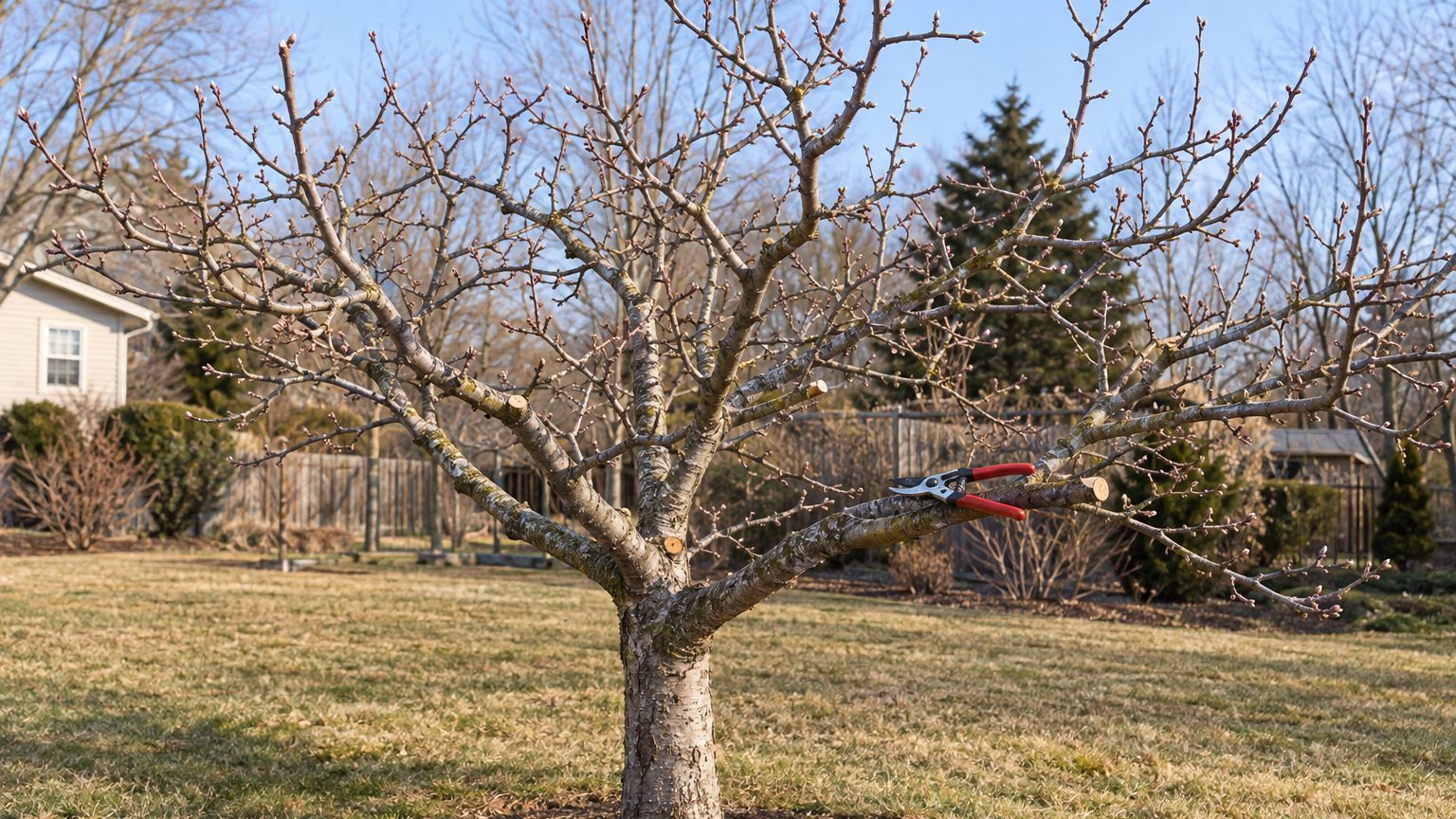
Bare branches in a fruit tree‘s quiet months are the cue to reach for the loppers. In Arizona, that means the stretch of winter when the tree is at rest and the buds have not yet opened. The timing leaves the tree’s cuts to heal as growth restarts, and the details shift a little from apples to peaches.
When to Prune Fruit Trees in Arizona

Dormant pruning of fruit trees in Arizona fits late January and February, before growth starts. The tree is resting, the cuts are easy to read against bare wood, and spring growth fills in right after. Fall and early winter pruning is avoided, because new growth may not harden before the cold.
| Fruit tree | When to prune in Arizona | Why |
|---|---|---|
| Apples and pears | Late January to February, among the first trees pruned | Dormant wood is easy to shape, and these trees tolerate an earlier start |
| Peaches and nectarines | February, last of the fruit trees and closest to bloom | Flower buds are easily hurt by cold, so pruning waits |
| Cherries and plums | Late January to February, while dormant | Cuts made before the buds swell heal as growth begins |
| Young trees | Late January to February, after planting in February to March | Bare-root trees go in while dormant, and early shaping sets the framework |
Nectarines follow the peach schedule. Low-chill stone fruits such as apricots, plums and peaches can bloom during a warm spell once they have met their chill hours, which is one more reason to finish pruning on time and not let it drift toward bloom.
Arizona — the year and the numbers
- State
- Arizona
- USDA zones
- 4b-10b
- Frost
- none in an average year
- Annual rain
- 7 in
- Lawn zone
- warm-season
- Source
- NOAA NCEI 1991-2020 Climate Normals + NOAA RCC ACIS daily records, station USW00023183 — https://www.ncei.noaa.gov/access/services/data/v1?dataset=normals-annualseasonal&stations=USW00023183 · Phoenix
How to Tell Your Fruit Trees Are Ready to Prune
The tree itself gives better timing cues than a calendar page, and a few signs together tell you the window is open.
- The leaves are all down, which tells you the tree is dormant and the structure of the branches is easy to see.
- Once winter has eased, cuts are less likely to be followed by a hard freeze that dries out the fresh wood.
- The buds are still tight and closed, which means the tree has not yet put its energy into new growth.
- Buds along the twigs have just started to look plump, a signal that peaches and other stone fruits should be pruned now and not postponed.
- Bark and wood look dry and firm, not soft or sappy, so cuts will seal cleanly.
Low-desert winters rarely bring hard freezes, though a rare cold snap can touch 32F between late December and mid January. Waiting until that stretch has passed keeps tender cuts from taking a hit.
When to Prune Peach and Apple Trees in Arizona
Apples go first. They sit deep in dormancy in late January and February, and the wood is sturdy enough to handle early cuts. Pruning them before the peaches also spreads out the work so no tree is rushed.
Peaches go last, close to bloom, because their flower buds are easily hurt by cold. Cutting late lets you see which buds came through the winter and which did not, so you can prune with the real crop in view. Stone fruits are far more frost-prone than apples, and that is why the peach waits.
Pruning in summer is not part of the regular routine for these trees, and the extension guidance covers dormant pruning as the main job. If a branch breaks or a limb is clearly dead in warm weather, take it off at the break and leave the shaping for winter.
Where to Get Fruit Tree Advice in Arizona
Arizona spans everything from low desert to high country, and fruit tree needs change with the elevation. Local help can confirm which varieties suit your chill hours and your yard. The University of Arizona Cooperative Extension is the place to start, and your county office adds neighborhood detail.
- Visit University of Arizona Cooperative Extension before winter for publications on deciduous fruit and chilling requirements, so you choose and prune varieties that fit your area.
- Call your county extension office in January to ask what the local trees are doing and whether your yard sits in a cold pocket.
Common Questions
Can You Prune Fruit Trees in Summer in Arizona?
Summer is hard on trees, since heat and dry soil stress them. Keep summer work to removing broken or dead wood, and save shaping cuts for the dormant season.
What Happens If You Prune Fruit Trees Too Early?
Pruning in fall or early winter can push new growth that does not harden before the cold. That tender growth is the part most likely to be damaged, so hold off until the late winter window.
Should Young Fruit Trees Be Pruned When You Plant Them?
Bare-root fruit trees are planted in February to March while dormant, before the buds open. Planting and early shaping happen in the same dormant stretch, so the tree settles in before growth begins.