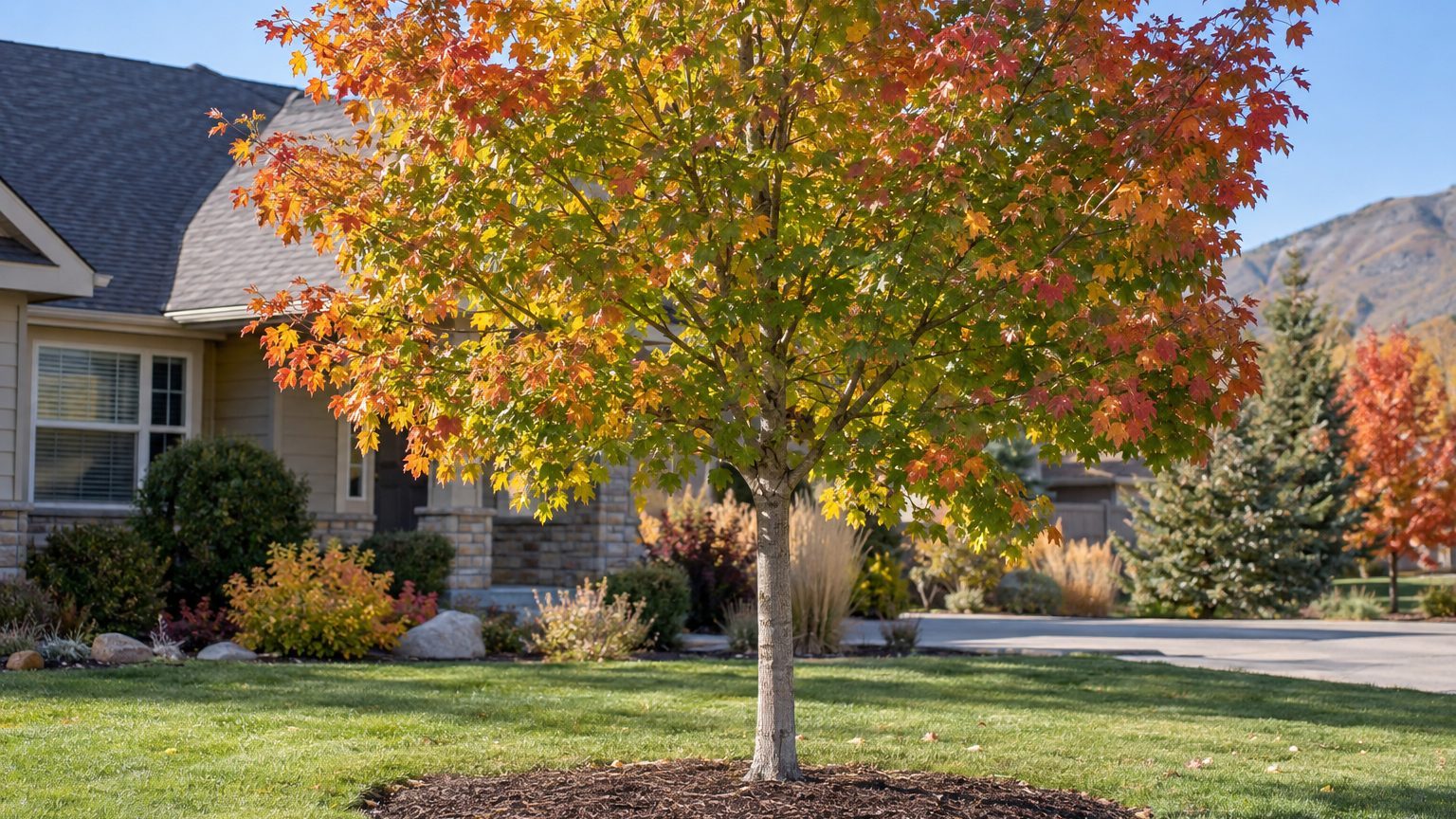
Bare branches in late winter and swelling buds in April mark the stretch when Idaho yards are ready for new trees. Spring is the main window for shade, ornamental and fruit trees, and fall gives container and balled-and-burlapped trees a second chance. Idaho spans a wide range of elevations, so the timing shifts from valley to mountain.
When Is the Best Time to Plant Trees in Idaho?

Shade and ornamental trees go in best in April and May, while the buds are still tight and the soil has thawed, with fall as a fallback for trees sold in containers or with a burlapped root ball.
- In April, plant while buds are still closed and the tree is dormant, so the roots can start working before leaves demand water.
- In May, container and balled-and-burlapped trees still settle well, as long as the soil stays moist and the weather has not turned hot.
- Through summer, hold off, because heat and dry soil stress new roots and make it the hardest season to plant.
- In September and October, container and balled-and-burlapped trees can go in while the soil is still warm enough for roots to keep growing.
- After a fall planting, keep watering until the ground freezes, since roots need moisture long after the leaves drop.
Bare-root trees are a spring job only, planted dormant before the buds open. Some species do better in spring than in fall, including magnolia, dogwood, tuliptree, sweet gum, red maple, birch, hawthorn, poplars, cherries, plums and many oaks. In Boise, the last spring freeze falls between April 23 and May 7 and the first fall freeze between October 7 and October 21. Boise sits in a low valley, and most of Idaho is higher and colder, with far shorter seasons. The USDA hardiness zone system spans 3b to 7b across the state, so mountain towns plant later in spring and finish earlier in fall than the Treasure Valley.
Idaho — the year and the numbers
- State
- Idaho
- USDA zones
- 3b-7b
- Last spring frost
- April 23 to May 7
- First fall frost
- October 7 to October 21
- Annual rain
- 12 in
- Lawn zone
- transition-season
- Source
- NOAA NCEI 1991-2020 Climate Normals, 32F freeze probabilities · Boise
When to Plant Fruit Trees in Idaho
April is the month for planting fruit trees in Idaho, with March and May as workable alternatives when the weather cooperates. Bare-root fruit trees go in only in spring, while they are still dormant, so plant them as soon as the soil can be worked.
Container-grown fruit trees are more forgiving. They can be planted most of the year if watered, but they settle best during the dormant season.
| Kind of fruit tree | When to plant in Idaho | Why then |
|---|---|---|
| Bare-root | April, or March and May if the soil is workable | The tree is dormant and the buds have not opened |
| Container | April, with March and May also working | Roots settle best in the dormant season, and watering carries the tree through |
Wait for workable soil rather than a date on the calendar. Soil that is frozen or sticky with meltwater is a poor place to set roots, and a few days of patience costs the tree nothing. Dwarf apples are not as cold-hardy as semi-dwarf trees, which is worth remembering in the colder parts of Idaho.
Best Trees to Plant in Idaho
Idaho winters and dry summers favor tough, drought-tolerant shade and ornamental trees. Chinkapin oak and crabapple are two that fit, though the right pick still depends on your space, sun and hardiness zone.
Local conditions vary from the Treasure Valley to the mountains, so match the tree to your own yard before buying.
| Tree | How it does in Idaho | Why |
|---|---|---|
| Chinkapin oak | Suited to hardiness zones 4 to 7 | Low-maintenance, long-lived and moderately salt tolerant, with no serious pests |
| Crabapple | Handles dry summers once established | Fairly drought tolerant, needing only a modest amount of annual moisture from rain plus any watering |
Crabapple varieties differ in disease resistance, and some are more susceptible than others. Ratings from the National Crabapple Evaluation Program, started in the early 1980s, help you choose a cultivar that holds up. Higher elevations call for extra care in selection, so ask a local nursery which cultivars have done well near you.
When to Plant, Water and Prune Trees in Idaho
Planting, watering and pruning each follow their own season. A young tree needs water while the ground is open, and a fruit tree is pruned only while dormant.
| Task | Best timing in Idaho | Why then |
|---|---|---|
| Plant shade and ornamental trees | April and May, or September and October for container and balled-and-burlapped trees | Buds are closed in spring, and fall soil is still warm enough for roots |
| Plant fruit trees | April, with March and May as alternatives | Bare-root trees must go in dormant |
| Water a young tree | Regularly through the first seasons, and in fall until the ground freezes | Roots are still small and cannot reach deep moisture |
| Prune fruit trees | February and March, with April as a fallback | After the worst cold and before the buds swell |
Peaches are pruned last, closest to bloom, because their flower buds are easily hurt by cold. Apples are pruned first. Pruning in fall or early winter invites new growth that may not harden before the cold. Details on pruning are on the page for when to prune fruit trees in Idaho.
Where to Get Tree Advice in Idaho
Elevation, soil and microclimate change from one Idaho county to the next, so local advice sharpens any general rule.
- University of Idaho Extension offers guidance on choosing species and planting, and a visit in late winter gives you time to plan.
- Your county extension office can advise on which trees suit your site and on soil testing, ideally before you buy.
Common Questions
Can You Plant a Tree in Summer in Idaho?
You can if the tree comes in a container and you keep the root zone moist, but it is a hard season for new roots. Wait for April or May, or for September and October, when planting is easier on the tree.
Should You Plant Bare-Root Trees in Fall?
Bare-root trees belong in the ground in spring, while they are still dormant. Fall is a time for container and balled-and-burlapped stock.
How Long Do You Water a Tree Planted in Fall?
Water until the ground freezes. Roots keep working in cool soil, and a dry autumn can leave a new tree short on moisture going into winter.