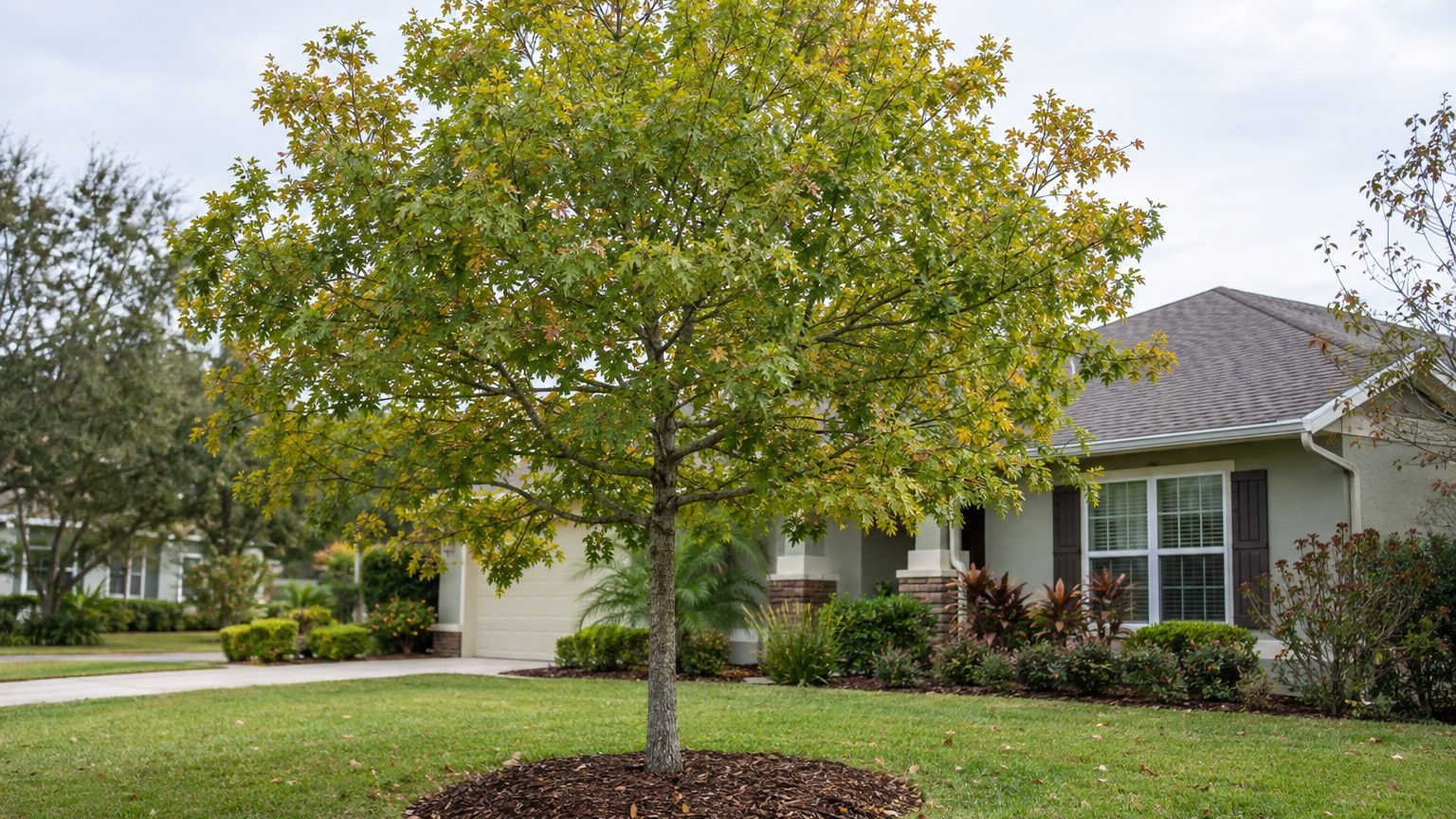
Newly planted trees in a Florida yard settle well when the rains arrive, because the soil stays warm and moist. For shade and ornamental trees that points to early summer, while fruit trees follow a winter rhythm.
When Is the Best Time to Plant Trees in Florida?

Shade and ornamental trees go in during June and July, early in the rainy season, and the reasons run through the whole year.
- In winter, north Florida still sees freezing nights, so a tender young tree planted then must face the cold while it is still establishing.
- As early summer arrives, the rains start to build, and new trees begin to get the moisture they need.
- In June and July, rain falls often enough that new roots spread into warm, damp ground with little hand watering.
- In the dry months, any tree you plant needs a hose or irrigation line within reach, because rain will not do the job.
- In south Florida, a container-grown tree can go in at any time of year as long as you can water it.
Balled-and-burlapped trees and container trees follow this rainy-season timing. Frost dates matter mostly in north Florida, in hardiness zone 8b (USDA system) at the cold end of a range that climbs to 11b. At Jacksonville, the last spring freeze falls between February 16 and March 7, and the first fall freeze arrives between November 26 and December 13. Central and south Florida are effectively frost-free, so summer heat is the hard part there, not winter cold.
Florida — the year and the numbers
- State
- Florida
- USDA zones
- 8b-11b
- Last spring frost
- February 16 to March 7
- First fall frost
- November 26 to December 13
- Annual rain
- 53 in
- Lawn zone
- warm-season
- Source
- NOAA NCEI 1991-2020 Climate Normals, 32F freeze probabilities · Jacksonville
When to Plant Fruit Trees in Florida
Fruit trees go in during December and January, and February works as well when winter planting slips by. Deciduous kinds are planted while they are dormant, which gives the roots time to settle before spring growth pushes the buds open.
Bare-root trees that are one or two years old do best in the dormant season, planted before the buds open. Container-grown fruit trees can go in at any time of year, though they settle best in winter.
| Kind of fruit tree | When to plant in Florida | Why then |
|---|---|---|
| Bare-root | Late December through January | Roots establish before spring growth begins |
| Container-grown | December and January, though any time of year works | Planting in the dormant season gives the best settling |
February remains a fallback for deciduous fruit trees if the holidays pass without a shovel in the ground. Pruning is a separate job with its own timing, so keep it apart from planting day.
Best Trees to Plant in Florida
Florida’s heat, drought and sandy or compacted soils reward tough, adaptable trees. Native and well-adapted choices handle the conditions in different parts of the state, while some popular trees from cooler climates do not.
| Tree | How it does in Florida | Why |
|---|---|---|
| Native beachfront shade tree | Hardy and adaptable | Suits coastal sites |
| South Florida’s native pine | Hard to establish on a home site | Does best in a group and will not survive compacted soil |
| Star magnolia | Suited to zones 5A through 8B, so north Florida only | Slow growing, with good pest and disease resistance and a showy spring bloom |
| Loquat | Among the best-adapted fruit trees for north-central Florida | Very cold hardy and able to endure long drought |
| Sand pear | Grows in zones 5 through 9 | Tolerates drought once established and likes well-drained soil |
Star magnolia will not tolerate salt, drought or root competition, so keep it away from the coast and from bigger trees. Sand pears may still want water every 7-10 days in the dry season. Figs such as Celeste, Brown Turkey and Ischia are recommended cold-hardy cultivars, and apples, pears and the native mayhaw also do well.
When to Plant, Water and Prune Trees in Florida
The year brings a different rhythm for planting by tree type, watering through dry spells and pruning fruit trees while they sleep. Each follows the weather more than the date on the wall.
| Task | Best timing in Florida | Why then |
|---|---|---|
| Plant shade and ornamental trees | June and July | Early in the rainy season, roots grow in warm, moist soil |
| Plant fruit trees | December and January | Dormant trees root in before spring growth |
| Water a young tree | Regularly through the dry season and after any winter planting | New roots cannot yet reach deep moisture |
| Prune a deciduous fruit tree | January and February | Late winter, while the tree is dormant, before the buds swell |
Skip pruning in fall or early winter, because new growth may not harden before cold arrives. Peaches are pruned last, closest to bloom, since their flower buds are easily hurt by cold, while apples go first. More detail lives on the page about when to prune fruit trees in Florida.
Where to Get Tree Advice in Florida
UF/IFAS Extension answers tree questions for every Florida county, and the local office knows the soil and climate where you live.
- Call or visit your county extension office to ask which species suit your soil and how much room a tree needs.
- Ask the office about a soil test before planting, since the result tells you what the ground lacks.
Before a June planting, check that a hose reaches the spot.
Common Questions
Can You Plant a Tree in Florida in Summer?
Yes. Early summer rains help new roots establish, and a container-grown tree can go in whenever you can keep it watered.
Can You Plant Fruit Trees in Florida After January?
Yes. February still works for deciduous fruit trees, and container-grown trees can be planted at any time of year.
Does Frost Affect When to Plant Trees in Florida?
Only in the north of the state. Central and south Florida are effectively frost-free, so heat and water matter more than cold there.