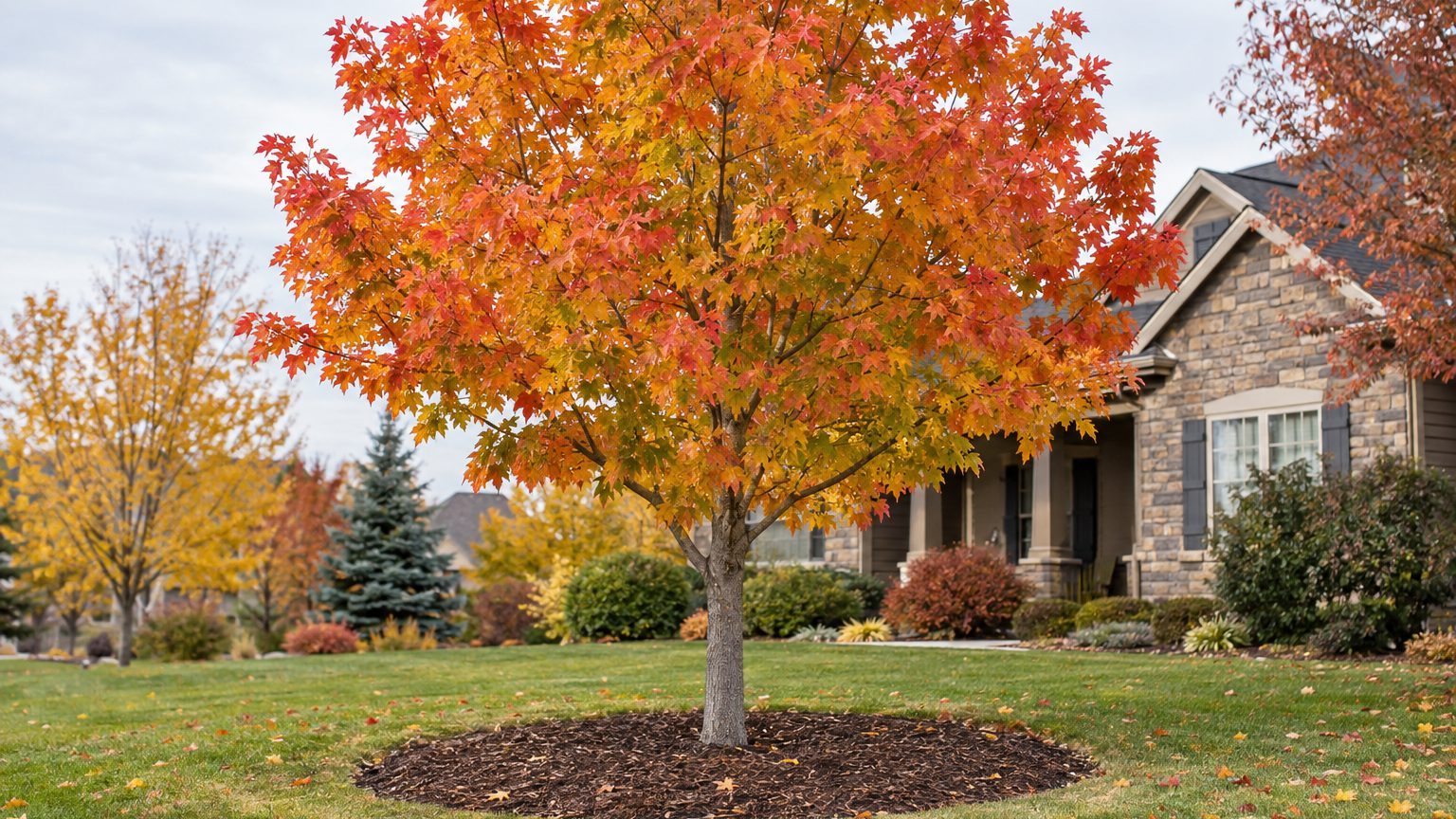
Colorado yards come alive in April, when buds on a crabapple are still tight and the ground has finally let go of winter. That is also when a new tree settles in best. Shade trees, ornamentals and fruit trees each have a window, and a few simple signs tell you when it is open.
When Is the Best Time to Plant Trees in Colorado?

Shade and ornamental trees go in during April and May, while the buds are still closed and the soil has thawed, and container or balled-and-burlapped trees can also go in during September and October.
- In April, plant while the tree is still dormant and the buds are tight, so the roots can start working before leaves demand water.
- In May, container and balled-and-burlapped trees still go in well, as long as you water them regularly once the weather turns warm.
- In summer, hold off if you can, because heat and dry soil stress new roots more than any other season.
- In September and October, container and balled-and-burlapped trees can go in while the soil is still warm enough for roots to grow, and you water until the ground freezes.
- In the dormant season, container trees settle in best, though they can be planted most of the year if you keep them watered.
Some trees do better planted in spring than in fall, including magnolia, dogwood, tuliptree, sweet gum, red maple, birch, hawthorn, poplars, cherries, plums and many oaks. Around Denver, the last spring freeze usually falls between May 1 and May 11, and the first fall freeze between September 30 and October 12. Denver sits at 5,280 feet on the plains, but the state spans USDA zones 3b to 7b. Mountain towns have far shorter seasons and can frost in July, and the western slope differs again, so a county extension office can tell you what holds for your elevation.
Colorado — the year and the numbers
- State
- Colorado
- USDA zones
- 3b-7b
- Last spring frost
- May 1 to May 11
- First fall frost
- September 30 to October 12
- Annual rain
- 15 in
- Lawn zone
- transition-season
- Source
- NOAA NCEI 1991-2020 Climate Normals, 32F freeze probabilities · Denver
When to Plant Fruit Trees in Colorado
April is the month for planting fruit trees, and March or May also work when the soil is workable. Bare-root trees go in only in spring, while they are still dormant and before the buds open.
A bare-root tree has no soil around its roots, so it needs to wake up in the ground rather than on a shelf. Container-grown fruit trees are more forgiving and can be planted most of the year with regular watering.
| Kind of fruit tree | When to plant in Colorado | Why then |
|---|---|---|
| Bare-root | April, or March and May | The tree is still dormant and the buds have not opened |
| Container | April, or March and May | Roots settle best in the dormant season, and watering carries the tree through the rest of the year |
Dwarf apple trees suit home gardens but need careful training and staking, and they are less cold-hardy than semi-dwarf trees. That matters in a state where winter lows swing as widely as they do here.
Best Trees to Plant in Colorado
Crabapples are the ornamental tree Colorado extension guidance singles out for the state’s soils and climate. They handle dry spells well once established, and chinkapin oak is considered low-maintenance and long-lived.
Whatever you choose, match the tree to your space, your sun and your zone before you buy.
| Tree | How it does in Colorado | Why |
|---|---|---|
| Crabapple | Well adapted to Colorado soils and climate | Fairly drought tolerant once established, needing only 15 to 20 inches of annual moisture from rain plus any watering |
| Chinkapin oak | Suited to zones 4 to 7, which covers much of the state | Low-maintenance, long-lived, moderately salt tolerant and free of serious pests |
Crabapple varieties are not equal. Some are more prone to disease than others, and higher elevations call for varieties picked with the cold in mind. The National Crabapple Evaluation Program, started in the early 1980s, rates varieties for ornamental value and disease resistance, which makes it a handy reference before you buy.
When to Plant, Water and Prune Trees in Colorado
Planting, watering and pruning each have their own season, and they do not overlap much. Spring starts the year with planting, fall closes it with watering, and late winter belongs to the pruning saw.
| Task | Best timing in Colorado | Why then |
|---|---|---|
| Plant shade and ornamental trees | April and May, or September and October for container and balled-and-burlapped trees | Buds are closed in spring, and fall soil is still warm enough for roots |
| Plant fruit trees | April, or March and May | Bare-root trees must go in while dormant |
| Water a young tree | Regularly through the growing season, and in fall until the ground freezes | New roots dry out fast in heat and need moisture before winter |
| Prune a fruit tree | February and March, or April | After the worst cold has passed and before bud swell |
Apples are pruned first and peaches last, closest to bloom, since peach flower buds are easily hurt by cold. Avoid pruning fruit trees in fall or early winter, because new growth may not harden before the cold. Late winter also leaves time to apply dormant oil as a preventative spray. The full pruning schedule is on the page called When to Prune Fruit Trees in Colorado.
Where to Get Tree Advice in Colorado
Elevation, soil and exposure change from one Colorado yard to the next, so local advice is worth having before you dig. Two sources are close at hand.
- Colorado State University Extension publishes guides on growing tree fruit and flowering crabapples, and the pages are worth reading before spring planting.
- Your county extension office can advise on which species suit your elevation and can arrange a soil test, so call in late winter before the planting window opens.
Common Questions
Can You Plant a Tree in Summer in Colorado?
You can, if the tree is container-grown and you keep it well watered, but it is the hardest season for it. Heat and dry soil stress new roots, so spring or fall gives a much easier start.
Should You Remove the Burlap When Planting a Balled-and-Burlapped Tree?
Yes, the burlap and any wire basket should come off or be cut away from the top of the ball once the tree sits in its hole. Left in place, they can hold back roots as the tree grows.
How Long Should You Water a Tree Planted in Fall?
Keep watering it until the ground freezes. Roots keep working in cool soil, and a tree that goes into winter with moist ground around it is better prepared for the cold.