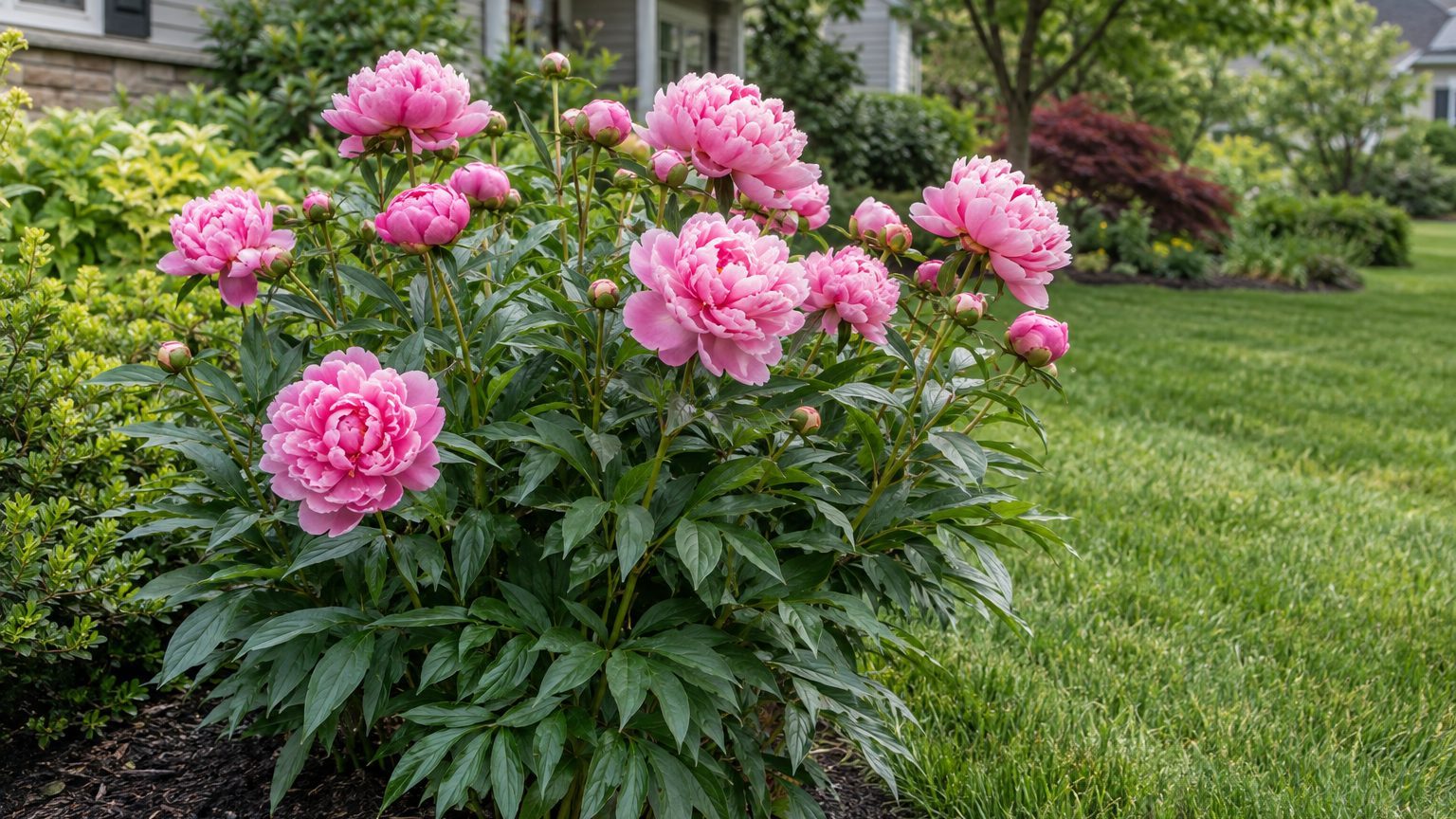
Peony eyes sit just under the soil in early spring, red and pointed, ready to push up into stems that will carry fat buds by late spring. Getting those roots in the ground at the right time decides how soon the show starts. For peonies in Ohio, the planting window falls in early fall, well ahead of hard winter.
When to Plant Peonies in Ohio

Plant or divide peonies in September, or in October at the latest, so the roots settle in while the soil still holds summer warmth and long before it freezes. Here is how the year runs for a peony in Ohio.
- In early spring, red shoots break through the soil, and old stems left standing from the previous year can still be cut back in March or April if they were not removed in fall.
- From May into June, the plants bloom on stems that draw on energy stored during the previous growing season.
- Through summer, the leaves keep working and store food in the roots, which is what carries the plant through winter and into the next bloom.
- In September, or October at the latest, new roots go into the ground or crowded clumps get divided, giving them several weeks to establish before the ground freezes.
- After frost in fall, stems of herbaceous peonies can be cut back, a job that suits October and November.
Frost timing sets the edges of this year. In zone 6a, the last spring frost usually lands between May 5 and May 15, which is why early shoots sometimes get nipped while buds are still forming. The first fall frost arrives between October 5 and October 15, a signal that the planting window is closing. Ohio spans USDA hardiness zones 5b to 6b, and conditions outside Columbus can differ.
Ohio — the year and the numbers
- State
- Ohio
- USDA zones
- 5b-6b
- Last spring frost
- May 5 to May 15
- First fall frost
- October 5 to October 15
- Annual rain
- 42 in
- Lawn zone
- cool-season
- Source
- Ohio State University Extension — Ohio Gardening Calendar · Columbus
Which Peonies Grow Best in Ohio?
Peonies suit Ohio well. They need a cold winter rest to flower, and zones 5b to 6b supply it, so plants bloom reliably and come back year after year. Summer heat is not the obstacle it is in warmer climates.
Home landscapes can include herbaceous, intersectional, tree and woodland peonies.
| Peony type | How it does in Ohio | Why |
|---|---|---|
| Herbaceous (garden) peony | Easy to grow and reliable | Dies back to the ground each fall and sends up new growth each spring |
| Intersectional (Itoh) peony | Easy to grow, with the same routine as herbaceous types | A hybrid of the garden and tree peonies that dies back each fall |
| Tree peony | Suited to the climate with a little more care | A woody shrub that goes dormant over winter and renews growth each spring on woody stems |
Woodland peony (Paeonia japonica) is another type grown in home landscapes. Whichever you choose, keep in mind that a newly planted or transplanted peony may not bloom the first spring.
When to Plant, Cut Back and Feed Peonies in Ohio
Peony work clusters in fall and early spring. The planting and cutting windows below fit Ohio. Feeding has no month of its own here, so it follows the plant: wait until growth is under way in spring rather than fertilizing a dormant clump.
| Task | Best timing in Ohio | Why then |
|---|---|---|
| Plant or divide | September, or October at the latest | Roots have stored food from summer and get several weeks to settle before winter |
| Cut back herbaceous peonies | October and November, after frost | Frost has ended the season for the foliage, and cleanup removes leaves that can carry disease |
| Cut back if fall was missed | March or April | Old stems come off before new red shoots grow tall |
| Feed | Once new growth is up in spring | Active shoots can use the nutrients |
Tree peonies are the exception to cutting back, because they keep their woody stems and are never cut back. For herbaceous types, stems come down close to the ground. When planting, keep the eyes near the soil surface, since a peony set too deep may bloom poorly or not come up at all.
How Peony Planting Dates Change Across Ohio
Ohio is wide enough that the season shifts with location, though the planting months stay the same everywhere. What changes is how soon the cold arrives and how fast spring warms.
- Lake Erie shoreline: the big lake keeps spring cooler and holds fall warmth longer, so shoots may emerge a little later and the planting window can stay open a bit longer.
- Northeast Ohio snowbelt: colder winters and later springs push the season back, so aim for September rather than waiting on October.
- Ohio River valley in the south: spring arrives earlier and fall frost comes later, so shoots and buds move ahead of the north, and October planting is usually still comfortable.
- Columbus and central Ohio: this area sits close to the middle of the pattern, with the typical timing described above.
Nearby microclimates also matter, since a sheltered south wall warms sooner than an open, windy lot.
Where to Get Peony Advice in Ohio
Local soil and yard conditions vary enough that a quick consult can save a season. Start with Ohio State University Extension and your county extension office for guidance suited to your yard.
- County extension offices can help you find soil-testing guidance before planting.
- Extension staff and master gardener volunteers can diagnose a peony that fails to bloom, if you bring photos or a stem sample.
- Calling your local extension office gives you time to prepare the bed before the September planting window opens.
Common Questions
Can You Plant a Peony in Spring in Ohio?
Fall is the better season, because roots need time to settle before winter. A newly planted peony may skip its first spring bloom.
Why Won’t My Peony Bloom in Ohio?
Planting too deep is a common cause, so check that the eyes sit near the soil surface. Check as well that the plant gets sun through the day, since a shaded clump that grows lush leaves but few buds is asking for more light.
Do Peonies Come Back Every Year in Ohio?
Yes. Herbaceous peonies die back each fall and return in spring from the same roots, while tree peonies keep their woody stems and leaf out again. Winters here give the cold rest that keeps them flowering.