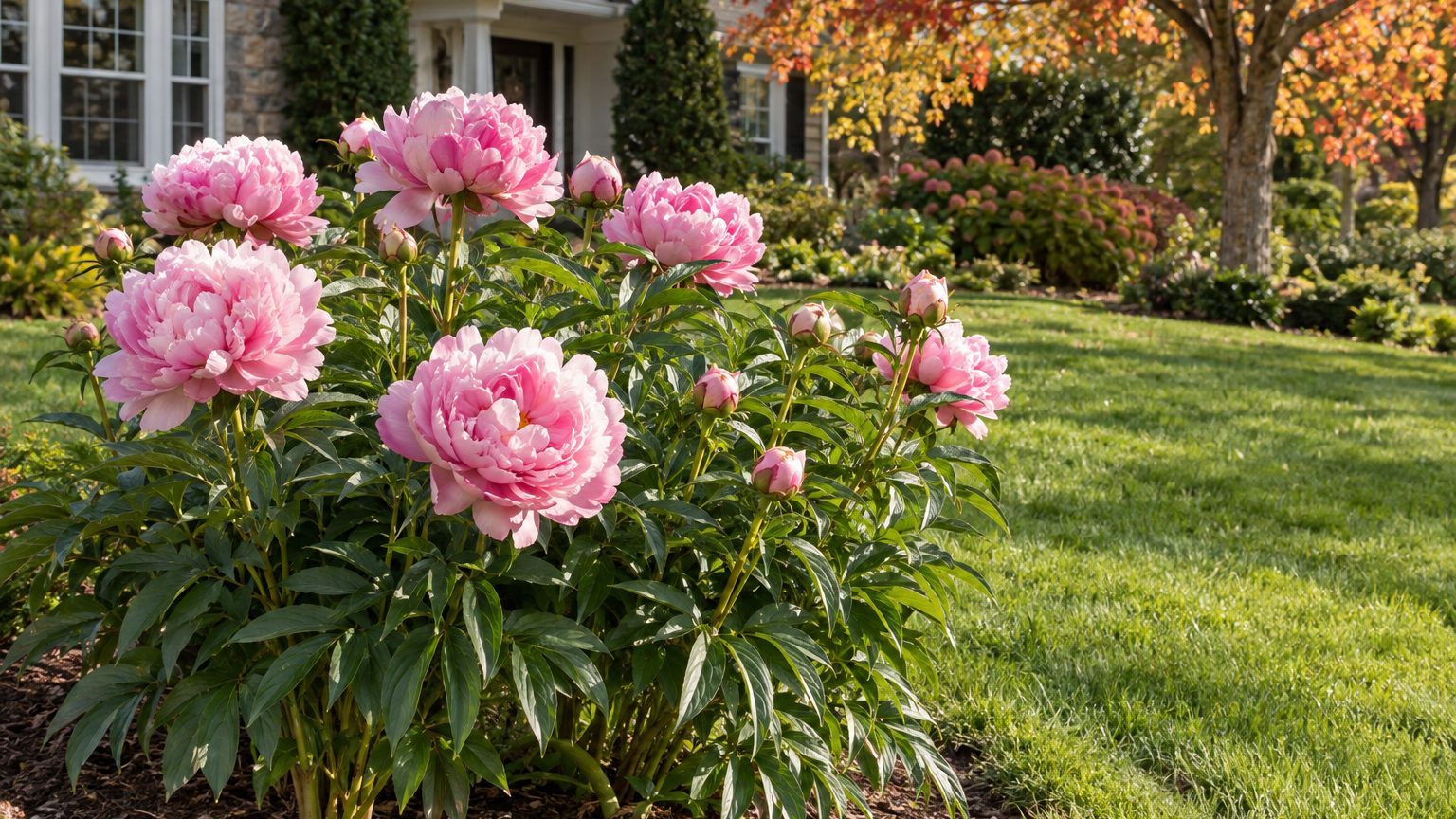
Peony stems pushing up red and fat in a cold spring garden are a sight many Californians never get to see, because most of the state’s gardens are too mild for them. Peonies in California do well in the colder parts and struggle in the warm, frost-free ones. The right moment to plant depends on where your yard sits.
When to Plant Peonies in California

California has no single planting month for peonies, so watch the weather rather than the calendar: plant bare-root peonies before the ground freezes, while the soil is still workable. Here is how the plant’s year unfolds in a yard cold enough to suit it.
- In late winter and early spring, red shoots break the soil as it thaws, and the plant is already counting on the winter chill it has just had.
- Through spring, stems grow, buds swell and flowers open, though a newly planted peony may not bloom its first spring.
- In summer, the foliage keeps feeding the roots, and the plant needs shelter from the worst heat to stay healthy.
- In autumn, as leaves yellow and the roots rest, the planting window opens: set the eyes near the soil surface, because a peony planted too deep may bloom poorly or not come up.
- After the first hard frost, a herbaceous peony dies back and is cut to the ground, while a tree peony keeps its woody stems and is never cut back.
Frost separates California’s climates. Coastal and southern California is frost-free: around Los Angeles, no freeze occurs in an average year, so there is no frost date to plan around. Northern California, the Central Valley and the Sierra do freeze. USDA hardiness zones across the state run from 5a to 11a, which is why a statewide planting rule cannot fit every yard.
California — the year and the numbers
- State
- California
- USDA zones
- 5a-11a
- Frost
- none in an average year
- Annual rain
- 12 in
- Lawn zone
- warm-season
- Source
- NOAA NCEI 1991-2020 Climate Normals · Los Angeles
Which Peonies Grow Best in California?
Peonies need a cold winter rest to flower, so they do best where winters are cold and may flower poorly in mild-winter climates. In frost-free coastal and southern yards, expect disappointment from herbaceous types. Cold-winter parts of the state suit them far better.
Early-blooming cultivars have time to flower before hot weather sets in and are less prone to botrytis blight.
| Peony type | How it does in California | Why |
|---|---|---|
| Herbaceous | Good in cold-winter areas, weak in frost-free ones | Needs winter chill to set flowers |
| Early-blooming herbaceous | Better suited to mild-winter areas | Flowers before summer heat arrives |
| Herbaceous peony in frost-free coastal and southern valleys | Often few or no blooms | Winter chill is too little |
Tree peonies and Itoh hybrids are worth asking about at a local nursery, though no chilling figure is given here for them. As a general rule, peonies need a stretch of cold winter weather, a requirement that mild coastal yards in California often miss.
When to Plant, Cut Back and Feed Peonies in California
Peony chores follow the weather more than the calendar in California, since the state spans snowy mountains and frost-free beaches. Each task below is tied to a sign you can see in your own yard.
There is little local guidance on feeding, so a soil test through your county office is sensible before adding anything.
| Task | Best timing in California | Why then |
|---|---|---|
| Plant bare-root peonies | Before the ground freezes | Roots settle before the cold arrives |
| Set planting depth | At planting, eyes near the soil surface | Deep planting means poor or no bloom |
| Cut back herbaceous peonies | After the first hard frost | Stems have died back and the roots are resting |
| Leave tree peonies alone | Never cut back | Woody stems carry next year’s buds |
| Wait for first blooms | May not bloom the first spring | New plants may need time to settle |
In frost-free yards, no hard frost arrives to signal the cutback. Herbaceous foliage there is cleaned up once it browns and collapses, and the plant is likely to bloom poorly anyway.
How Peony Planting Dates Change Across California
Winter cold is what sets the timing, and California’s cold varies enormously with elevation and distance from the ocean.
- Sierra Nevada foothills and high country: Winters freeze here, so plant while the soil is still workable and peonies can get the cold rest they need.
- Central Valley: Winters freeze, but summers are hot, so choose early bloomers and give afternoon shade.
- Northern California inland: Freezing winters suit peonies better, and planting follows the first signs of autumn cooling.
- Los Angeles and the southern coast: No freeze in an average year, so herbaceous peonies often flower poorly or not at all.
Mild coastal winters may not provide the cold rest peonies need.
Where to Get Peony Advice in California
For a soil test, a diagnosis or a variety suited to your microclimate, local help beats general rules, because California’s conditions change from one valley to the next.
- University of California Agriculture and Natural Resources offers research-based guidance on plants and soil, a good first stop before buying roots.
- Your county extension office and its Master Gardeners can look at a sick plant or advise on a soil test, ideally before autumn planting.
Common Questions
Can You Grow Peonies in Southern California?
You can plant them, but results are uncertain. With no freeze in an average year on the coast, herbaceous peonies often get too little winter chill to flower well.
Should You Water Peonies During Drought Restrictions in California?
Water restrictions are a real constraint in much of the state. Water newly planted roots at the base rather than overhead, and follow your local district’s rules.
Why Won’t a Peony Bloom After Planting?
Check how deep the eyes sit, since too deep means poor bloom, and check whether the plant is new, since first-spring flowers are not guaranteed.