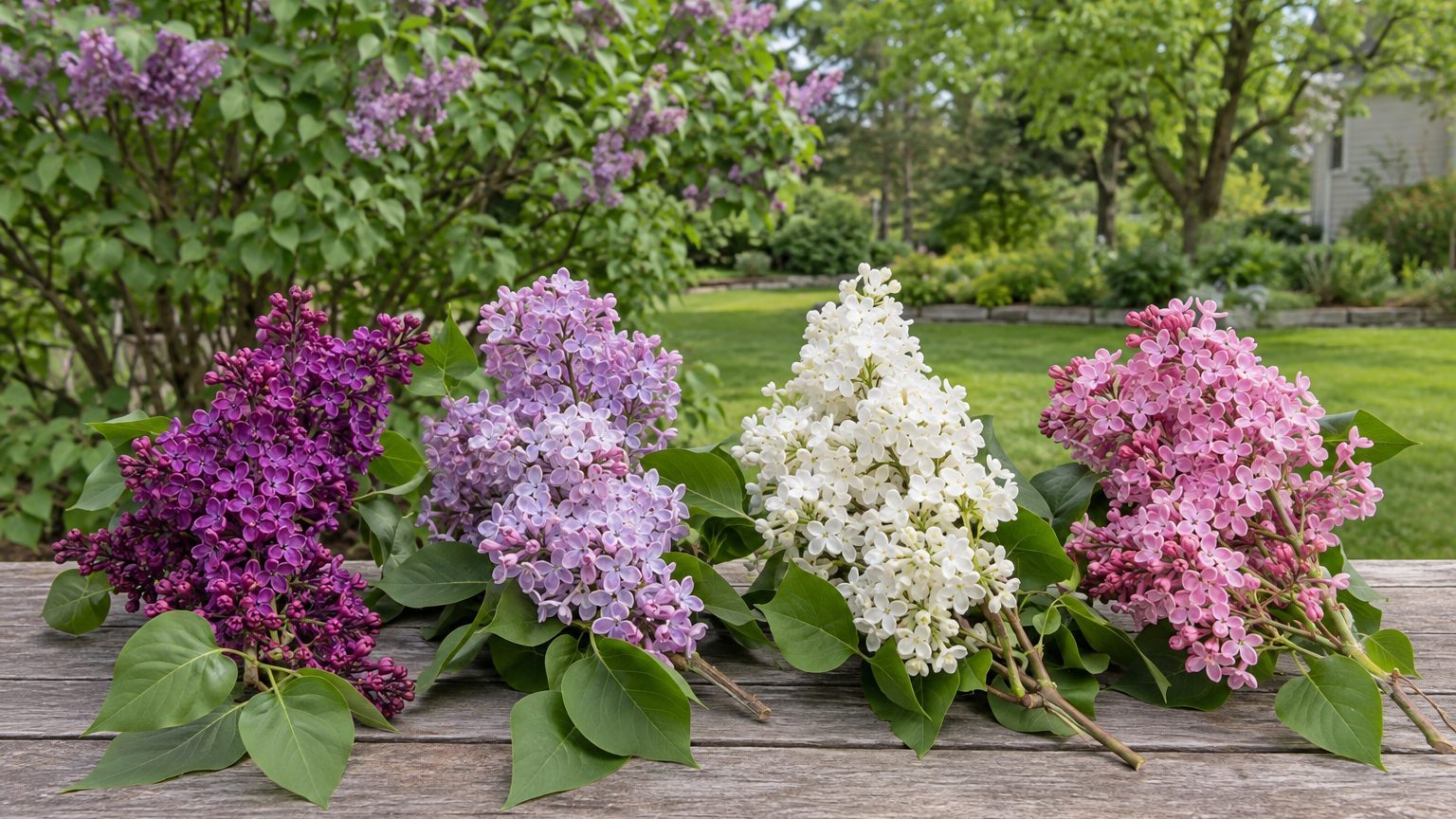
A lilac in full flower is a spring picture most California gardeners want, yet the plant that makes it happen is picky about winter. Lilacs here do well in the cold parts of the state, and only a few kinds will flower where winters stay mild.
Best Lilacs to Grow in California

Lilacs that bloom with little winter chilling, such as the Descanso hybrids and the early-blooming Southern lilacs, tend to do best here, because coastal and southern California never freezes in an average year and the plant needs a cold rest to mature its flower buds. Across the state, USDA hardiness zones run from 5a to 11a, so the right choice depends on where you garden.
Descanso Hybrids

These were developed in Southern California, which is the strongest reason to try them in a warm yard. The white ‘Angel White’, the blue ‘Blue Boy’ and the pink ‘California Rose’ belong to the group.
Choose one of these if you garden on the coast or in the south, where a classic lilac would sulk.
Southern Lilacs
Nurseries often label early-blooming types as Southern lilacs or lilacs for warm climates. They usually grow and bloom where common lilacs will not, though they are not as fragrant as the old-fashioned kind.
Expect a lighter scent and accept it as the trade for flowers.
Low-Chill Varieties
Lilacs grow best where there is a pronounced winter chilling, but some varieties will bloom with only a little. That is the quality to look for on a plant tag if your winters are mild.
Even low-chill cultivars flower best after an extended cold rest, so a cool, open spot beats a warm wall.
Less Blight-Prone Species
Many common lilac cultivars are highly susceptible to bacterial blight and canker in California. Syringa josikaea, S. komarowii, S. microphylla, S. pekinensis and S. reflexa are generally less susceptible.
If you have lost a lilac to blighted shoots before, these species are the safer replacement.
Nadezhda
This double-flowered form has purple buds that open to bluish florets, giving a bicolor look. It performs well in the landscape and shows disease resistance.
It can suit a front yard that has enough room for its mature size.
California — the year and the numbers
- State
- California
- USDA zones
- 5a-11a
- Frost
- none in an average year
- Annual rain
- 12 in
- Lawn zone
- warm-season
- Source
- NOAA NCEI 1991-2020 Climate Normals · Los Angeles
How to Choose a Lilac for a California Garden
Start with your winter. Where it freezes hard, a classic lilac gets the cold rest it wants. Where it never freezes, the plant has to bring its own low chilling requirement.
Then think about summer heat and humidity, which invite mildew, and about how much space and upkeep you can offer.
| Your situation | What suits it in California | Why |
|---|---|---|
| Very cold winter (Sierra, northern interior) | Classic lilacs such as ‘President Lincoln’ | Lilacs grow best with pronounced winter chilling, and this one has a closest-to-true-blue flower |
| Frost-free coast or south | Descanso hybrids and low-chill varieties | Descanso hybrids were developed in Southern California, while low-chill varieties can bloom with little winter chilling. |
| Hot, humid summer | Southern lilacs | Common lilacs struggle in high heat and humidity, which brings powdery mildew |
| Little time for care | Nadezhda | It shows disease resistance and performs well in the landscape |
| Room for a shrub that grows larger over time | Nadezhda | It performs well in the landscape and shows disease resistance, though it grows larger over time. |
| Worry about blight | Syringa pekinensis or S. microphylla | They are generally less susceptible to bacterial blight and canker |
A tall, upright variety like ‘President Grevy’ offers double lilac-blue flowers in large clusters, but it grows very tall, so it needs real room.
Which Lilacs Suit Different Parts of California
California covers coast, valley and mountains, and the lilac you pick should follow the winter you actually get.
- Sierra Nevada: Winters freeze here, so classic lilacs get the cold rest they need to set flower buds.
- Central Valley: Freezes do happen, which helps buds mature, though hot summers still favor tougher, disease-resistant choices.
- Los Angeles and the southern coast: No freeze occurs in an average year, so the Descanso hybrids and other low-chill types are the sensible bet.
- Northern California: Frost returns here, which opens the door to more classic varieties than the south can hold.
Never assume the mild coast speaks for the whole state, because the cold interior behaves very differently.
Lilac Buying Mistakes to Avoid in California
Ignoring Chill Needs
A variety that needs more cold than your yard provides may leaf out but flower poorly. Look for low-chill or early-blooming labels if your winters are mild.
A cool, open spot helps a little, but it cannot turn a high-chill plant into a low-chill one.
Choosing a Blight-Prone Type
Many common lilac cultivars are highly susceptible to bacterial blight and canker, and a diseased shrub means dead shoots and a replacement purchase. Ask for one of the less susceptible species or a variety noted for disease resistance, such as Nadezhda.
Forgetting Adult Size
A lilac in a pot looks modest, but ‘President Grevy’ grows into a large shrub, both tall and broad. Planted beside a walkway, it will need constant cutting back.
Check the mature size on the tag and give it space. Once it is planted, prune right after the flowers fade, because the next flower buds form in summer and later cuts remove them.
Where to Get Lilac Advice in California
Local winters vary so much that the best advice is local. The state’s extension network connects you with people who know which lilacs have worked in your area.
- The University of California Agriculture and Natural Resources site offers plant guides and pest advice, handy before you buy.
- Your county extension office can tell you which varieties suit your neighborhood’s winters.
- Call or visit before planting, or when leaves show spots or shoots die back.
Common Questions
Are Southern Lilacs as Fragrant as Common Lilacs?
No. They usually grow and bloom in mild climates, but they are not as fragrant as the lilacs gardeners in cold regions know.
Why Do Lilac Leaves Get a White Coating?
A white powdery film on the leaves, especially during a hot, humid spell, points to powdery mildew. Common lilacs struggle in that weather, so a Southern lilac or a Descanso hybrid is the better replacement.
Which Lilac Has the Truest Blue Flowers?
‘President Lincoln’ is widely acknowledged as producing flowers closest to true blue. Its single florets are arranged in loose conical clusters.