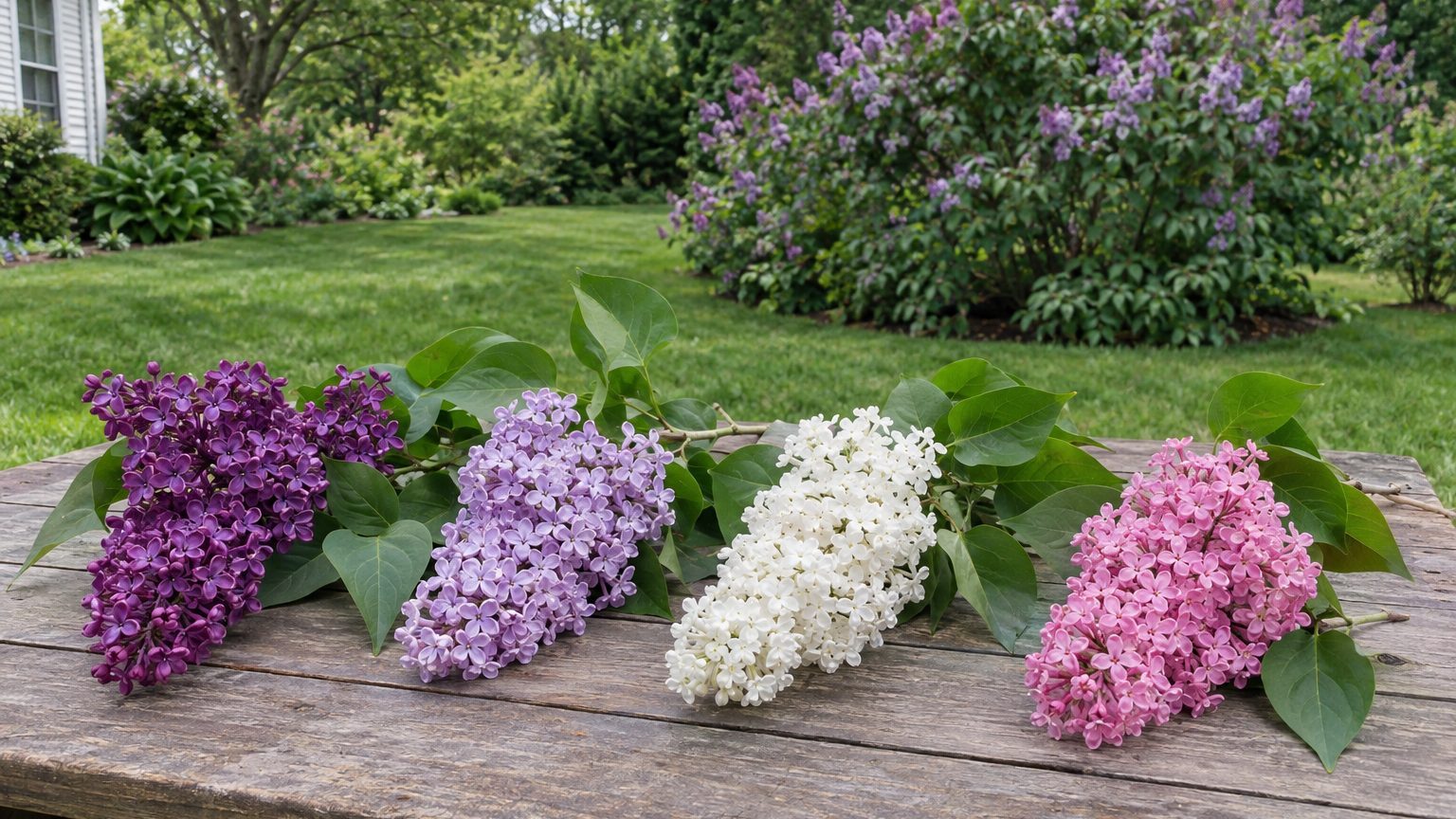
Lilacs open in April and May across Arkansas, and the gardens where the flowers return year after year usually have a heat-tolerant lilac rather than the classic common lilac. Heat and humidity decide which lilacs last here.
Best Lilacs to Grow in Arkansas

Lilacs want a long, cold winter rest to ripen their flower buds, and much of Arkansas is too warm and muggy to give it. Good options include the Miss Kim lilac and the Korean early lilac, while the classic common lilac is better kept for the cooler corners of the state.
Miss Kim Lilac

‘Miss Kim’ is a cultivar of Syringa patula, and it has been publicized as a lilac that can take hot Southern conditions. That reputation is the reason to start here if your summers are sticky.
Give it the same cold-winter chance as any lilac and plant it where air moves freely around the leaves.
Korean Early Lilac

Syringa oblata var. dilatata, a variety of the Korean early lilac, has been mentioned as a candidate for warm-climate gardens. Treat it as a worthwhile experiment rather than a sure thing.
It makes a sensible alternative if you want something other than ‘Miss Kim’ and like trying promising plants.
Bloomerang Lilac
The Bloomerang group is known for blooming in spring, then again in summer and fall. That repeat show is its main attraction.
Like nearly all lilacs, though, Bloomerang needs a period of cold weather to bloom well, so a mild winter will thin the display.
Common Lilac
Syringa vulgaris is the lilac most people picture. Despite plenty of cultivars sold with heat-tolerance claims, they often do not thrive in central and southern Arkansas the way they do in more northern climates.
Long hot, humid spells invite powdery mildew. Keep common lilac for cooler sites in the northern part of the state.
Arkansas — the year and the numbers
- State
- Arkansas
- USDA zones
- 6b-8a
- Last spring frost
- March 12 to March 28
- First fall frost
- November 7 to November 20
- Annual rain
- 50 in
- Lawn zone
- warm-season
- Source
- NOAA NCEI 1991-2020 Climate Normals, 32F freeze probabilities · Little Rock
How to Choose a Lilac for an Arkansas Garden
Start with your summer, because heat and humidity cause more trouble here than winter cold does. Then think about how much winter chill your spot gets, since even the low-chill cultivars perform best after an extended, cold rest.
Match the plant to the yard you actually have, not the one the plant tag imagines.
| Your situation | What suits it in Arkansas | Why |
|---|---|---|
| Hot, humid summers in central or southern Arkansas | ‘Miss Kim’ or the Korean early lilac | Common lilacs struggle in heat and humidity and pick up powdery mildew |
| Cooler yard in the northern part of the state | Common lilac | It does better in more northern climates and wants a cold winter rest |
| Want flowers that bloom again and again | Bloomerang group | It blooms in spring, then again in summer and fall, but still needs cold weather |
| Late spring frosts in your area | Skip the early-blooming Hyacinthifloras | They bloom earlier than French hybrids and suit places where frosts come less often |
| Little time for upkeep | Any of the above | Lilacs should only be pruned as needed, right after bloom |
Not every lilac has the same track record in Arkansas, so a plant with limited local proof deserves a spot where a failure will not hurt.
Which Lilacs Suit Different Parts of Arkansas
The farther north and higher you garden, the better a lilac’s odds, because the cold winter rest it craves is easier to come by there.
- The Ozarks and northwest Arkansas: This is the part of the state where common lilac has its best shot, since the climate is closer to the cold-winter, cooler-summer conditions lilacs prefer.
- Central Arkansas around Little Rock: Common lilac often struggles in the heat and humidity here, so lean toward ‘Miss Kim’ or the Korean early lilac and expect mildew pressure on anything else.
- South Arkansas and the Delta: Summers are hot and sticky, and common lilac does not thrive as well as it does farther north. Treat any lilac as a small experiment with a heat-tolerant type.
Wherever you live, give any lilac the coolest, airiest spot the yard offers.
Lilac Buying Mistakes to Avoid in Arkansas
Trusting Heat-Tolerant Labels
Plenty of common lilac cultivars are sold with heat-tolerance claims, yet in central and southern Arkansas they often do not thrive. The cost is a shrub that fights mildew every summer and flowers poorly.
Choose ‘Miss Kim’ or the Korean early lilac for those regions, and keep common lilac for northern sites.
Buying More Winter Chill than You Get
Bloomerang and other lilacs need cold weather to bloom well, and even low-chill cultivars do best after an extended cold winter rest. In a mild winter the buds do not mature fully and flowers come up thin.
Plant in the coolest part of the yard and set your expectations to match, rather than assuming a low-chill tag guarantees heavy bloom.
Ignoring Adult Size in the Pot
A small lilac in a nursery container grows into a sizable shrub, and one planted too close to a walk or foundation soon needs cutting back. Read the tag for mature width, then allow that space from the start.
A lilac sets its next flower buds in summer, soon after it blooms, so prune right after the flowers fade, in May or June, and no later than July 10. Pruning in late summer, fall or winter removes the following spring’s flowers.
Where to Get Lilac Advice in Arkansas
Local experience beats a plant tag, and good local help is close at hand: University of Arkansas Extension and your county extension office.
- The extension lilac page covers which types cope with heat and humidity, and it is worth reading before you buy.
- Your county office can tell you which lilacs have lasted in neighbors’ yards nearby, so call before spring planting.
Common Questions
When Do Lilacs Bloom in Arkansas?
Lilacs typically flower in April and May here. A late freeze can still catch opening buds, and light frost is possible at Little Rock until April 3, so watch the forecast once color shows.
Are Lilacs Hardy Enough for Arkansas Winters?
Cold itself is rarely the problem. The state falls in USDA zones 6b to 8a, and the real limit on lilacs is heat and humidity in summer plus too little winter chill in the warmer parts.
What Is the White Powder on My Lilac Leaves?
White, dusty patches on the leaves, appearing mostly during hot, humid stretches on a common lilac, point to powdery mildew. Good air flow around the shrub may help with humidity, while a heat-tolerant type such as ‘Miss Kim’ is better suited to warm Southern conditions.