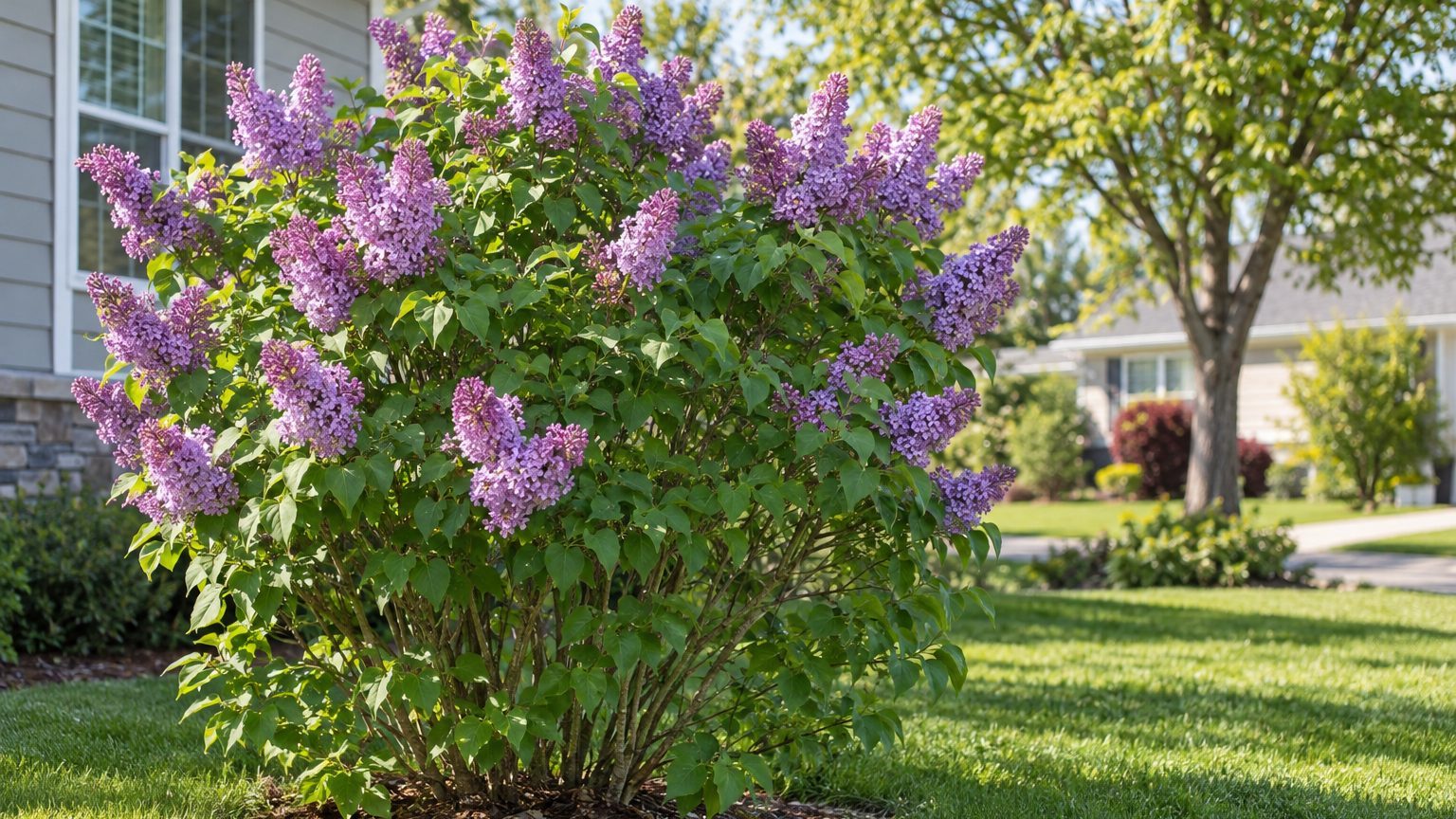
A lilac in full bloom announces itself from the sidewalk, with a scent that carries well past the property line. In South Dakota that show belongs to late spring, and the plants are built for the state’s hard winters. What follows is when the flowers open, which lilacs suit the state, and when each yard task fits.
When Do Lilacs Bloom in South Dakota?

Lilacs bloom in South Dakota from May into June, with the common lilac opening first and the late and tree lilacs closing out the season in June. A lilac’s year runs like this:
- In May, the common lilac opens its fragrant clusters, and the show carries on as other types come into flower.
- In June, the late lilacs and tree lilacs take over, and this is also the month to prune, right after the flowers fade.
- In early summer, the shrub sets next year’s flower buds on the new growth, so cutting it later in the season removes spring’s flowers.
- Through late summer and fall, the plant simply grows and hardens off, needing no special attention beyond ordinary watering in dry spells.
- In winter, the shrub rests in the cold, and that rest is what matures the buds for the next spring.
Frost dates matter for the opening flowers. At the reference city, the last spring frost falls between April 29 and May 9, and the first fall frost arrives between September 24 and October 4. Suburban and rural yards usually freeze later in spring and earlier in fall, often by one to two weeks, and more so at elevation, so check your own county. The state spans USDA hardiness zones 3b to 5b, which suits lilacs well.
South Dakota — the year and the numbers
- State
- South Dakota
- USDA zones
- 3b-5b
- Last spring frost
- April 29 to May 9
- First fall frost
- September 24 to October 4
- Annual rain
- 28 in
- Lawn zone
- cool-season
- Source
- NOAA NCEI 1991-2020 Climate Normals, 32F freeze probabilities · Sioux Falls
Which Lilacs Grow Best in South Dakota?
Lilacs do well in South Dakota. They need a cold winter rest to mature their flower buds, and the state’s winters provide it. They struggle in hot, humid summers.
Lilacs are adapted to zones 3, 4 and 5, and they thrive in sunny spots with good air circulation. Several types fit the state.
| Lilac type | How it does in South Dakota | Why |
|---|---|---|
| Common lilac | Reliable, opens first in May | Hardy in zones 3 to 5, needs winter cold |
| Late lilacs | Bloom in June, after the common lilac | Extend the season past the first flush |
| Tree lilacs | Bloom in June | Close the lilac season with a late show |
| Hyacinthiflora hybrids | Hardy, but need a frost-aware spot | Bloom earlier than French hybrids |
Because hyacinthifloras flower early, plant them where late frosts are less frequent. Extension advice puts it just that way, and the same logic applies to a cold snap after budbreak anywhere in South Dakota. Hybrids of Syringa oblata and Syringa vulgaris are also well suited to cold climates.
When to Plant, Prune and Feed Lilacs in South Dakota
A lilac blooms on last year’s wood, so the pruning moment decides next spring’s flowers. Prune right after the flowers fade, because cutting in late summer, fall or winter removes the buds already formed.
| Task | Best timing in South Dakota | Why then |
|---|---|---|
| Enjoying the bloom | May into June | Common lilac first, late and tree lilacs in June |
| Routine pruning | June, right after the flowers fade | Prompt pruning avoids removing next year’s buds |
| Pruning while dormant | March or April | Easy to see the shape, but this spring’s flowers are lost |
| Hard renovation of an overgrown shrub | March or April | The plant is dormant and regrows from the base |
An overgrown lilac can be cut back hard in late winter, but it will not flower for a few years afterward. Choose that route only when the shrub is too tall or woody to fix gradually. Planting and feeding months are not set here. For pruning in detail, see the page on when to prune lilacs in South Dakota.
How Lilac Bloom Time Changes Across South Dakota
Bloom time shifts with local weather, and the state’s regions do not move in lockstep.
- Black Hills: Higher ground stays cooler and holds frost later, so lilacs here open later than on the plains and face more risk from a late freeze.
- Sioux Falls and the southeast: Sioux Falls is the reference point for the frost dates above, so check your county before treating them as local dates.
- Rapid City and the western plains: Local bloom timing can differ from the statewide window, so watch the flowers in your own yard.
Within any town, a south-facing wall or a spot sheltered from wind may open earlier than an exposed corner.
Where to Get Lilac Advice in South Dakota
For a diagnosis, a soil test or a local question, South Dakota State University Extension is the place to start, and its county offices know the conditions where you live.
- Your county extension office can look at a leaf or a stem that worries you, so bring a sample when the problem appears.
- A soil test through the office helps before planting a new lilac, so schedule it when the ground is workable.
- The extension website carries guides on shrubs and pruning that you can read before the next bloom.
Common Questions
Why Is My Lilac Not Blooming?
Certain signs point to the likely cause. If the shrub is leafy and healthy but sits in shade, it needs more sun to set buds. If it was cut back in late summer, fall, or winter, the flower buds were probably removed along with the branches.
Can You Move a Lilac in South Dakota?
Yes, a lilac can be moved while it is dormant, in late winter or early spring, when the soil is workable. Dig a wide root ball, replant in full sun, and water regularly as it settles. Expect fewer flowers after the move.
Do Lilacs Need Winter Protection in South Dakota?
Established lilacs are hardy across the state’s zones and need no wrapping. The cold actually helps by maturing the flower buds. Young plants benefit from a layer of mulch, and a sheltered site keeps early-opening types from frost damage in spring.