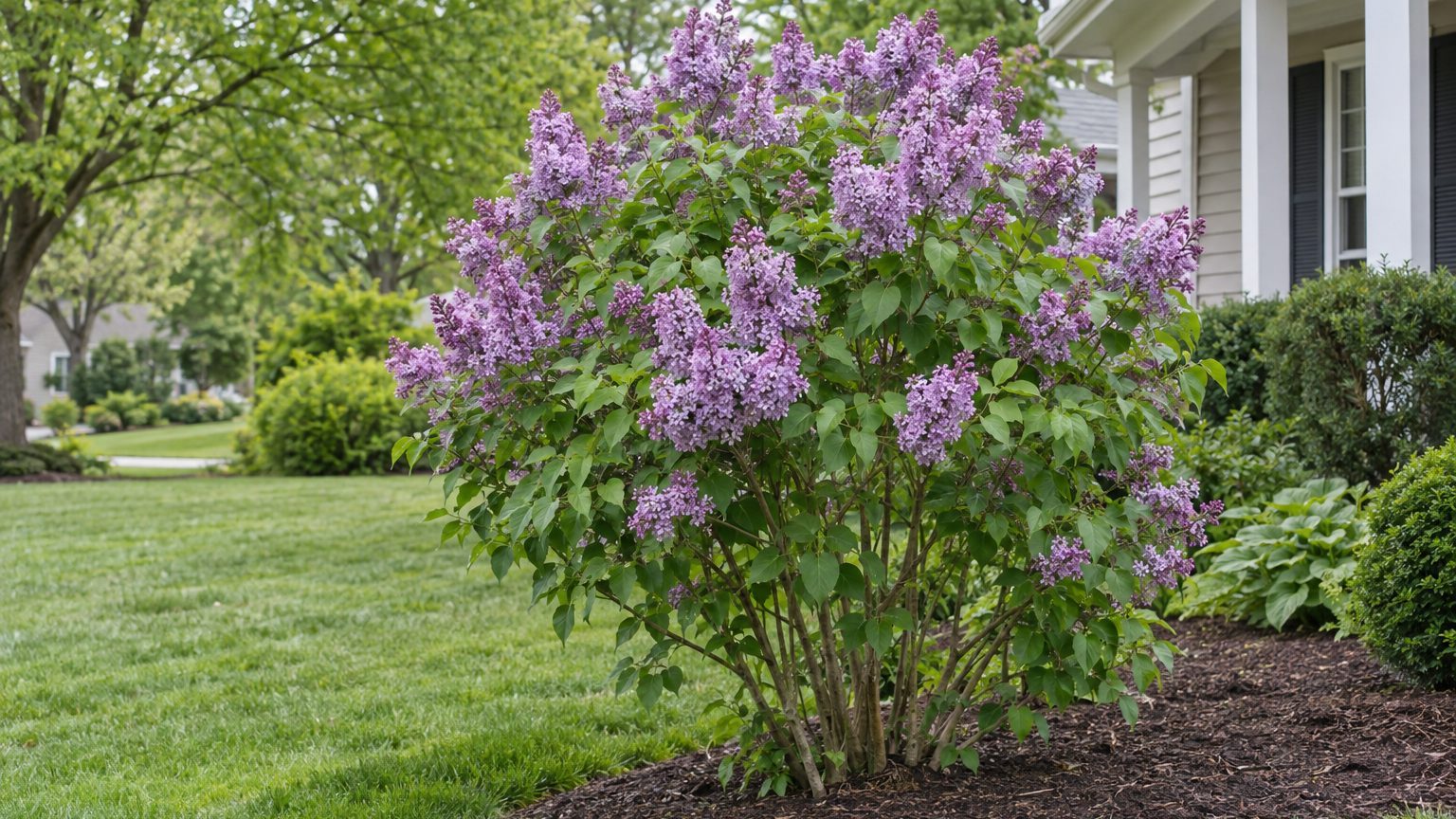
A lilac in a South Carolina yard often leafs out nicely and then skips the flowers, because the plant came from a place with real winters. Bloom time here follows the local spring, and the honest answer depends on how much cold your winter delivers and which kind of lilac you planted.
When Do Lilacs Bloom in South Carolina?

Lilacs bloom with the local spring, as the weather turns mild and leaves are fully out, and the rest of their year is built around that display.
- In spring, flower clusters open on last year’s wood, and a lilac with enough winter chill gives the full show while one without it flowers thinly or not at all.
- Right after the flowers fade, the shrub is ready for any trimming it needs, before it starts setting the next round of buds.
- Through summer, the plant forms next spring’s flower buds, and in hot, humid stretches it works hard just to keep its leaves healthy.
- In winter, the shrub rests, and that cold rest matures the buds, so a mild winter can leave the next display sparse.
- For the Charleston reference location, the last spring frost range is February 28 to March 17.
- For the Charleston reference location, the first fall frost range is November 20 to December 5.
USDA hardiness zones run from 7a to 9a across the state, and the Upstate has a later last spring frost and an earlier first fall frost than Charleston, so cold-hungry plants fare better there.
South Carolina — the year and the numbers
- State
- South Carolina
- USDA zones
- 7a-9a
- Last spring frost
- February 28 to March 17
- First fall frost
- November 20 to December 5
- Annual rain
- 53 in
- Lawn zone
- warm-season
- Source
- NOAA NCEI 1991-2020 Climate Normals, 32F freeze probabilities · Charleston
Which Lilacs Grow Best in South Carolina?
Lilacs can grow here, but the common lilac is a stretch. It struggles in hot, humid summers and wants a cold winter rest that most of the state rarely delivers.
Lilacs bred or labeled for the South give you a fair chance, and they are the ones worth shopping for.
| Lilac type | How it does in South Carolina | Why |
|---|---|---|
| Common lilac (Syringa vulgaris) | Struggles, with sparse flowers | It needs a cold winter rest and dislikes hot, humid summers |
| Common cultivars sold as heat tolerant | Often do not thrive | The label does not change how much summer heat and humidity the plant can take |
| Southern lilacs (also sold as lilacs for the South) | Usually grow and bloom | They are early-blooming types suited to milder winters |
| Descanso hybrids such as Angel White and Blue Boy | Worth trying | They were bred for mild-winter regions |
| Low chill cultivars | Flower more reliably than standard types | They need less winter cold, though they still do best with an extended rest |
Expect less fragrance from the Southern types than from the old-fashioned lilacs you may remember from colder places. Trading some perfume for flowers that actually open is usually a fair deal.
When to Plant, Prune and Feed Lilacs in South Carolina
Lilacs here reward careful pruning timing and good judgment before you buy. The signs below do the work of a calendar.
Pruning in detail has its own page, When to Prune Lilacs in South Carolina.
| Task | Best timing in South Carolina | Why then |
|---|---|---|
| Choosing a plant | Before you buy, at the garden center | A Southern or low chill type copes with mild winters better than a standard lilac |
| Pruning | Right after the last flowers fade | A lilac sets next year’s flower buds in summer, soon after it blooms |
| Cutting back hard | Not in late summer, fall or winter | Those cuts remove the buds that would open the next spring |
| Leaving the shrub alone | Through the cool months | The winter rest is what matures the flower buds |
Lilacs bloom on last year’s wood, so a tidy-up at the wrong time costs you the flowers. For feeding, a soil test through your county office tells you what the plant needs, which beats guessing.
How Lilac Bloom Time Changes Across South Carolina
Bloom shifts with how much winter cold a spot gets, and the state has a wide spread from the mountains to the sea.
- Upstate: Winters are colder here, so lilacs get more of the chilling they need and are likelier to flower. Spring also arrives later than on the coast, with a later last spring frost and an earlier first fall frost.
- Charleston and the coast: The peninsula is milder than the airport station inland, which can leave lilacs short of winter chill. A Southern or low chill type is the sensible pick, and flowering can come early and thinly.
The Midlands fall between the Upstate and the coast, so your own street, sun exposure and shelter can matter as much as the region.
Where to Get Lilac Advice in South Carolina
When a shrub looks off or fails to bloom, local people can look at the plant and the soil, which is more reliable than guessing from a distance.
- Clemson University Extension runs the state’s research and gardening information, so start there for pest and disease questions or advice on choosing plants.
- Your county extension office can test your soil and look at leaves or stems you bring in, so go as soon as something looks wrong.
- Once the flowers fade, snip the spent clusters and bring a sample of any troubled foliage with you.
Common Questions
Why Does a Lilac Have Healthy Leaves but No Flowers?
Start with the winter weather and the type of lilac. If winters have been mild and the shrub is a standard type, it probably did not get enough chilling to form buds. If the branches were cut in late summer, fall or winter, the buds were removed with the wood.
What Does Powdery Mildew Look Like on a Lilac?
Leaves carry a dusty white coating that wipes off with a finger, and it shows up in hot, humid stretches. Heat and humidity are hard on the common lilac here, which adds to the case for choosing a Southern type.
Do Southern Lilacs Smell as Strong as Old-Fashioned Ones?
No. They usually grow and bloom well here, but they are less fragrant than the lilacs many gardeners remember from colder climates.