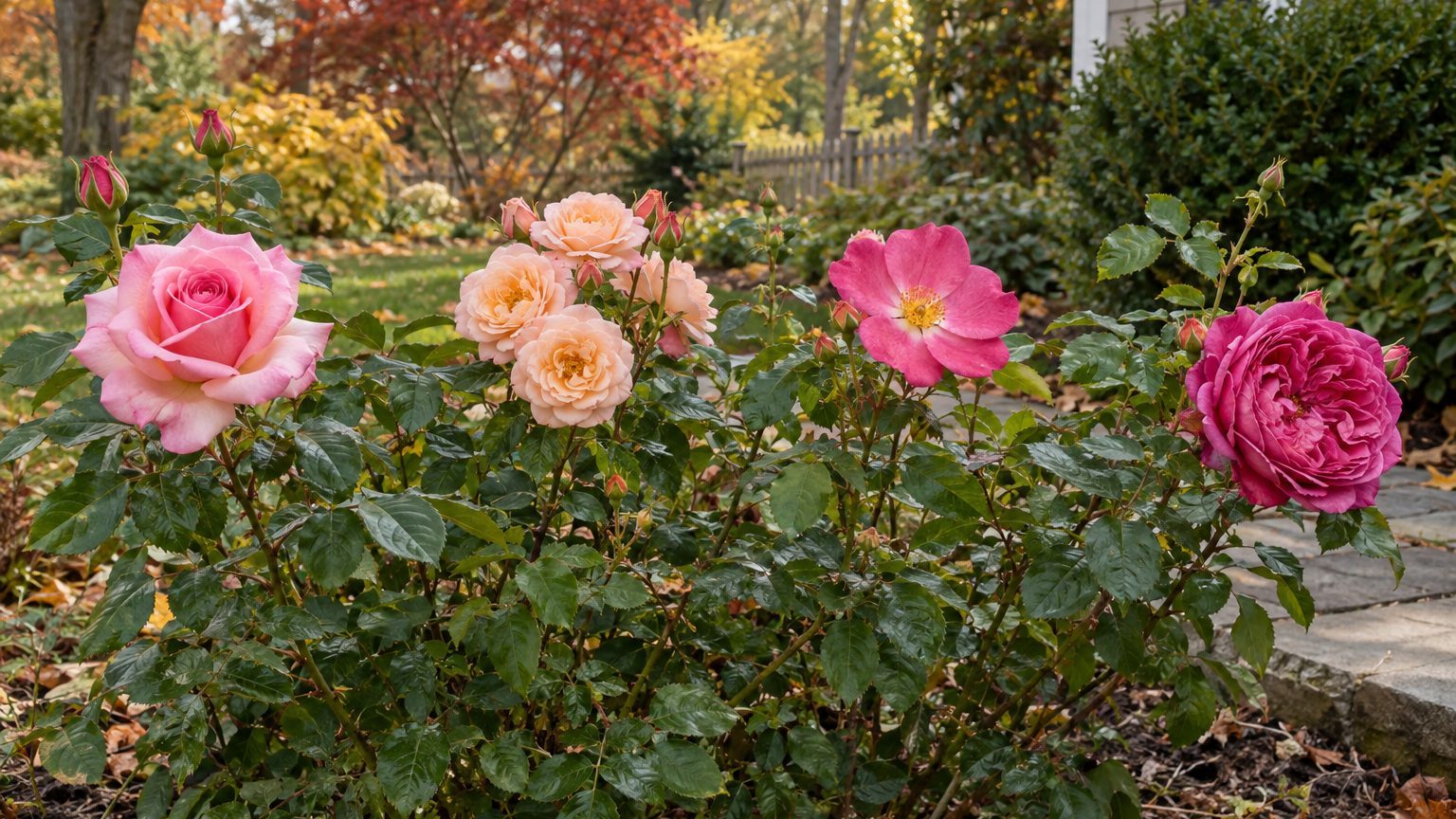
Roses that come through a Missouri winter with green canes and still bloom in a humid July tend to be tough rather than fussy. Floribundas, polyanthas, shrub roses and old garden roses have that reputation, while hybrid teas ask for more attention. Choosing by hardiness first makes the rest of the season easier.
Best Roses to Grow in Missouri

Hardy types hold up here because winters fall between zones 5b and 7b on the USDA system, and humid summers invite black spot on the fussier kinds. A rose bred for colder winters than yours needs little added protection, which makes hardy, compact and disease-tolerant types practical choices for a Missouri yard.
Floribundas

Floribundas came from crosses between hybrid teas and polyanthus roses. They make large, hardy, shrubby bushes that bloom profusely in clusters. They are very hardy and ask for less care than a hybrid tea.
Their compact growth suits bed planting, a shrub border or a low hedge.
Polyantha Roses

Polyanthas are shrubby, low-growing roses with clusters of small flowers. They are usually quite hardy and bloom freely through the growing season, which is what a long Missouri summer calls for.
Their low habit makes them easy to tuck in front of taller shrubs.
Old Garden Roses
Many old garden roses tolerate cold well, while hybrid teas can take considerable damage in the same winter. That makes them a sound pick for the colder parts of the state.
Once-blooming roses, which include old garden roses, ramblers and many climbers, flower on last year’s wood. Prune them right after they bloom, never in early spring.
Shrub Roses
More gardeners are getting to know old fashioned and shrub roses, and many of them are well adapted to water-conserving landscapes. That helps when a dry spell settles in during summer.
Because they are sturdy plants, they suit a yard where roses must manage on their own.
Hybrid Teas
Hybrid teas carry large flowers, and most but not all have some fragrance. They are semi-hardy and need winter protection, and they are susceptible to aphids and black spot.
If you want hybrid teas, plant them where you can keep an eye on them rather than building a whole bed around them.
Missouri — the year and the numbers
- State
- Missouri
- USDA zones
- 5b-7b
- Last spring frost
- April 6 to April 20
- First fall frost
- October 18 to October 29
- Annual rain
- 39 in
- Lawn zone
- transition-season
- Source
- NOAA NCEI 1991-2020 Climate Normals, 32F freeze probabilities · Kansas City
How to Choose a Rose for a Missouri Garden
Start with the trouble your yard actually hands a rose, whether that is a hard winter, a damp summer or simply too little time. Each type answers a different problem.
Hardiness comes first, because a rose that dies back to the ground every winter never gets a chance to show what it can do.
| Your situation | What suits it in Missouri | Why |
|---|---|---|
| Cold winters | Old garden roses, polyanthas | Many old garden roses tolerate cold, and polyanthas are usually quite hardy |
| Humid, disease-prone summers | Floribundas or shrub roses instead of hybrid teas | Hybrid teas are susceptible to aphids and black spot |
| Heat and dry spells | Shrub roses | Many are well adapted to water-conserving landscapes |
| Little time | Floribundas | They are very hardy and require less care |
| Small space | Floribundas, polyanthas | Floribundas grow compact, and polyanthas stay low |
Whatever you choose, plant bare-root roses in March or April (February works too), and feed from April through August. Repeat bloomers such as hybrid teas and floribundas get pruned in March, when the forsythia blooms and the buds swell, though April is fine as well.
Which Roses Suit Different Parts of Missouri
Winters vary across Missouri, and that changes how much protection a rose needs.
- Northern Missouri: this is the colder end of the state, toward zone 5b, so lean on old garden roses, polyanthas and other hardy types, and expect hybrid teas to want winter cover.
- Southern Missouri: winters are milder here, which gives hybrid teas a better chance and lets you experiment a little more with tender varieties.
Wherever the yard sits, a rose bred for cold winters is a dependable choice.
Rose Buying Mistakes to Avoid in Missouri
Hybrid Teas Without Winter Cover
Hybrid teas are semi-hardy, and a hard winter can cost you the canes, sometimes the whole plant. That is a poor return on a nursery purchase.
Pick a hardier type for the main planting, and if you want a hybrid tea, plan on covering it for winter.
Disease-Prone Varieties for Humid Summers
Black spot and aphids find susceptible roses easily in a damp Missouri summer, and the leaf loss weakens the plant before winter.
If you want less spraying and fussing, look beyond susceptible hybrid teas.
Feeding Past August
Feeding is something roses welcome from April through August, and March works if leaves come early. Fertilizer late in the season pushes soft new growth that may not harden off before winter.
Stop after August and let the canes firm up.
Where to Get Rose Advice in Missouri
Variety lists change as breeders release new roses, so local advice is worth a visit. University of Missouri Extension publishes garden guidance, and your county extension office knows what grows in your soil.
- Its website has rose and garden articles written for Missouri conditions, useful before you order in winter.
- The county extension office can answer questions about your own yard, and spring is a good time to call, before planting.
Common Questions
Do All Hybrid Teas Have a Fragrance?
Most do, but not all. If scent matters to you, check the label or smell the flower before you buy.
Can You Plant a Potted Rose Later than a Bare-Root One?
Yes. Potted roses can go in later than bare-root plants, which need the cool months of March and April.
Where Do Floribundas Come From?
Floribundas were derived from crosses between hybrid teas and polyanthus roses, which is why they join compact growth with clusters of flowers.