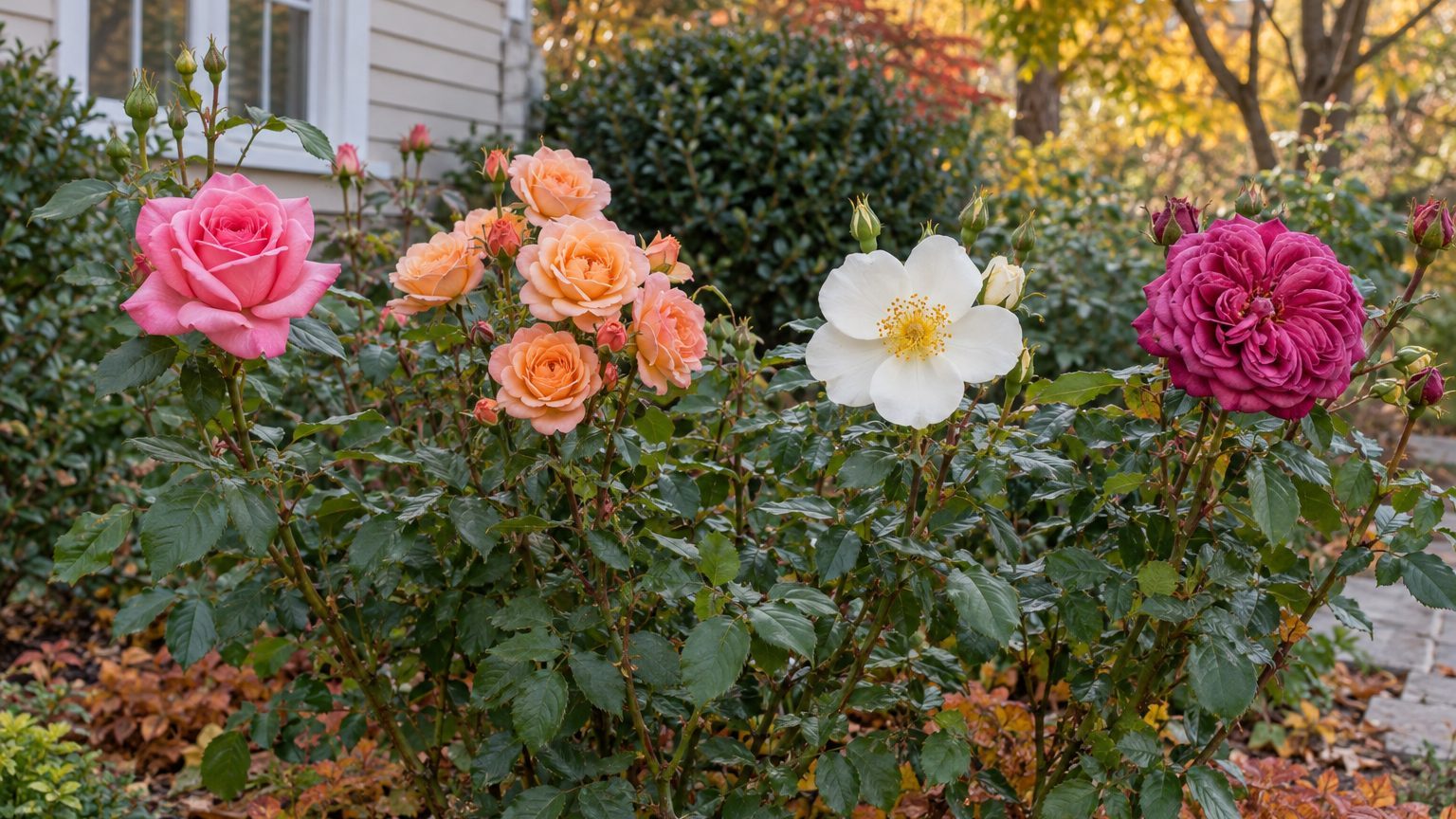
Along Hawaii’s warm lowlands, a rose bush sets new buds in every season, because no freeze ever sends it into rest. That changes what to buy: types that handle constant warmth, humid air and leaf disease do better than ones bred for a long winter sleep. Hybrid teas, floribundas, polyanthas and miniatures all grow here, and rootstock and disease resistance decide how well.
Best Roses to Grow in Hawaii

Roses thrive in a wide variety of Hawaiian climates, and at sea level they grow and flower throughout the year. The limits are not cold but heat, the lack of a dormant rest, and the leaf diseases that follow humid weather. These are the types that handle those limits.
Hybrid Teas
For cutting, for size and for enjoyment in the garden, hybrid teas are the most satisfactory choice in Hawaii. They are valued in Hawaii for cutting and for flower size.
Give them a spot with steady sun and room for air to move through the canes. Crowded plants in damp air invite the diseases that trouble every rose here.
Floribundas and Polyanthas
If quantity of flowers and ease of maintenance matter more to you than long stems, floribundas and polyanthas are the ones to plant. They carry blooms in clusters and ask less fuss than a hybrid tea.
They suit a front bed where you want color across the seasons without much deadheading and grooming. Plant the same variety together for a fuller display.
Miniature Roses
Miniature roses can be grown in Hawaii, which makes them an easy way to try roses on a lanai or along a walkway. Like all roses, they meet rose beetle, powdery mildew, spider mite and black spot.
Check the leaves regularly, top and underside, so a problem gets caught while it is small. Pick a spot with good airflow and avoid wetting the foliage late in the day.
Roses on Fortuniana Rootstock
Research in Hawaii suggests that, at sea level, roses budded on a Rosa fortuniana rootstock are best prepared to withstand the high temperatures and lack of dormancy. The rootstock is part of the plant you buy, so it is worth asking about before you pay.
Look for a tag or a nursery answer that names the rootstock. At sea level, Rosa fortuniana rootstock is suited to high temperatures and the lack of dormancy.
Newer Disease-Resistant Roses
Many of the newly introduced roses are resistant to the leaf diseases that follow humid weather. For a gardener who would rather not spray, that resistance is worth more than a famous name.
Read the plant description before you buy and choose the variety that states disease resistance. Disease resistance remains useful when humid weather favors leaf diseases.
Hawaii — the year and the numbers
- State
- Hawaii
- USDA zones
- 9a-13a
- Frost
- none in an average year
- Annual rain
- 16 in
- Lawn zone
- warm-season
- Source
- NOAA NCEI 1991-2020 Climate Normals: not-computable flag for every freeze percentile at 32F and 36F, zero days per year at or below 32F, station USW00022521 — https://www.ncei.noaa.gov/access/services/data/v1?dataset=normals-annualseasonal&stations=USW00022521 · Honolulu
How to Choose a Rose for a Hawaii Garden
Start with what your yard and your schedule give you. Cold is rarely the question in Hawaii, since no freeze occurs in inhabited areas, so the choice turns on humidity, heat, upkeep and what you want to do with the flowers.
Use the table to match your situation to a type, then check the plant tag for rootstock and disease resistance.
| Your situation | What suits it in Hawaii | Why |
|---|---|---|
| Worried about winter cold | A rose suited to Hawaii’s constant warmth | No freeze occurs where people garden, so roses grow and flower throughout |
| Humid, rainy stretches | Newer disease-resistant varieties | Black spot and powdery mildew are the usual trouble, and many newer roses resist them |
| Heat and no dormant rest | Roses budded on Rosa fortuniana rootstock | The rootstock copes with high temperatures at sea level |
| Little time for upkeep | Floribundas and polyanthas | They give plenty of flowers with easy maintenance |
| Flowers for the vase | Hybrid teas | They are the most satisfactory for cutting and for size |
Miniature roses can also be grown in Hawaii, and they are worth a try if you want a rose with a smaller presence. Expect the same pests and diseases as any other rose.
Which Roses Suit Different Parts of Hawaii
Rainfall, elevation and windward versus leeward exposure shape the choice more than any frost line, so match the rose to the side of the island you garden on.
- Windward coasts: Rain falls often and leaves stay wet, so lean toward disease-resistant varieties and give every bush room for air.
- Leeward coasts: Drier, sunnier ground puts more weight on heat tolerance, which makes a rootstock suited to high temperatures the better pick.
- Haleakala, Mauna Kea and Mauna Loa summits: Frost occurs only here, high above where people garden, so it has no bearing on the roses you plant in a yard.
Between those, local pockets of shade, wind and soil differ from one neighborhood to the next, so watch how a bed behaves before you fill it.
Rose Buying Mistakes to Avoid in Hawaii
Buying for a Cold Winter
At sea level, ask whether the rootstock can handle high temperatures and the lack of dormancy. Choose roses described for warm climates and ask whether the plant is budded on a Rosa fortuniana rootstock, which handles high temperatures and the lack of dormancy at sea level.
Picking a Disease-Prone Variety
Rose beetle, powdery mildew, spider mite and black spot all find roses in Hawaii. Without disease resistance, a variety may be harder to keep healthy in humid weather. Buy newer introductions that state resistance, and space plants so air moves between them.
Pruning a Once-Blooming Rose Like a Hybrid Tea
Old garden roses, ramblers and many climbers flower once a year, on last year’s wood. Cutting them back with the repeat-bloomers removes that season’s flowers. Prune them right after they bloom, never in early spring, and read the tag before you buy to know which kind you have.
Where to Get Rose Advice in Hawaii
The University of Hawaii CTAHR extension service publishes free rose guidance written for Hawaiian conditions, and the extension office for your county can speak to your own island and elevation.
- Browse the extension rose publications before you shop, so you can ask a nursery about rootstock and resistance with confidence.
- Contact the county office when leaves spot, curl or drop, and bring a cutting from the affected cane to show.
- Ask about your area’s rainfall and exposure before you plant, then choose one variety and put it in the ground.
Common Questions
Can You Plant a Rose in Hawaii in Summer?
Yes. Dormant bare-root plants are usually available in spring, but they can be planted at any time in Hawaii. Water new plants regularly while they establish.
How Often Should You Feed Roses in Hawaii?
Because roses keep growing all year, feed them every 4 to 6 weeks. Organic fertilizer works at the rate of 3/4 pound per 100 square feet to keep nutrients available to the plant.
When Should You Cut Back Hybrid Teas in Hawaii?
Early January suits repeat-blooming roses. Many gardeners cut their bushes to within 24 inches of the ground then. Flowers pause for a while, but the plant returns with a burst of color 3 months later.