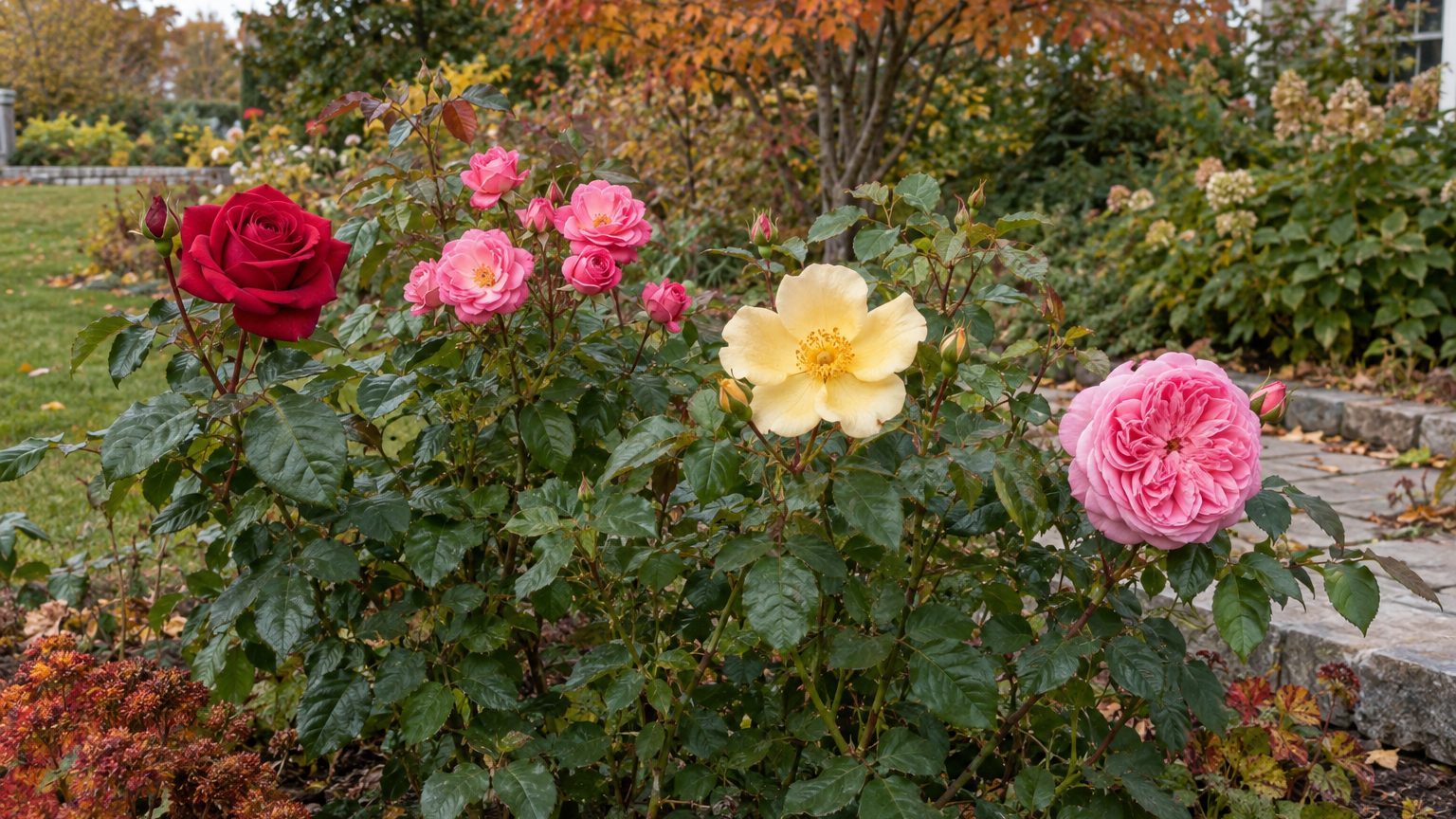
Roses in California can bloom in a January garden on the coast and sit dormant under frost in a Sierra yard. Disease pressure matters as much as cold, because a rose that looks perfect in May can be covered in mildew by July. The roses that earn a spot here are the ones that stay clean and keep blooming with little fuss.
Best Roses to Grow in California

Landscape shrub roses, floribundas and polyanthas hold up best in California because they resist the diseases that wreck fussier types. Heat is not the only challenge. Humidity is, since fungal trouble is more common in damp areas than in the dry interior valleys. Pick for disease resistance first and flower form second.
Floribundas and Polyanthas

In California, extension advice points to cluster-flowered floribundas and polyanthas as better landscape choices than hybrid teas and grandifloras. They bloom heavily and resist disease well, so they fill a front bed with color without much spraying.
Plant them where you want a mass of flowers rather than a few long-stemmed cuts.
Landscape Shrub Roses
Landscape roses, also called shrub roses, came from crossing with floribundas and were selected to work as flowering shrubs. They carry stronger disease and insect resistance and need less pruning than traditional garden roses.
Among the types that vary in mildew resistance, shrub roses rank among the more resistant. They suit a gardener who wants flowers without a weekend of maintenance.
Glossy-Leaved Hybrid Teas
Hybrid teas and grandifloras can be workable choices in the dry interior valleys, where diseases are less common. Look for glossy-foliaged varieties, which often resist powdery mildew well.
Skip the matte, soft-leaved kinds if your summers are damp.
Miniature Roses
Miniature roses are more prone to black spot than other types, so they ask for more care in California. A few varieties are reliably resistant to every strain of the disease.
Ask for those by name before you buy, and choose disease-resistant varieties whenever you plant.
Proven Named Varieties
For powdery mildew, California advice lists ‘Double Delight’, ‘Julia Child’, ‘Iceberg’ and ‘Sunshine Daydream’ among the roses that stay clean. ‘Simplicity’ and ‘Meidiland’ roses and Rosa rugosa varieties are on that list too.
Start your shopping with these names and you avoid the guesswork.
California — the year and the numbers
- State
- California
- USDA zones
- 5a-11a
- Frost
- none in an average year
- Annual rain
- 12 in
- Lawn zone
- warm-season
- Source
- NOAA NCEI 1991-2020 Climate Normals · Los Angeles
How to Choose a Rose for a California Garden
The right rose depends on how damp your summers run and how much time you want to spend. California covers frost-free coast and hard-freezing mountains, so match the rose to your own yard rather than to the state.
Freezes do occur in northern California, the Central Valley and the Sierra. Where late spring frosts are common, delay pruning until the danger passes.
| Your situation | What suits it in California | Why |
|---|---|---|
| Humid summer | Landscape shrub roses, ‘Iceberg’, glossy-leaved hybrid teas | Humid areas see more disease, and these types resist mildew well |
| Dry interior valley heat | Hybrid teas and grandifloras are workable here | Diseases are less common in the dry interior valleys |
| Little time | Landscape shrub roses | They need less pruning and resist disease and insects |
| Mass of color in a bed | Floribundas and polyanthas | Profuse bloom and disease resistance suit landscape use |
For a tight space, a miniature rose is an option, but choose a variety known to resist black spot.
Which Roses Suit Different Parts of California
The state changes the rose list less than it changes the care, so the differences below come down to disease pressure and frost.
- Central Valley: Disease runs lighter in the dry interior, so hybrid teas and grandifloras have a fair chance here. Winter freezes still happen, which is the reason to prune on the later side of the winter window.
- Los Angeles and the southern coast: No freeze occurs in an average year, so frost is usually less of a concern for what you plant than it is in colder parts of the state. Heat, drought and water restrictions matter more than frost here, so check a rose’s water needs before you buy.
- Sierra Nevada: Freezes are part of the winter, and late spring frosts can follow a warm spell. Prune later here, and lean on shrub roses and floribundas for dependable bloom.
Check which of these describes your yard before you order, because a rose that thrives in one can struggle in another.
Rose Buying Mistakes to Avoid in California
Choosing a Disease-Prone Variety
A rose picked only for its flower can spend a humid summer fighting mildew and black spot. That costs you leaves, bloom and the time spent treating it.
Choose disease-resistant varieties when planting, and favor landscape shrub roses or glossy-leaved hybrid teas if your air stays damp.
Assuming the Whole State Is Frost-Free
The coast and the south stay frost-free, but northern California, the Central Valley and the Sierra freeze. Pruning too early in a frost-prone yard exposes fresh growth to a late spring cold snap.
Where late spring frosts are common, wait. In most of California, pruning belongs in winter before the buds swell.
Pruning a Once-Blooming Rose Like the Rest
Old garden roses, ramblers and many climbers flower once a year on last year’s wood. A winter pruning cuts off that year’s flowers.
Prune them right after they bloom, never in early spring, and save the winter shears for the repeat-blooming roses.
Where to Get Rose Advice in California
Local conditions vary so much that nearby advice is worth more than general rules. University of California Agriculture and Natural Resources runs the state’s extension network and a county office near you.
- Your county extension office can tell you which roses do well in your own microclimate, and a visit in late winter fits the planting and pruning season.
- The extension’s rose and disease guidance explains how to recognize mildew and black spot, and it helps most before you shop.
Call your county office with your ZIP code and a short list of the varieties you are considering.
Common Questions
When Should You Prune Roses in California?
Prune repeat-blooming roses such as hybrid teas, floribundas and modern shrub roses in January and February. It can also be done in March or December. Do it in winter before the buds swell, and later where spring frosts are common.
Can You Plant a Rose in Summer in California?
Container roses can go in through the summer. Bare-root roses do best in February and March, and in California, extension advice is to plant them in spring for the best establishment.
When Should You Feed Roses in California?
Feed in March and April, and again in September and October. For young plantings, California extension advice is 1 pound of nitrogen per 1,000 square feet, or proportionally less for a smaller bed, in spring and fall.