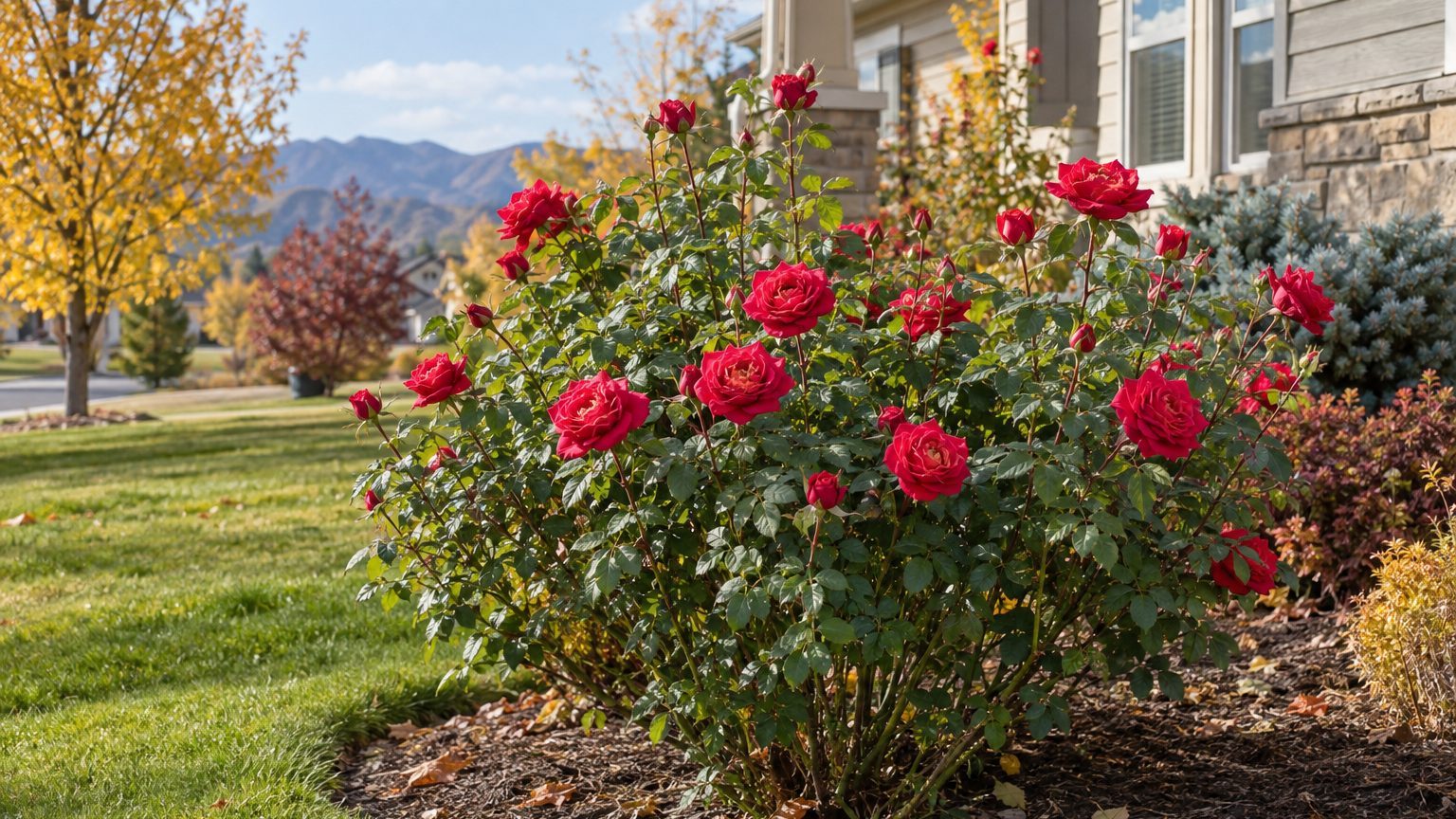
When the snow pulls back from the rose bed and the ground softens enough for a spade, the planting season for roses in Wyoming has opened. Bare-root roses go in first, while they are still dormant. Potted roses follow later. Cold winters and a short growing season decide which roses thrive here and when each job gets done.
When to Plant Roses in Wyoming

Bare-root roses go in during April and May, as soon as the soil can be worked, and potted roses can wait until the weather has settled.
- In early spring, plant bare-root roses while they are still dormant. April is the target, and May works too.
- Through May, bare-root planting can continue, but a leafed-out young rose is tender. In Cheyenne, the last spring frost arrives between May 7 and May 18.
- Once the danger of hard frost has passed, potted roses can go into the ground. They tolerate a later start than bare-root plants because they arrive with roots and leaves already growing.
- From late spring into midsummer, roses feed and bloom. Frost is possible in any month at higher elevations, so a young plant needs watching even in June.
- In early autumn in Cheyenne, the first fall frost lands between September 24 and October 5, which ends the bloom and sends the plant toward dormancy.
- Around November, soil goes over the base of the plant for winter. October and December also work, depending on how the nights are running.
Wyoming covers USDA hardiness zones 3a to 6a, so the dates above are a guide that shifts with your elevation and your town. At roughly 6,000 feet, the frost-free stretch in Cheyenne is short, which is why protecting young plants is part of the routine here.
Wyoming — the year and the numbers
- State
- Wyoming
- USDA zones
- 3a-6a
- Last spring frost
- May 7 to May 18
- First fall frost
- September 24 to October 5
- Annual rain
- 15 in
- Lawn zone
- cool-season
- Source
- NOAA NCEI 1991-2020 Climate Normals, 32F freeze probabilities · Cheyenne
Which Roses Grow Best in Wyoming?
Hardy shrub roses are a practical choice. They are vigorous, need little care in severe conditions, and handle cold winters without a lot of fuss. Hybrid teas, floribundas and grandifloras can still succeed, but they ask for more winter protection than a shrub rose does.
| Rose type | How it does in Wyoming | Why |
|---|---|---|
| Hardy shrub roses (Explorer series, Knock Out) | Perform well without extra winter protection | Hardy and vigorous, with low care needs in severe conditions |
| Hybrid teas, floribundas, grandifloras | Need winter protection in cold winters | Less hardy canes suffer when winters turn hard |
| Alpine and Nootka roses | Need a warm, protected planting site | A sheltered site limits exposure to harsh winter conditions |
Old garden roses, ramblers and many climbers are worth a place in a sheltered corner, but they bloom once a year, so they need different pruning from the repeat bloomers above. Heat and humidity are rarely the limiting factors for roses in Wyoming. Winter cold and a short season are.
When to Prune, Feed and Protect Roses in Wyoming
The rose year here follows a practical rhythm, and each job has its own window. Pruning and uncovering share April, feeding runs through summer, and covering comes with November.
| Task | When to do it in Wyoming | Why then |
|---|---|---|
| Pruning repeat-blooming roses (hybrid teas, floribundas, modern shrub roses) | April, and May if needed | Repeat bloomers flower on new wood, so pruning comes just ahead of new growth |
| Feeding roses | May, June, July (April or August also work) | Feeding supports growth during the growing season, then stops so the canes can harden |
| Putting on winter protection | November (October or December also work) | Soil over the crown goes on once nights turn hard and stay cold |
| Taking winter protection off | April, and May if needed | Uncover gradually after the danger of hard frost has passed |
Stop feeding after mid-August so late, soft growth does not get caught by the first frost. Once-blooming roses are the exception to the April rule: they flower on last year’s wood, so prune them right after they bloom, never in early spring.
How Rose Care Dates Change Across Wyoming
Elevation shifts the rose year across the state, so the dates above lean earlier in low basins and later in the high country.
- Jackson Hole: A high mountain valley, where spring comes later and frost returns sooner. Plant hardy shrub roses and expect to keep covers handy well into the season.
- Laramie and Cheyenne: The high plains in the southeast are cold, windy and exposed. Planting and uncovering tend to wait until the danger of hard frost is truly past.
- Bighorn Basin (Cody and Powell): A lower, warmer basin where the season starts earlier and lasts a little longer than in the mountains. Planting and uncovering can lean toward the early end of the window.
If your yard sits well above the nearest town, plan on the later end of every window.
Where to Get Rose Advice in Wyoming
Local conditions vary so much that a short conversation with the people who work the same soil and weather can save a plant. University of Wyoming Extension and your county office are the places to start.
- The state extension service publishes research-based guidance on roses and cold-climate gardening, useful before you choose varieties in winter or early spring.
- Your county extension office can help diagnose a struggling rose and arrange a soil test, ideally before you plant in April.
- Bring a cane or leaf sample to the county office when something looks wrong, so the answer comes from the plant itself.
Common Questions
Can You Grow Roses at High Elevation in Wyoming?
Yes, with hardy shrub roses and some extra care. Frost can come in any month at higher elevations, so plan on covers and a sheltered spot, such as the south side of a wall or fence.
Can You Plant a Potted Rose Later than a Bare-Root Rose?
Potted roses go in later because they are already growing. Wait until the danger of hard frost has passed, then water the plant in well and keep an eye on the forecast.
What Should You Do If Frost Is Forecast After a Rose Leafs Out?
Cover the plant before dark with a breathable cloth or an inverted bucket, and uncover it in the morning once temperatures rise. Young leaves are the tender part, so protect them even after the bush looks established.