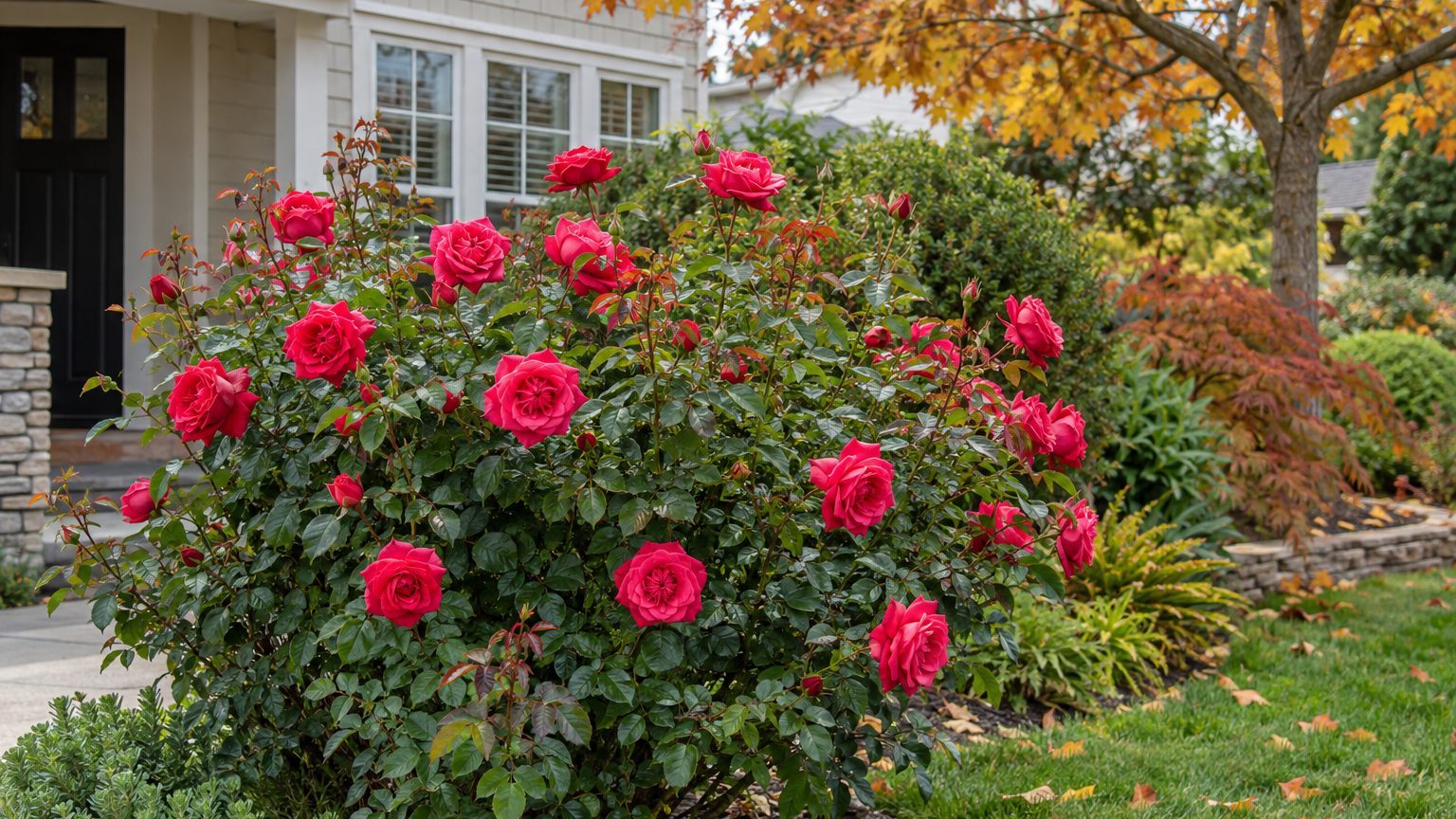
Bare-root roses arrive in winter, brown and leafless, and go into California soil while they are still asleep. Container roses follow once the weather settles and can be planted well into summer.
When to Plant Roses in California

Bare-root roses go in first, and container roses follow through summer. Frost decides how careful you need to be, and that depends on where you garden. Coastal and southern California is frost-free, so the limits there are heat, drought and water restrictions. Northern California, the Central Valley and the Sierra do freeze. USDA hardiness zones run from 5a to 11a across the state, so a Sierra garden and a coastal garden follow different rules.
- In winter, bare-root roses are pruned back if they are repeat bloomers, and the garden bed is prepared before the plants arrive from the nursery.
- In February and March, plant bare-root roses while they are dormant, because spring planting gives them the best start at establishing roots.
- In March and April, feed the roses with nitrogen as the first flush of growth begins.
- From April through August, container roses can go in, and bare-root planting is still possible through those months if a nursery has stock.
- In September and October, give the second feeding of the year, with prunings and fallen leaves cleaned up around the base.
Bare-root plants establish best in spring, which is why February and March are the main planting window.
California — the year and the numbers
- State
- California
- USDA zones
- 5a-11a
- Frost
- none in an average year
- Annual rain
- 12 in
- Lawn zone
- warm-season
- Source
- NOAA NCEI 1991-2020 Climate Normals · Los Angeles
Which Roses Grow Best in California?
Roses that bloom heavily and resist disease do the most for a California yard. Dry interior valleys see fewer diseases than humid regions, so mildew and black spot press less there. Along the coast, cool damp air favors mildew, and the right variety matters more.
Resistance varies a great deal between varieties, so ask the nursery about mildew resistance before buying.
| Rose type | How it does in California | Why |
|---|---|---|
| Floribundas and polyanthas | Suited to landscape use | Profuse bloom and disease resistance |
| Landscape (shrub) roses | Among the most mildew-resistant | Powdery mildew resistance is high in these varieties |
| Hybrid teas and grandifloras | Less suited to landscape use than floribundas | Lower disease resistance and bloom density |
Old garden roses, ramblers and many climbers bloom once a year on last year’s wood, so they need different pruning timing than repeat bloomers. The pruning section below covers that.
When to Prune, Feed and Protect Roses in California
Pruning, planting and feeding set the rhythm of the rose year in California. Pruning comes in winter, planting in late winter, and feeding in spring and again in fall. In California, the suggested nitrogen rate is 1 pound per 1,000 square feet, scaled down for smaller beds, twice a year.
| Task | Best months in California | Why then |
|---|---|---|
| Pruning repeat-blooming roses (hybrid teas, floribundas, modern shrub roses) | January, February | Winter, before the buds swell |
| Planting bare-root roses | February, March | Dormant plants establish best in spring |
| Feeding roses | March, April, September, October | Nitrogen goes on in spring and again in fall |
Pruning can also happen in March or December. In places where late spring frosts are common, it can be delayed. Once-blooming roses are the exception, because they are pruned right after they flower and never in early spring.
How Rose Care Dates Change Across California
The state is large enough that the same task lands on different weeks depending on where the garden sits. Altitude, distance from the ocean and the risk of frost all shift the timing.
- Sierra foothills and high country: Frost returns here, so pruning and planting wait later and buds stay protected longer.
- Central Valley: Winters bring freezes, but interior dryness keeps disease pressure lower than on the coast.
- Southern California coast: Frost does not occur in an average year, so the season stays open and heat and water limits matter more.
Where frost is possible, wait for the coldest weather to pass before pruning hard, and where it never comes, follow the months in the calendar.
Where to Get Rose Advice in California
When a rose looks sick or the soil seems off, local help narrows the guesswork. The state’s land-grant system supports gardeners through University of California Agriculture and Natural Resources and its county offices.
- The county extension office can help diagnose a leaf problem if you bring a sample, and the sooner you go once symptoms appear, the better.
- Master gardener volunteers answer local questions and know which varieties suit your area, so they are worth contacting before a winter order.
- A soil test before planting in February or March shows what the bed needs before the first feeding.
Common Questions
Can You Plant a Rose in Summer in California?
Yes, with a container rose. Bare-root plants go in from February through August, and potted roses can go in through the summer months if they are watered regularly while they settle.
Do Roses Need Frost Protection in California?
That depends on the region. Coastal and southern gardens do not freeze in an average year, while northern areas, the Central Valley and the Sierra can, so young plants there need care in cold snaps.
Which Roses Are Easiest in a Dry Interior Valley?
Floribundas, polyanthas and landscape shrub roses suit these gardens well. Disease is less common in the dry interior valleys, and these types add heavy bloom and mildew resistance.