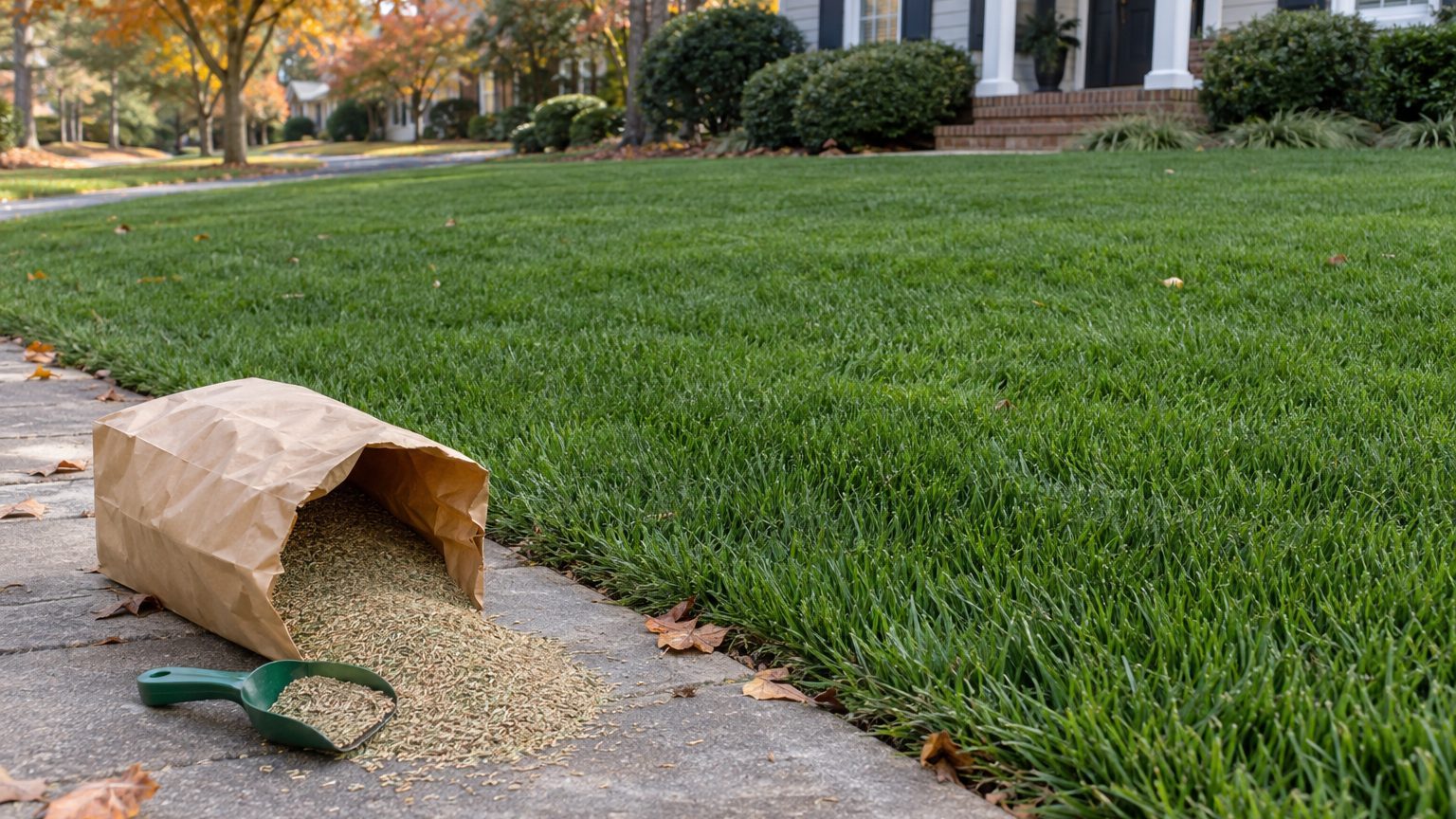
Walk a South Carolina lawn in July and healthy warm-season grass can look green and thick while the heat bears down. South Carolina lawn choices include bermudagrass, centipedegrass, zoysiagrass, bahiagrass and St. Augustinegrass, and only some of them come in a seed bag.
Which Grass Grows Best in South Carolina?
Warm-season grasses are widely used here because they grow actively during South Carolina’s long, hot summers and normally go dormant in winter. Cool-season grasses like tall fescue struggle through the summer heat. South Carolina spans USDA hardiness zones 7a to 9a, but that range describes average annual extreme minimum temperatures and cannot by itself determine which grass will perform best. These are the grasses to know, and each comes with its own tradeoffs.
Bermudagrass
Bermudagrass is one of the few lawn grasses here that you can start from seed, and it loves full sun and heat. It fills in fast and recovers from foot traffic, but it turns tan in winter and needs regular mowing to look tidy.
Centipedegrass
Centipedegrass is a low-maintenance seeded option that suits acidic, sandy soil. It grows slowly, needs little fertilizer, and rewards a relaxed approach to lawn care. Heavy traffic is not its strength.
Bahiagrass
Bahiagrass grows from seed and handles drought and poor soil well, which makes it a practical pick for large, rough or sandy lots. The leaf blade is coarser than the other lawn grasses, so the look is more rustic than manicured.
Zoysiagrass
Zoysiagrass makes a dense, soft carpet that crowds out weeds. It is mostly planted as sod or plugs rather than seed, so a seed bag is rarely the way to get it. Expect slow establishment and a rich, thick lawn once it fills.
St. Augustinegrass
St. Augustinegrass is never sold as seed, so any bag claiming to be it deserves suspicion. It comes as sod or plugs only. It handles shade better than most of the others here, which is why it is popular in coastal yards with big trees.
South Carolina — the year and the numbers
- State
- South Carolina
- USDA zones
- 7a-9a
- Last spring frost
- February 28 to March 17
- First fall frost
- November 20 to December 5
- Annual rain
- 53 in
- Lawn type
- warm-season
- Source
- NOAA NCEI 1991-2020 Climate Normals, 32F freeze probabilities · Charleston
How to Choose Grass Seed for a South Carolina Yard
Start with the light your yard gets and the wear it takes, then decide how much mowing and watering you want to sign up for. Those answers narrow the field quickly, and they matter more than any label on the bag.
Seeding itself is limited to the seeded grasses: bermudagrass, centipedegrass and bahiagrass. If your heart is set on St. Augustinegrass or zoysiagrass, plan on sod or plugs instead.
| Your yard | Grass to consider | Why it fits |
|---|---|---|
| Full sun, kids and pets | Bermudagrass | Spreads fast and bounces back from wear |
| Low effort, acidic sandy soil | Centipedegrass | Slow growth, little fertilizer, less mowing |
| Large lot, dry or poor soil | Bahiagrass | Tolerates drought and thin soil |
| Dense, soft turf, willing to buy sod | Zoysiagrass | Thick carpet that crowds out weeds |
| Shade from large trees | St. Augustinegrass | Handles shade better, but sod or plugs only |
If you water only when you must, lean toward bahiagrass or centipedegrass. If you like a sharp, frequently mowed lawn and have plenty of sun, bermudagrass pays you back for the effort.
Which Grasses Grow Where in South Carolina
Climate shifts across the state, and that nudges the best pick in each region without changing the warm-season rule.
- Upstate: Winters run colder and frost windows are tighter at both ends, so choose the hardier warm-season types and expect a longer brown spell.
- Midlands: Hot summers favor bermudagrass and zoysiagrass, and centipedegrass does well where soils are sandy and acidic.
- Charleston and the Lowcountry: Mild winters keep grass greener longer, and St. Augustinegrass is common, though it comes as sod or plugs. Peninsular Charleston is milder than areas farther inland.
A neighbor’s lawn a few counties away is a rough guide, but local soil and shade count for more.
Grass Seed Mistakes to Avoid in South Carolina
Buying Cool-Season Seed
Tall fescue and ryegrass mixes can struggle in South Carolina’s summer heat. For a warm-season lawn, check the label for bermudagrass, centipedegrass or bahiagrass, and skip anything promising St. Augustine seed.
Seeding at the Wrong Time
Warm-season seed needs warm soil to sprout and root. May is the best month to seed, and June still works if you miss it. Seeding before the recommended window leaves warm-season seed in cold soil instead of helping it establish.
Burying or Piling on Seed
Seed that is buried deep struggles to come up, and seed left on top dries out or washes away. Cover it with no more than 0.25 inch of soil and press it down for firm contact. Follow the rate on the bag rather than guessing, since too much seed crowds seedlings and too little leaves gaps for weeds. Water regularly while the new grass establishes.
Where to Get Lawn Advice in South Carolina
Local soil and shade vary enough that a quick check with the people who study them is worth the time before you buy seed.
- Clemson Cooperative Extension offers lawn guides for each grass type, so read the one for your species before seeding season.
- Your county extension office can test your soil and advise on local conditions, so contact it before you buy seed.
Common Questions
Can You Plant St. Augustinegrass from Seed in South Carolina?
No. St. Augustinegrass is sold only as sod or plugs, so seed labeled as St. Augustine is not what it claims to be.
Is a Brown Lawn in Winter a Sign of Dead Grass?
Not usually. Warm-season grasses go dormant and turn tan after cold weather arrives, then green up again as the soil warms. If the grass is brown and the blades pull out easily in summer, something else is going on.
Can You Reseed Bare Patches in a Warm-Season Lawn?
Yes, if the lawn is a seeded type like bermudagrass, centipedegrass or bahiagrass. May is the best time, and June also works. For zoysiagrass or St. Augustinegrass, patch with plugs or sod instead.