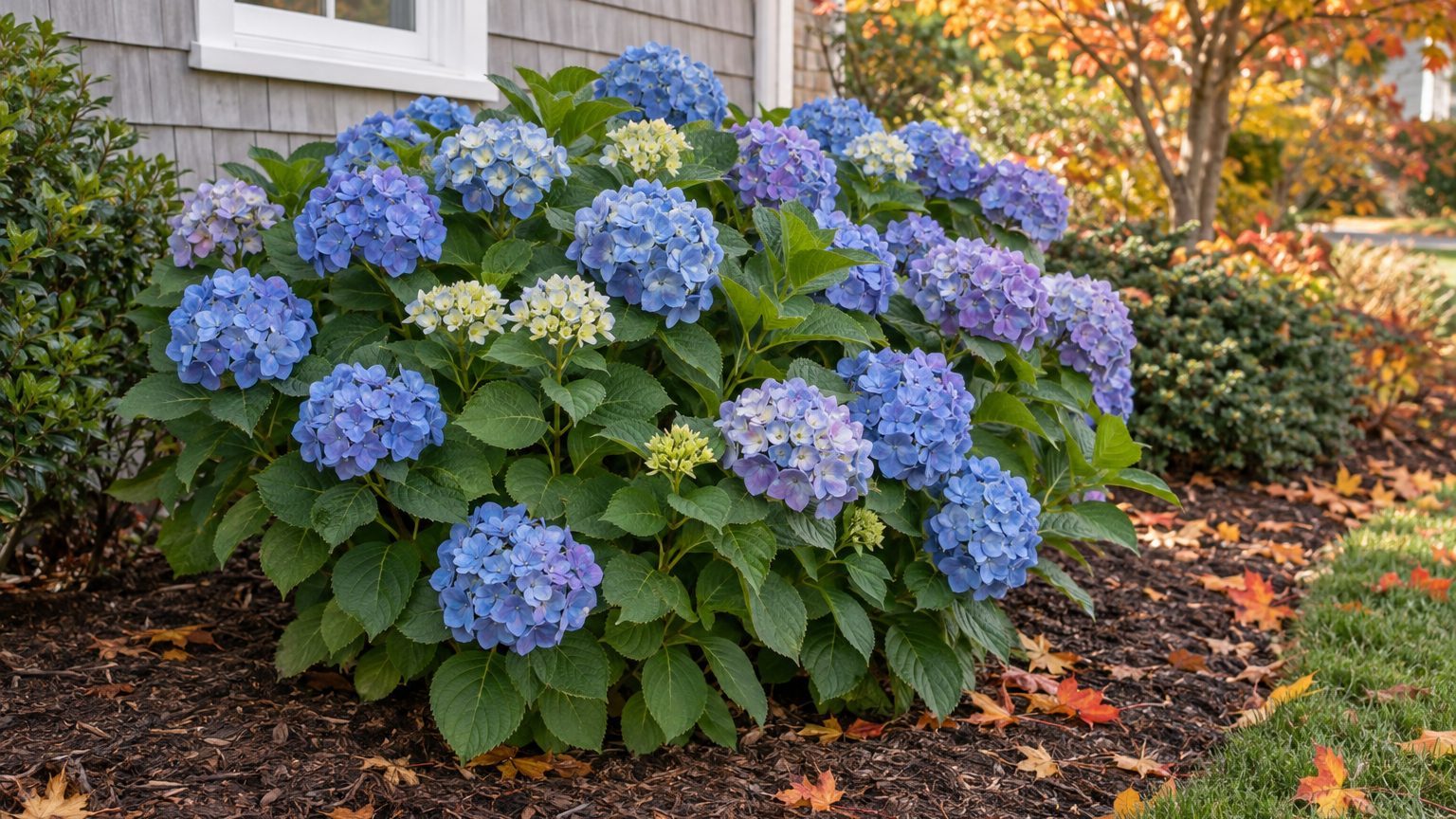
In South Carolina, the safest planting window falls in February through March and again in September through October, once soil has warmed but before summer heat sets in. Charleston’s last spring frost lands between February 28 and March 17, so gardeners there plant right after that window closes. Pruning bigleaf hydrangeas waits until June or July, after the shrub finishes its first bloom.
When to prune hydrangeas in South Carolina: The Short Answer
Charleston sets the pace for the Lowcountry calendar, and the twelve-month rundown below follows the frost windows measured at that reference station.
- January: hydrangeas sit dormant, and this is a good month to check mulch depth rather than dig anywhere.
- February: NOAA NCEI 1991-2020 Climate Normals put Charleston’s last spring frost window at February 28 to March 17, so early planting still risks a late freeze on tender roots.
- March: once that frost window closes, this becomes one of the two best planting months on the state calendar, alongside September.
- April: new growth is pushing hard now, so this is a month for watering and watching, not for pruning bigleaf types.
- May: the state calendar lists this as a fertilizing month, feeding the shrub as buds set for summer bloom.
- June: pruning season opens for bigleaf hydrangeas, right after the first flush of blooms fades.
- July: the pruning window stays open, and it doubles as a fertilizing month too, so a cut and a feed can happen in the same week.
- August: heat and humidity peak, and this is the month to hold off on any transplanting.
- September: the second planting window opens as nights cool, giving roots time to settle before frost.
- October: planting continues through this month, the last safe stretch before the ground cools too far.
- November: the first fall frost arrives sometime between November 20 and December 5, closing out the planting season.
- December: the shrub goes dormant again, and there is nothing left to do but wait for February.
That twelve-month shape holds for the Lowcountry reference station near Charleston, though the Upstate compresses both ends of it by several weeks.
South Carolina — the year and the numbers
- State
- South Carolina
- USDA zones
- 7a-9a
- Last spring frost
- February 28 to March 17
- First fall frost
- November 20 to December 5
- Annual rain
- 53 in
- Lawn zone
- warm-season
- Source
- NOAA NCEI 1991-2020 Climate Normals, 32F freeze probabilities · Charleston
How to Work Out the Dates for Your Own Yard
Working out your own dates starts with the same frost window Charleston uses, then adjusts for what actually sits in your yard.
- Start from the last spring frost: NOAA NCEI 1991-2020 Climate Normals mark that window at February 28 to March 17 for the Charleston reference station, so count back roughly two weeks from the early end to find your earliest safe planting date.
- Check your hardiness zone: the USDA Plant Hardiness Zone Map places South Carolina between 7a and 9a, and a shrub rated hardy to zone 6 has margin to spare almost anywhere in the state.
- Match the variety to the zone: panicle hydrangea tolerates both the cold snaps of the Upstate and the long, humid summers near the coast, while bigleaf hydrangea can lose flower buds to a late freeze in a harder winter.
- Walk your yard before you dig: a low spot that collects cold air, or a slope that drains fast, can shift your personal frost date by a week or more in either direction.
- Count forward to fall: the first fall frost lands between November 20 and December 5, so plant by mid-October to give roots six weeks in the ground before that window opens.
Bigleaf hydrangea usually pulls through a Charleston winter without protection, but it is the variety that struggles most through an Upstate one, where the freeze window arrives earlier and stays longer.
South Carolina North to South: How the Dates Shift
Elevation, the coastline, and distance from the ocean all nudge these dates without changing the shape of the calendar.
- The Lowcountry and coastal plain (Charleston, Beaufort, Myrtle Beach): frost arrives late and leaves early here, stretching the planting season closer to the edges of the calendar than anywhere else in the state.
- The Midlands (Columbia, Sumter, Orangeburg): frost dates sit close to the statewide average, with a planting window that opens and closes roughly on schedule with the reference dates for the state.
- The Upstate and foothills (Greenville, Spartanburg, Anderson): higher elevation compresses the frost-free season from both ends, so spring planting should wait, and fall planting should happen sooner.
- Peninsular Charleston itself: the warmth held by the harbor and the streets runs milder than the airport station the state figures come from, so gardeners right in the city often gain a few extra weeks on either end.
The state guide lays out the full frost-date picture for South Carolina for gardeners who want a sharper local read before they dig.
Mistakes South Carolina Punishes
Planting before the frost window closes
A warm spell in late February tempts gardeners to dig early, but Charleston’s frost window runs to March 17, and a late freeze can blacken new leaves overnight. Wait until the window closes fully, then plant, rather than trusting one warm week in the middle of it.
Pruning bigleaf hydrangea in fall or winter
Bigleaf hydrangea sets next year’s flower buds on old wood soon after it blooms, so cutting it back in October or November removes the very buds meant to open next summer. The calendar reserves pruning for June and July, right after bloom, for exactly this reason.
Skipping afternoon shade near the coast
Full sun that suits a shrub in the Upstate can scorch leaves fast in the humid heat of the Lowcountry. Afternoon shade, or a spot east of a wall or a tree line, keeps the leaves from crisping through a Charleston summer.
South Carolina Extension Offices and County Contacts
The state figures above are a starting point, not the last word, and the county office fills in what a statewide range cannot. Clemson University Cooperative Extension, listed in the USDA NIFA land-grant directory, answers questions specific to a yard rather than a region.
- Your state page: the frost dates and the pruning window where you live.
- Which ones hold up here: the varieties suited to South Carolina’s zones, from safest to most exposed.
- What goes wrong locally: the pests and problems this state’s growers report most often, and the fix that actually works.
Common questions
Can I plant hydrangeas in South Carolina in the fall?
Yes, September and October form the second planting window on the state calendar, and roots planted by mid-October have about six weeks to settle before the first fall frost arrives between November 20 and December 5.
Is it too late to plant hydrangeas in July in South Carolina?
July sits outside the planting window on the state calendar, and the heat of a Lowcountry summer stresses new roots before they can establish. Fertilizing is the July task instead, with planting saved for the cooler weeks of fall.
Do hydrangeas need winter protection in South Carolina?
Most of the state sits within USDA zones 7a to 9a, mild enough that established hydrangeas rarely need winter protection. The exception is a late spring freeze right after the last frost window, which can still nip new growth on a shrub planted too early.