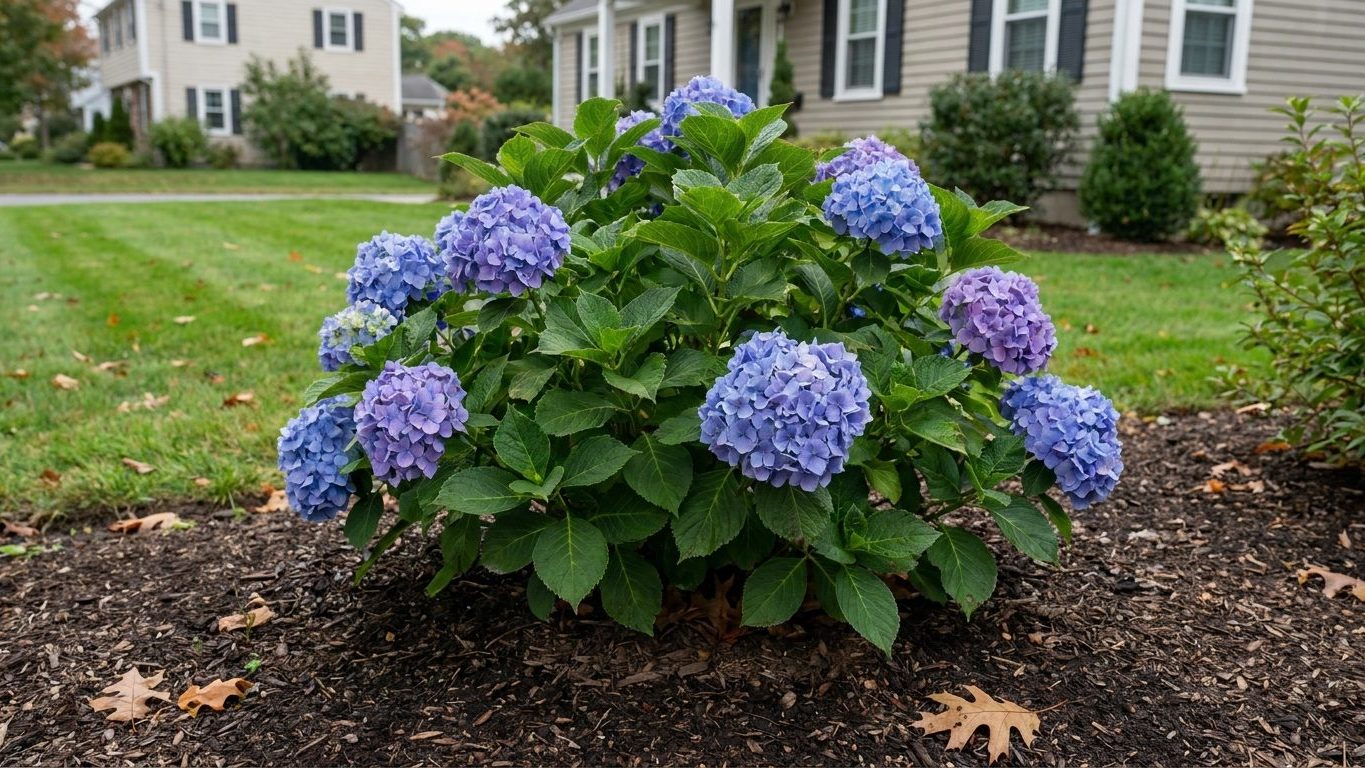
Hydrangeas in Rhode Island face a fairly short list of real problems: aphids and four-lined plant bugs early in the season, powdery mildew and leaf spot through humid summer stretches, and winter bud kill on bigleaf varieties when a hard freeze catches unprotected stems. Providence, the reference city for the state’s climate data, anchors most of what follows below.
Hydrangea Pests and Diseases Rhode Island: The Short Answer
Seven problems account for nearly every hydrangea complaint that reaches Providence-area garden centers, and they tend to arrive in a predictable order tied to the growing season. Knowing which one is active this week turns the fix from a guess into a five-minute check.
Aphids on new growth
Aphids cluster on soft spring tips as hydrangeas push new leaves, curling foliage and leaving a sticky residue behind. They multiply fast in mild weather but rarely kill an established shrub. A strong water spray or insecticidal soap knocks populations down within a week.
Four-lined plant bug spots
Small circular brown spots that appear almost overnight on leaves in late May or June point to four-lined plant bug, an insect active for only a few weeks each year. The damage looks alarming but stays cosmetic, and most shrubs simply grow past it by midsummer.
Powdery mildew on leaves
A gray-white film across upper leaf surfaces during humid stretches signals powdery mildew, which thrives where air barely moves. Spacing shrubs for airflow and watering the soil instead of the foliage keeps it from spreading. It dulls the show more than it threatens the plant.
Cercospora leaf spot
Purple-brown spots ringed in yellow on lower leaves late in the season are the calling card of Cercospora leaf spot, a fungus that builds up in wet, crowded plantings. Removing affected leaves rather than composting them keeps next year’s infection lighter.
Botrytis blight on blooms

Cool, wet stretches can turn flower clusters and soft stems brown and mushy almost overnight, a sign of Botrytis blight. Thinning stems for airflow and deadheading spent blooms promptly limits how far it spreads, especially on shrubs already stressed by an earlier dry spell.
No flower buds after winter
When a bigleaf hydrangea leafs out but skips flowers entirely, winter bud kill is almost always the cause. The USDA Plant Hardiness Zone Map puts Providence at zone 6a to 7b, where a hard snap can freeze next year’s buds outright. A loose mulch collar over the crown each fall is the fix that holds.
Deer browsing in fall
Stripped leaves and snapped stems low on the shrub in October and November usually mean deer, not disease, especially once other food sources thin out. A physical barrier over winter protects both the wood and next year’s flower buds better than repellent sprays alone.
Rhode Island — the year and the numbers
- State
- Rhode Island
- USDA zones
- 6a-7b
- Last spring frost
- April 7 to April 17
- First fall frost
- October 24 to November 3
- Annual rain
- 48 in
- Lawn zone
- cool-season
- Source
- NOAA NCEI U.S. Climate Normals 1991-2020, 32F freeze probabilities · Providence
How to Work Out the Dates for Your Own Yard
Matching a symptom to the right week takes counting backward from Providence’s frost windows rather than from a fixed calendar date.
- Mark the frost windows: NOAA NCEI U.S. Climate Normals puts Providence’s last spring frost between April 7 and April 17 and the first fall frost between October 24 and November 3, and every timeline below sits inside that stretch.
- Watch the weeks right after last frost: aphids and four-lined plant bug show up as soon as new growth hardens off, once frost risk has cleared.
- Track the humid middle of summer: powdery mildew and Cercospora leaf spot build during the same stretch the calendar table above calls for a summer fertilizer round.
- Check bloom timing against blight risk: cool, wet weeks ahead of the October to November fall frost window are when Botrytis moves fastest through open blooms.
- Test bud survival at the first spring push: if leaves emerge but flower buds stay bare past mid-May, count back to the winter’s coldest snap rather than to any insect.
- Call in the extension office for a confirmed ID: a sample in a sealed bag beats a phone description every time.
None of this replaces looking at the actual leaf or stem in hand, but lining up the symptom against the week of the year it appeared cuts most of the guesswork out of a diagnosis.
Rhode Island North to South: How the Dates Shift
Rhode Island barely stretches 40 miles top to bottom, but that’s enough to shift both frost timing and disease pressure across three rough bands.
- Coastal Rhode Island (Newport, Narragansett, Westerly): the ocean holds heat into fall, delaying the first frost and stretching the powdery mildew season a few extra weeks.
- Providence and the inland lowlands (Providence, Cranston, Warwick): this is the reference band for the state’s frost dates and zone figures, and where the calendar above lines up most closely.
- Northern uplands (Woonsocket, Chepachet, Foster): colder air pools here first, and the zone 6a end of the state’s range sits mostly in this band, raising winter bud kill risk.
Check the state guide’s zone map for which band a given zip code falls into before setting a treatment or winter protection schedule.
Mistakes Rhode Island Punishes
Watering the leaves at dusk
Evening sprinklers that leave foliage wet overnight give powdery mildew and Cercospora leaf spot exactly the damp window they need, and humid summer air makes that window last. A soaker hose at the base, run in the morning, dries leaves by nightfall.
Skipping fall cleanup
Leaving matted leaves under the shrub through winter lets leaf spot spores and Botrytis overwinter right where they’ll reinfect new growth in spring. Raking and discarding fallen leaves, not composting them, closes that loop before the ground freezes.
Pruning bigleaf hydrangea outside June and July
Cutting back a bigleaf hydrangea outside its window removes the very buds that survived winter and were about to bloom, on top of whatever cold damage the season already caused. Sticking to June and July protects next year’s flowers twice over.
Rhode Island Extension Offices and County Contacts
Providence’s frost dates and zone 6a to 7b range are a starting point, not a diagnosis. The University of Rhode Island Cooperative Extension office fields the calls that follow, and often asks for a leaf sample before naming a fungus or an insect for certain.
- Your state page: the frost dates and pruning window for wherever you live in Rhode Island.
- Which hydrangeas hold up here: variety by variety picks matched to zone 6a to 7b.
- The planting calendar: the fertilize, plant, and prune months laid out in order.
Common questions
Do all Rhode Island hydrangeas get powdery mildew?
No. Panicle and smooth hydrangeas resist it far better than bigleaf varieties, whose broad, closely spaced leaves trap moisture against the plant.
Is winter bud kill treatable once it happens?
Not for that season. A shrub that loses its buds to a hard freeze will still leaf out and grow, just without flowers, and next year’s buds can be protected with mulch instead.
Should I spray hydrangeas preventively each spring?
Most Rhode Island yards don’t need it. Spacing plants for airflow and watering at the soil line prevents more disease than any routine spray schedule does.