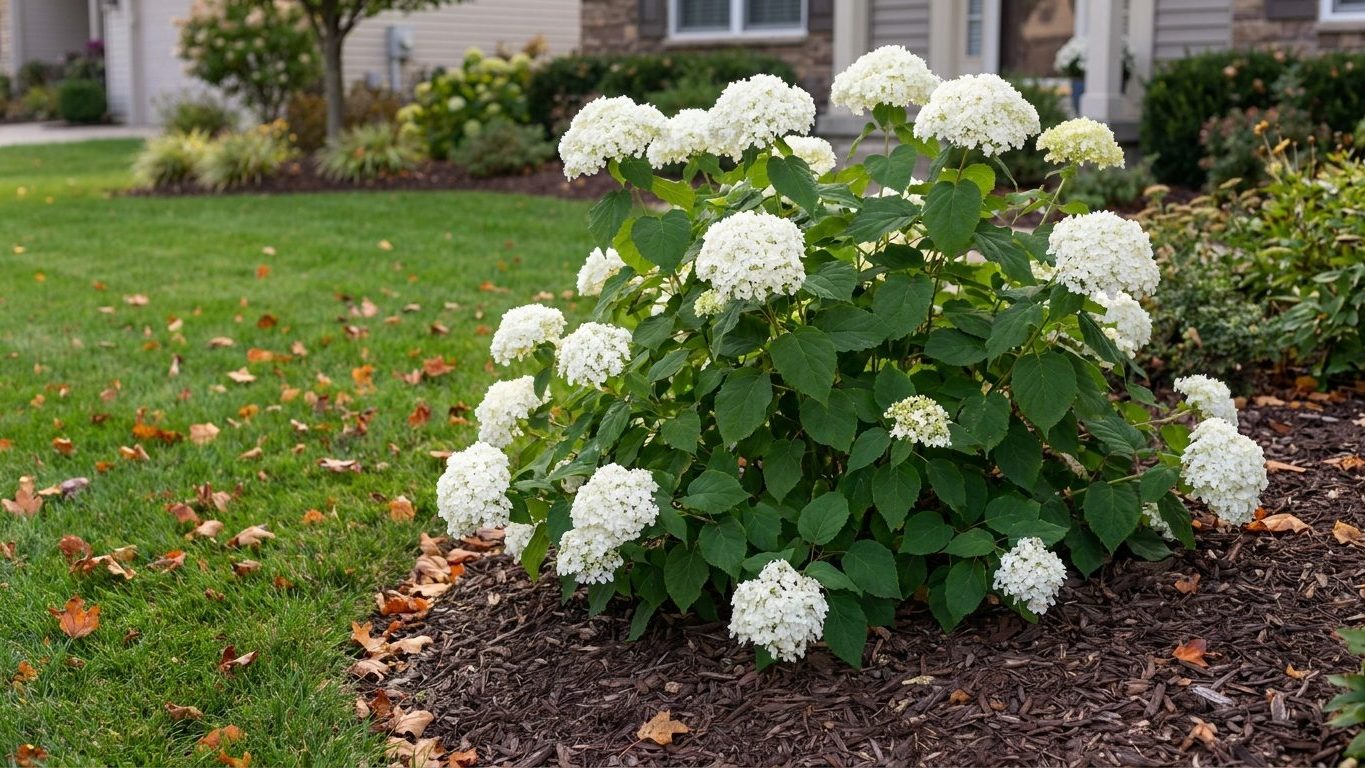
Ohio hydrangeas run into a predictable list of problems, and most trace back to the same root cause: a frost window that closes in mid-May and reopens in early October. In Columbus, buds that form before that gap freeze, humid summers feed fungus, and dry stems in winter tell you where zone 5b meets 6b. Six issues explain nearly everything gardeners see here.
Hydrangea pests and diseases Ohio: The Short Answer
Ohio State University Extension’s Ohio Gardening Calendar puts the last spring frost in Columbus between May 5 and May 15, and the first fall frost between October 5 and October 15. That gap of roughly five months sets the stage for every pest and disease listed below, in the order each one shows up.
No flowers on a healthy shrub

Flower buds die when a frost lands after they’ve broken dormancy, and in Columbus that risk lingers all the way to mid-May. Skip pruning before June, since the pruning window for bigleaf sits in June and July, and buds that survive frost need those months to set.
Deer browsing new growth

Ragged, torn stems rather than clean cuts point to deer feeding at dawn or dusk, common wherever yards back up to woods or fields. A physical barrier or repellent applied through the growing season protects buds better than any spray timed once.
Aphids on new growth
Small green or black insects cluster on tender shoots once warm weather settles in, leaving a sticky film called honeydew on leaves below. A strong spray of water knocks most colonies off, and a light insecticidal soap handles the rest before flowers open.
Leaves scorched on the sunny side
Crisp brown edges on the side facing full afternoon sun point to heat and dry soil, not a pest. Hydrangeas planted where zone 5b meets 6b handle more sun than those further south, but afternoon shade and a deep soak still cut scorch fast.
Powdery mildew coating leaves

A gray-white dusting across older leaves shows up once Ohio’s summer humidity settles in, usually worse on plants crowded against a fence or wall. Space new plants set out in May or June for airflow, and water the soil instead of the foliage.
Leaf spot with brown rings

Circular brown spots with a darker edge spread across lower leaves by late summer, usually after a stretch of wet weather. Pull off and bag affected leaves rather than composting them, and avoid overhead watering for the rest of the season.
Stems dead to the ground after winter
Bare, brittle wood that snaps instead of bending by spring often means a hard freeze hit before the plant hardened off, more likely where the shrub sits outside the milder pocket near the Ohio River. Cut back to living wood and expect a lighter bloom that year.
Ohio — the year and the numbers
- State
- Ohio
- USDA zones
- 5b-6b
- Last spring frost
- May 5 to May 15
- First fall frost
- October 5 to October 15
- Annual rain
- 42 in
- Lawn zone
- cool-season
- Source
- Ohio State University Extension — Ohio Gardening Calendar · Columbus
How to Work Out the Dates for Your Own Yard
Matching a symptom to its real cause in Ohio comes down to running it through the same four fixed points every year, in order, rather than guessing from a single photo or a neighbor’s diagnosis.
- Mark the last frost window: Ohio State University Extension’s Ohio Gardening Calendar sets Columbus between May 5 and May 15, and any bud or new-growth damage that shows up before that range points to frost, not a pest.
- Hold pruning until the window opens: bigleaf pruning in Ohio runs June and July only, so bare wood or missing buds after an April or May cut are self-inflicted, not disease.
- Track symptoms against rainfall: powdery mildew and leaf spot both spread fastest right after a wet stretch, so problems that appear the week after heavy rain almost always trace back to fungus rather than insects.
- Check the planting calendar first: shrubs set out in May, June, August, or September can wilt or drop leaves from transplant stress alone, with no pest anywhere near the roots.
- Line feeding up with the fertilize window: shrubs fed in May and July recover from minor aphid or mildew damage within a couple of weeks, while unfed plants stay ragged all season.
- Mark the first fall frost: October 5 to October 15 is when stems legitimately die back for winter, so collapse that happens weeks earlier usually has a different, fixable cause.
Work a symptom through those six checks in the order they happen during the season, and most Ohio hydrangea complaints sort themselves into weather, timing, or something actually living on the plant, long before a trip to the garden center.
Ohio North to South: How the Dates Shift
Ohio isn’t uniform, and the same frost and pruning windows that hold in Columbus shift by days to weeks depending on where a yard sits relative to Lake Erie, the hills, or the river.
- The Lake Erie shoreline (Cleveland, Toledo, Sandusky): the lake holds heat into fall and delays the first frost, but it also adds the humidity that feeds powdery mildew and leaf spot longer into the season.
- The Appalachian foothills (Athens, Marietta, Zanesville): higher ground cools faster at night, so frost can arrive on the early edge of the range and linger into the pruning window.
- The Ohio River valley (Cincinnati, Portsmouth, Ironton): this southern pocket runs milder, closer to the 6b half of the state’s range, which softens winter dieback but not summer fungus.
- The northwest plains (Toledo, Findlay, Lima): open, flat farmland with less windbreak means harder, faster frosts and less margin for shrubs planted near the edge of their hardiness.
None of that changes what a problem is, only when it shows up, so check the state page for the exact frost window before deciding a symptom is early or late.
Mistakes Ohio Punishes
Pruning bigleaf before June
Cutting back stems in April or May removes the very buds that survived the frost window, since bigleaf pruning in Ohio belongs in June and July only. Wait until new leaves confirm which wood is alive, since winter kill varies across the state’s 5b to 6b range, then cut just above the highest healthy bud.
Watering the leaves instead of the soil
Overhead watering during Ohio’s humid summer stretch keeps foliage wet long enough for powdery mildew and leaf spot to take hold, especially on plants set close together. Switch to a soaker hose at the base and water in the morning so leaves dry by afternoon.
Skipping the July fertilize window
Plants fed only in May and left alone through summer head into the October frost window already thin, with less reserve to recover from aphids or mildew picked up along the way. A second feeding in July closes that gap before cold weather arrives.
Ohio Extension Offices and County Contacts
The state numbers above are a starting point, not a diagnosis. Ohio State University Extension runs a county office in every part of Ohio, and that local office can confirm whether a shrub is fighting frost, fungus, or something living.
- Your state page: the frost dates and the pruning window where you live.
- Which ones hold up here: the hydrangea types worth planting in this hardiness range.
- When to plant, prune, and fertilize: the month-by-month calendar for the whole season.
Call the county office before spraying anything, since a wrong guess on the cause usually means the wrong treatment too.
Common questions
Do hydrangeas in Ohio need winter protection?
Shrubs at the edge of the state’s 5b to 6b range benefit from a layer of mulch over the root zone before the first fall frost between October 5 and October 15, since protecting the roots matters more than covering the stems.
Is powdery mildew dangerous to hydrangeas?
Powdery mildew rarely kills an established hydrangea, but it weakens the plant heading into winter and spreads fastest in humid stretches of an Ohio summer, so pulling affected leaves and improving airflow limits the damage before it compounds.
Why didn’t my hydrangea bloom this year in Ohio?
The most common cause is frost hitting buds that had already broken dormancy before the last frost window closed between May 5 and May 15, followed by pruning done outside the June and July window.