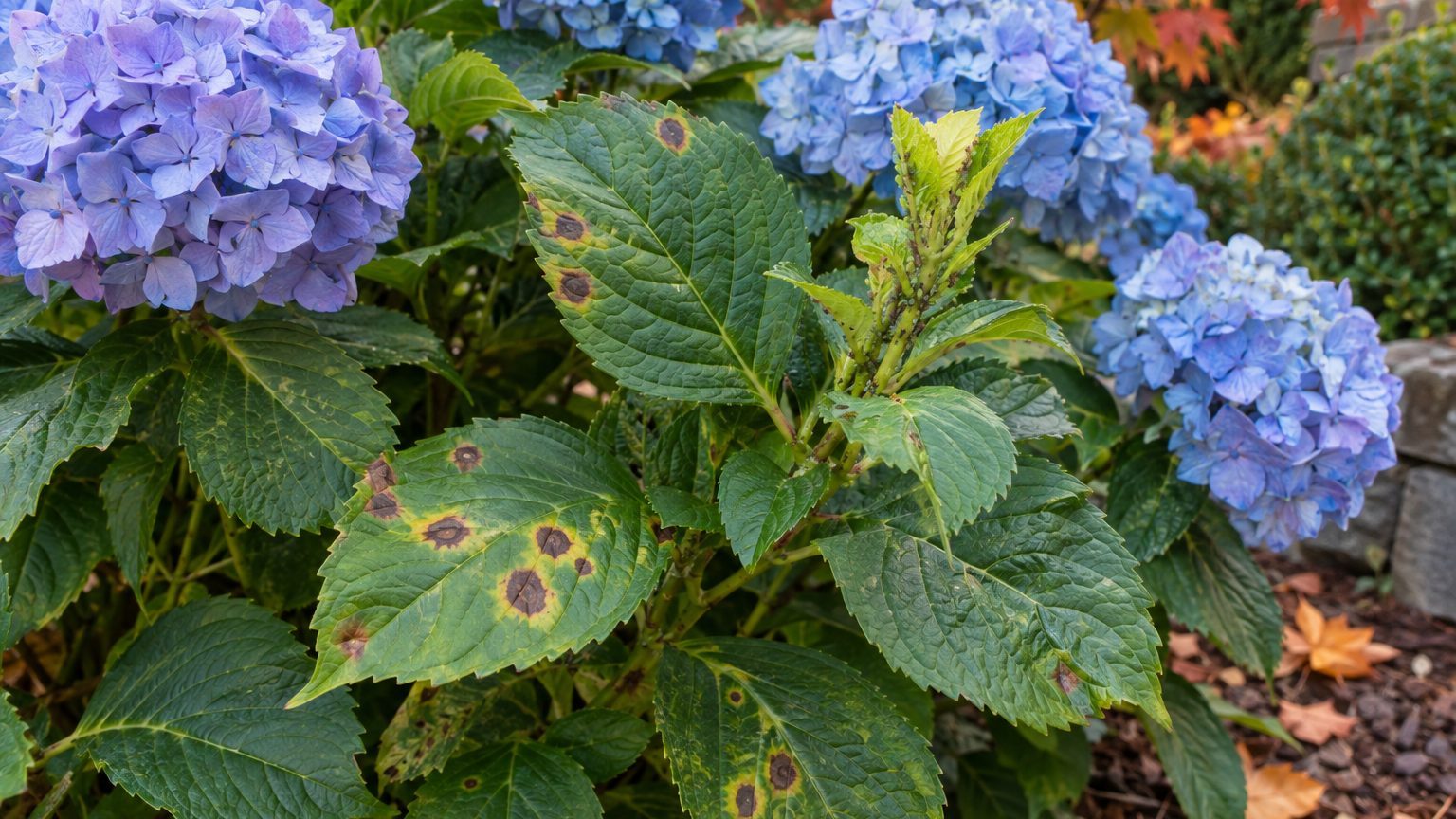
Hydrangeas in Hawaii rarely die from cold. The trouble here is moisture: constant humidity on windward coasts feeds fungal disease, while a handful of insects, most the Chinese rose beetle, chew fresh growth after dark. Knowing which one you’re looking at saves the plant.
Hydrangea pests and diseases Hawaii: The Short Answer
The USDA Plant Hardiness Zone Map places the islands across a 9a-13a range, with Honolulu as the low-elevation reference point most gardeners compare against. Most of what damages hydrangeas here is fungal, tied to rainfall and shade, rather than the insect pressure mainland gardeners describe.
Slugs and snails on new leaves

Wet soil left over from the January and February planting window draws slugs to tender seedlings at night. Ragged holes with a silvery trail are the tell. Handpick after dark or set a shallow beer trap, and check the state calendar page for the full planting window.
Chinese rose beetle at dusk

This beetle skeletonizes leaf edges into a lacy pattern and feeds almost exclusively after sunset, vanishing by morning. It favors soft new growth pushed by the March, May and July fertilize schedule. Row cover over young plants at dusk blocks it without spraying.
Aphids clustered on buds
Small, soft-bodied clusters gather on flower buds right when fertilizer pushes new growth. Sticky residue and curled leaf tips follow. A strong water spray every few days knocks populations down before buds open, cheaper than any treatment.
Powdery mildew in humid shade

A gray-white dusting spreads across leaves wherever airflow is poor, worse on the humid windward side of an island. It rarely kills the shrub but weakens bloom. Space plants wider and prune out crowded interior stems during the June or July bigleaf pruning window.
Botrytis blight on wet blooms

Brown, mushy spots appear on petals and buds right after a heavy rain event, spreading fast in still air. Remove and discard affected blooms rather than composting them. Better spacing and morning watering, not evening, keep this from returning.
Root rot after standing water

Yellowing lower leaves and a soft, blackened base signal Phytophthora root rot, almost always from soil that never drains between rains. Raised beds or amended, gritty soil fix this faster than any fungicide. See the state guide page for a full site-prep checklist.
Hawaii — the year and the numbers
- State
- Hawaii
- USDA zones
- 9a-13a
- Frost
- none in an average year
- Annual rain
- 16 in
- Lawn zone
- warm-season
- Source
- NOAA NCEI 1991-2020 Climate Normals: not-computable flag for every freeze percentile at 32F and 36F, zero days per year at or below 32F, station USW00022521 — https://www.ncei.noaa.gov/access/services/data/v1?dataset=normals-annualseasonal&stations=USW00022521 · Honolulu
How to Work Out the Dates for Your Own Yard
NOAA NCEI’s 1991-2020 Climate Normals record zero days at or below 32°F at station USW00022521, so there’s no frost countdown to run here. The method instead starts from the calendar windows and works backward through rainfall and airflow at your own site.
- Check the month against the planting window: wilting in a shrub set out during January or February usually points to transplant stress, not pest damage.
- Walk the yard after dark: chewed leaf edges with no insect visible by morning almost always mean Chinese rose beetle, active at night only.
- Match new growth to the fertilize schedule: aphid clusters and mildew both spike around the March, May and July feeding, since both feed on soft tissue.
- Check drainage after the next heavy rain: yellowing that starts low on the plant after standing water points to root rot, not a leaf disease.
- Note what happens after the bigleaf pruning window: buds that fail to open following June or July pruning suggest disease carried over on old wood, not a new pest.
Run through these five checks in order before treating anything. Most misdiagnoses in Hawaii come from spraying for insects when the real problem is standing water.
Hawaii North to South: How the Dates Shift
Hawaii doesn’t run north to south so much as windward to leeward, and elevation matters as much as either.
- Windward coasts (Hilo, Hamakua, Puna): humidity stays high year-round, so fungal pressure from mildew and botrytis runs higher than anywhere else in the state.
- Leeward and dry coasts (Kona, Waianae, Kihei): drier air cuts fungal risk sharply, but spider mites become the more likely complaint on stressed foliage.
- Upcountry and high elevation (Waimea, Volcano, Kula): cooler nights slow both insects and fungal spread, the closest match to a mainland-style growing season.
- Outer islands and exposed shores (Kauai’s north shore, Molokai): wind and salt spray add stress that opens the door to root and stem disease.
Check the state guide page for the planting and pruning windows that apply to your part of the island chain.
Mistakes Hawaii Punishes
Watering on top of standing rain
Adding irrigation right after a downpour keeps roots sitting wet and invites Phytophthora root rot within weeks. Let soil drain and dry slightly at the surface before watering again, and confirm the bed drains at all before replanting there.
Pruning outside the bigleaf window
Cutting bigleaf hydrangeas outside June or July removes the buds that were already set for next season’s bloom. Wait for that window, and mark it on next year’s calendar so it doesn’t get skipped again.
Ignoring airflow in windward shade
Crowding shrubs together on the humid windward side traps moisture against the leaves and feeds both mildew and botrytis. Space plants wider than feels necessary and prune the interior open during the bigleaf window to let air move through.
Hawaii Extension Offices and County Contacts
The zone range and calendar windows above are a starting point. The CTAHR Extension office for your county carries the rest, from soil testing to confirming a pest identification in person.
- Your state page: the planting, fertilizing and pruning windows for where you live.
- Which ones hold up here: the varieties that tolerate Hawaii’s humidity and elevation spread.
- County extension office: soil testing, pest samples and a local answer when a diagnosis isn’t clear.
Common questions
Do hydrangeas need winter protection in Hawaii?
No. NOAA records zero freeze days for the islands, so cold protection isn’t part of the calendar here.
Why do my hydrangea leaves have holes but no bugs in sight?
Check after dark. Chinese rose beetle feeds at night and disappears well before daylight, leaving damage but no visible insect.
Is powdery mildew dangerous to the plant?
It weakens bloom but rarely kills the shrub. Wider spacing and pruning during the June or July window control it better than repeated spraying.