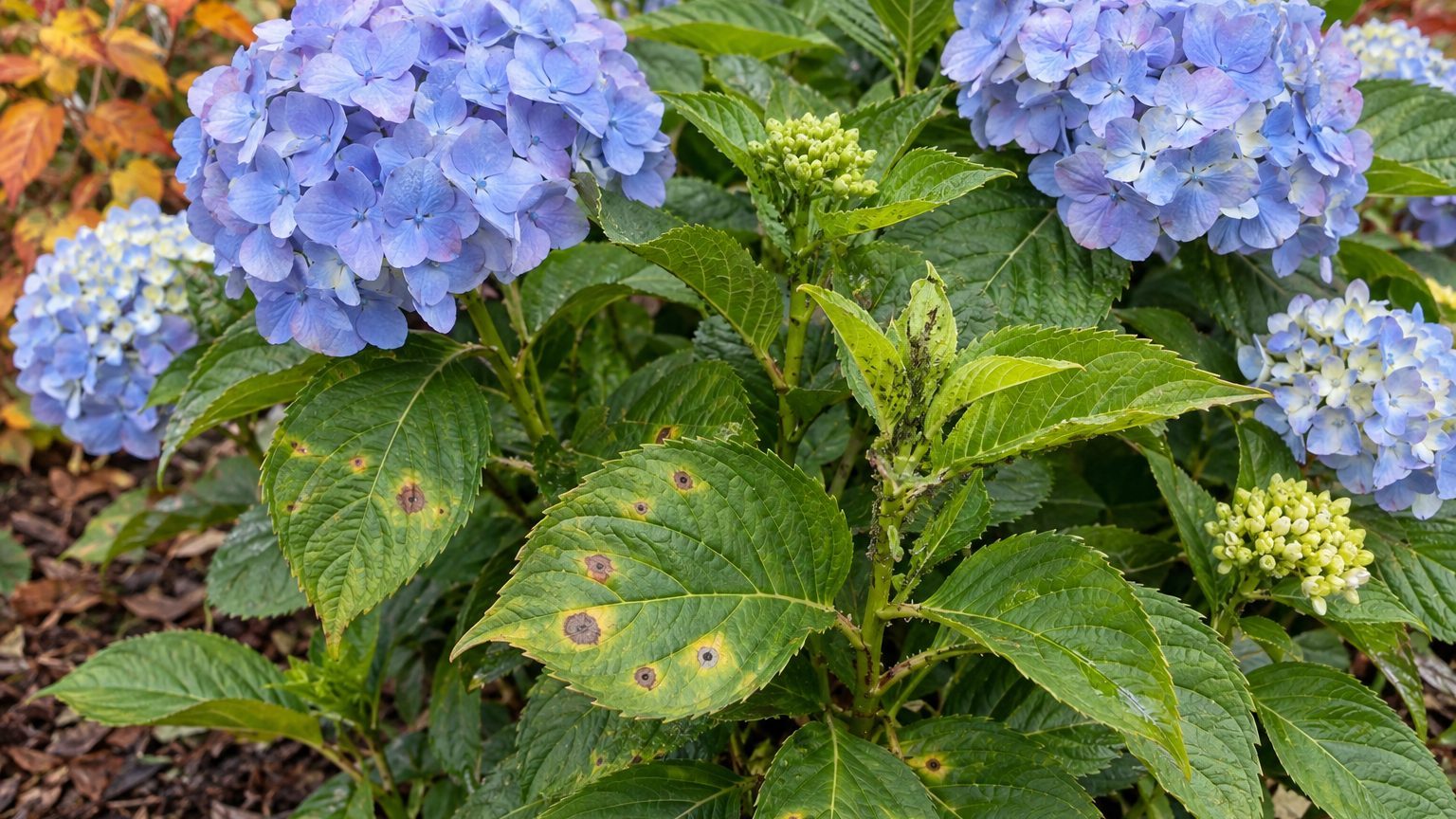
California hydrangea trouble breaks along a line most gardeners never think to draw: coastal and southern yards fight heat and drought, while the Central Valley, the north and the Sierra foothills still deal with real winter freezes. Which pest or disease shows up first depends entirely on which side of that line the shrub sits.
Hydrangea pests and diseases California: The Short Answer
In Los Angeles and the frost-free stretches of coastal and southern California, NOAA climate normals show no measurable freeze in an average year, so hydrangeas here fight heat, drought and water restrictions rather than winter dieback. California’s own hardiness range still stretches from zone 5a to 11a, the widest spread of any state, which means a shrub in the Sierra foothills faces freeze pressure a coastal plant in Los Angeles never sees.
Aphids clustering on new growth
Aphids show up on tender spring growth soon after the March fertilizing window, leaving a sticky residue and curled leaves behind. A strong hose spray or insecticidal soap knocks them back before the colony spreads to nearby buds.
Powdery mildew on new leaves
Coastal fog and cool spring nights coat leaves in a white, floury film, usually right as buds set. Space plants for airflow and water the soil, not the foliage, to keep spores from moving across the bed.
Spider mites in the summer heat

Fine webbing and stippled, bronzed leaves appear once daytime heat climbs and drought stress builds during the dry summer stretch. A forceful rinse under the leaves paired with steady deep watering breaks the cycle mites need to spread.
Leaf scorch along the western exposure

Direct afternoon sun combined with water restrictions bakes leaf edges brown, especially in the Central Valley. Move containers or add partial shade, and shift deep watering to early morning to protect the roots underneath.
Root rot from summer overwatering

Wilting despite moist soil signals root rot, common where clay holds water during compensatory summer irrigation. Let soil dry between waterings and improve drainage with a raised bed or amended planting hole.
Botrytis blight in fall fog

Brown, mushy blotches on petals and leaves spread when coastal fog keeps foliage damp for hours at a stretch. Remove spent blooms promptly and skip overhead watering as days shorten toward the October and November planting window.
Deer and snails after dark
Ragged, chewed leaves and slime trails point to deer browsing or snails, both active through mild California nights when other forage runs short. Fencing, copper tape and evening hand-picking keep either one from returning night after night.
California — the year and the numbers
- State
- California
- USDA zones
- 5a-11a
- Frost
- none in an average year
- Annual rain
- 12 in
- Lawn zone
- warm-season
- Source
- NOAA NCEI 1991-2020 Climate Normals · Los Angeles
How to Work Out the Dates for Your Own Yard
Working out which hydrangea problem you actually have starts with placing your yard on the state’s climate map, then matching the symptom to the month it appeared.
- Place your yard on the zone map: California’s USDA Plant Hardiness Zone Map runs from zone 5a to 11a, so decide first whether you garden in a freeze-prone pocket like the Sierra foothills or a frost-free spot like Los Angeles.
- Match the symptom to the month: aphids and mildew tend to appear near the March fertilizing window, while mites and scorch follow the July pruning window and the driest weeks of summer.
- Check the leaf texture: sticky residue points to aphids, a white film points to mildew, fine webbing points to mites, and crisp brown edges point to heat and drought stress instead.
- Review your watering log: soil that stays wet for days despite restrictions suggests root rot, while soil that dries out fast between waterings points toward mite pressure.
- Cross-check with your county extension: a local advisor confirms which of these is active in your zip code before you spray or treat anything.
Once the climate half of the yard and the calendar month agree, the diagnosis usually narrows to one or two candidates, and the fix listed above stops the spread before it reaches the next shrub over.
California North to South: How the Dates Shift
Pest and disease pressure shifts across California more by elevation and coastal fog than by simple latitude, and each region tends to favor a different problem from the list above.
- North Coast and Sierra foothills (Redding, South Lake Tahoe, the Shasta area): winter freezes knock back overwintering aphids and mites, but the same cold plus wet springs favors powdery mildew and Botrytis blight.
- Central Valley (Sacramento, Fresno, Bakersfield): summer heat well past what the coast sees drives spider mites and leaf scorch hardest, especially where irrigation lapses during restrictions.
- Coastal strip (San Francisco, Santa Barbara, San Diego): year-round fog keeps foliage damp longer, favoring mildew and Botrytis over mites, and frost-free winters mean pests rarely fully pause.
- Southern inland valleys and deserts (Riverside, Palm Springs, inland San Diego County): dry heat pushes mites and scorch to the front while fungal problems fade for lack of moisture.
Whichever part of the state applies, the state guide lines up the zone number with the region so the diagnosis above fits the yard, not just a statewide average.
Mistakes California Punishes
Watering on a fixed schedule through a drought order
Sticking to a normal irrigation calendar while a county water restriction is active leaves roots either parched or waterlogged once the schedule finally runs. Check soil moisture by hand before each watering and adjust between the drought and normal weeks.
Overhead watering during coastal fog season
Sprinklers that wet the foliage add to the moisture fog already leaves behind, exactly what mildew and Botrytis need to spread across a bed. Switch to soil-level drip irrigation, especially through the fall fog months near the coast.
Planting in July heat instead of the fall window
Setting new hydrangeas out during peak summer heat stresses roots before they establish, inviting scorch and rot at once. The calendar lists January, February, October and November as the planting months for good reason, so hold new stock until then.
California Extension Offices and County Contacts
The zone range above is a starting point, not a diagnosis, and county offices fill in the rest with soil tests and pest identification.
- Your state page: the zone breakdown and calendar months for where you live.
- Which ones hold up here: the varieties that shrug off heat, drought and coastal fog without extra spraying.
- UC ANR: county-by-county contacts for confirming a pest or disease before treating it.
Common questions
Do hydrangeas get frost damage in California?
Only in the freezing zones, since coastal and southern California run frost-free in an average year while the Central Valley, the north and the Sierra foothills still see freezes that zones as low as 5a account for.
What is the most common hydrangea pest in California?
Aphids and spider mites lead the list statewide, though which one dominates depends on whether the yard sits in a cool coastal fog belt or a hot inland valley.
When should I stop worrying about fungal disease and start worrying about drought stress?
Once the calendar turns past the July pruning window into the driest weeks of summer, drought stress and mites typically replace mildew and Botrytis as the main concern.