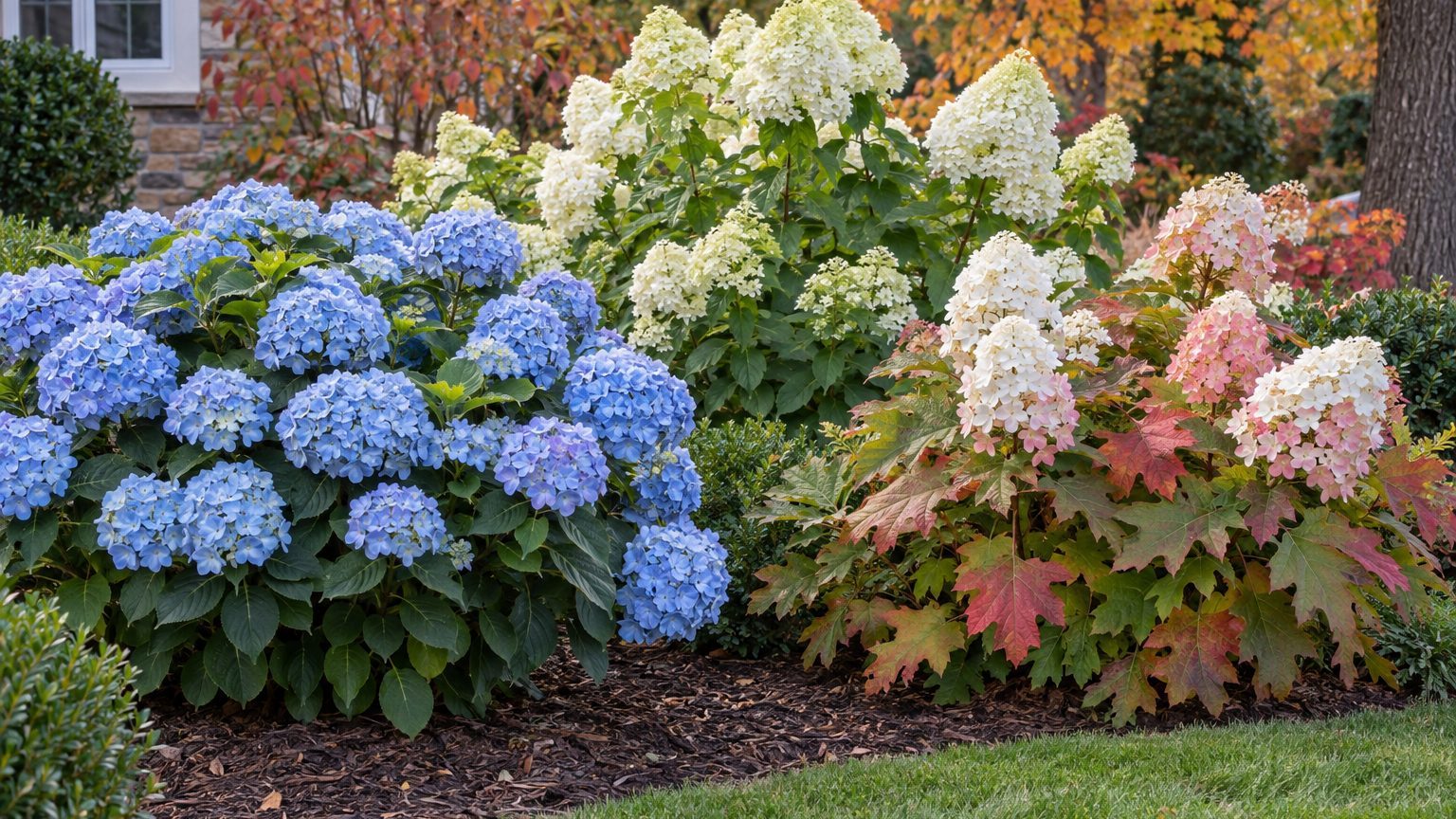
In Los Angeles and most of coastal California, hydrangeas run into heat and drought long before they ever see frost. The state’s USDA hardiness range stretches from 5a to 11a, and panicle and oakleaf varieties handle that spread better than classic mophead types. Los Angeles itself never records a hard freeze, so timing here is about summer sun, not spring frost.
Hydrangeas that grow well in California: The Short Answer
USDA’s Plant Hardiness Zone Map puts California anywhere from 5a to 11a, and Los Angeles sits at the frost-free end of that range, averaging zero days at or below 32°F in an average year. That spread means the safest hydrangea choices for most California yards lean toward heat and drought tolerance rather than cold hardiness.
Panicle hydrangea

Hydrangea paniculata tolerates full sun and dry heat better than any other type sold here, which makes it the safest pick from the coast to the Central Valley. It blooms on new wood, so a hard freeze inland never costs a season’s flowers.
Oakleaf hydrangea

Hydrangea quercifolia handles part sun once its roots are established and shrugs off short dry spells better than the mophead types. Its fall foliage color is a bonus in a state where most shrubs stay green year round.
Mountain hydrangea

Hydrangea serrata is a smaller, tougher cousin of the classic bigleaf, with better tolerance for temperature swings between coastal fog and inland heat. It still wants afternoon shade south of the Bay Area, but it recovers from stress faster than macrophylla.
Bigleaf hydrangea

Hydrangea macrophylla is the shrub most people picture, and it grows well along the coast from San Diego to Mendocino where fog keeps afternoons cool. Inland, it needs consistent water and full afternoon shade or the flowers and leaves scorch by midsummer.
Smooth hydrangea

Hydrangea arborescens, sold as Annabelle types, wants steady moisture and part shade all season, conditions that are hard to hold through a dry California summer without daily attention. It survives here, but only with irrigation most other hydrangeas don’t need.
Climbing hydrangea

Hydrangea anomala subsp. petiolaris is the riskiest of the group in this state, since it takes years to establish and wants shade and moisture more consistent than most California soil holds onto. It rewards patience on a north-facing wall, but it punishes neglect fast.
California — the year and the numbers
- State
- California
- USDA zones
- 5a-11a
- Frost
- none in an average year
- Annual rain
- 12 in
- Lawn zone
- warm-season
- Source
- NOAA NCEI 1991-2020 Climate Normals · Los Angeles
How to Work Out the Dates for Your Own Yard
Working out real dates for your yard starts with the same frost record that sets Los Angeles apart from the rest of the state.
- Check your local freeze record: NOAA NCEI climate normals show zero days at or below 32°F in thirty years for Los Angeles, so a frost-safe planting date does not apply there the way it does inland.
- Find your USDA zone: the state runs from 5a to 11a, and a shrub rated for the warm end of that range in a coastal catalog can still freeze out in the Sierra foothills.
- Plant in the cool months: the calendar for this state lists January, February, October and November as planting months, avoiding the dry heat of summer establishment.
- Match the species to your summer: panicle hydrangea takes full sun through a Central Valley summer, while smooth hydrangea wants the kind of steady shade and moisture that dry heat rarely allows.
- Prune bigleaf on schedule: June and July are the pruning months here, timed after bloom so next year’s buds stay on the plant.
- Feed three times a season: March, May and July carry the fertilizing windows, spaced around the heat rather than the frost.
None of these steps depend on a frost date that Los Angeles simply doesn’t have. They depend on heat, water and the calendar above.
California North to South: How the Dates Shift
Elevation, fog and distance from the coast move these numbers more than latitude does inside one state this large.
- Southern California coast (San Diego, Los Angeles, Santa Barbara): frost-free by NOAA’s record, so hydrangea care here runs on drought and shade management rather than any cold date.
- Central Valley (Sacramento, Fresno, Bakersfield): summer heat arrives earlier and holds longer than on the coast, pushing hydrangea bloom forward and making afternoon shade close to mandatory for bigleaf types planted in full sun.
- Sierra Nevada and mountain towns (South Lake Tahoe, Truckee, Mammoth Lakes): real winter freezes return here, so planting waits for the ground to thaw in spring rather than following the coastal calendar.
- Bay Area and North Coast (San Francisco, Mendocino, Eureka): marine fog cools summer afternoons enough that classic bigleaf hydrangeas often need less shade than they would inland.
- Inland deserts (Palm Springs, Palm Desert, Indio): extreme summer heat pushes most hydrangea species past their limit, so success here depends on heavy shade and irrigation most yards can’t sustain long term.
The state’s planting calendar assumes something closer to the coastal pattern, so gardeners in the mountains or the Valley should shift it toward their own frost and heat record.
Mistakes California Punishes
Full sun without afternoon shade
Bigleaf and smooth hydrangeas planted in a west-facing bed scorch by midsummer once inland heat sets in. Give them morning sun and afternoon shade, or swap in panicle hydrangea, which tolerates the exposure this state’s dry heat creates.
Watering on a fixed schedule, not the soil
A calendar reminder to water twice a week ignores how fast California soil dries between fog and heat waves. Check soil moisture with a finger before each watering, and adjust for the county water restrictions many California cities enforce.
Pruning bigleaf outside its window
Bigleaf hydrangea sets next year’s flower buds on this year’s wood, so cutting it back outside June and July removes the very buds meant to bloom. Prune right after flowering ends, inside the window the calendar above lists.
California Extension Offices and County Contacts
The 5a to 11a zone range is a starting point, not a promise. University of California Agriculture and Natural Resources runs county offices that track local soil, water rules and pest pressure closer than any statewide map.
- UC ANR county offices: find your local office for soil tests and current water-use rules.
- The planting calendar for California hydrangeas: month-by-month planting, feeding and pruning windows for this state.
- What goes wrong with hydrangeas in California: the pests and problems specific to this climate, in the order they show up each season.
Call your county office before you plant if you’re not sure which zone your yard actually falls into.
Common questions
Do hydrangeas need winter protection in Los Angeles or San Diego?
No. NOAA’s climate record shows zero freeze days there in an average year, so bigleaf hydrangeas can stay in the ground year round without mulch or wrapping for cold.
Which hydrangea handles California drought best?
Panicle hydrangea and oakleaf hydrangea both tolerate short dry spells once established, needing far less supplemental water than bigleaf or smooth types through a California summer.
Can I grow hydrangeas in the Central Valley or inland deserts?
Yes, but only with afternoon shade and consistent irrigation. Panicle hydrangea handles the sun best inland, while deep desert heat pushes most species past what regular watering can offset.