Skip to content
  1. Jan
  2. Feb
  3. Mar
  4. Apr
  5. May
  6. Jun
  7. Jul
  8. Aug
  9. Sep
  10. Oct
  11. Nov
  12. Dec
State
Quebec
Hardiness zones
5b
Last spring frost
May 6
First fall frost
October 5
Annual rain
39 in
Lawn zone
cool-season
Source
Environment and Climate Change Canada — Canadian Climate Normals 1981-2010, station MONTREAL/ST-HUBERT A · Montreal

The year in Quebec, from the calendar

  1. Jan—
  2. Feb—
  3. MarRenew an overgrown lilac · Prune fruit trees
  4. AprSpring bulbs bloom · Lilacs bloom · Renew an overgrown lilac · Feed roses · Plant roses
  5. MaySpring bulbs bloom · Feed hydrangeas · Plant hydrangeas · Lilacs bloom · Prune lilacs
  6. JunPlant hydrangeas · Prune bigleaf hydrangeas · Prune lilacs · Peonies bloom · Feed roses
  7. JulFeed hydrangeas · Prune bigleaf hydrangeas · Feed roses · Mow · Water
  8. AugPlant hydrangeas · Seed the lawn · Plant peonies · Dethatch · Mow
  9. SepPlant hydrangeas · Seed the lawn · Plant peonies · Aerate · Dethatch
  10. OctPlant spring bulbs · Mow · Plant trees
  11. NovCut back peonies · Protect roses for winter
  12. DecCut back peonies

From the state frost facts and extension calendars: University of New Hampshire Extension ; University of New Hampshire Extension · Cornell Cooperative Extension (Monroe County) · Clemson HGIC factsheet — Hydrangea · Guelph Turfgrass Institute (University of Guelph) — Spring care tips for your yard.

Best Spring Bulbs for Quebec

Best Spring Bulbs for Quebec

Daffodil shoots pushing through the cold ground are the first sign that a Quebec garden has made it through winter. That show is planted the autumn before, and the bulbs you choose decide whether it returns or fizzles.

Best Spring Bulbs to Grow in Quebec

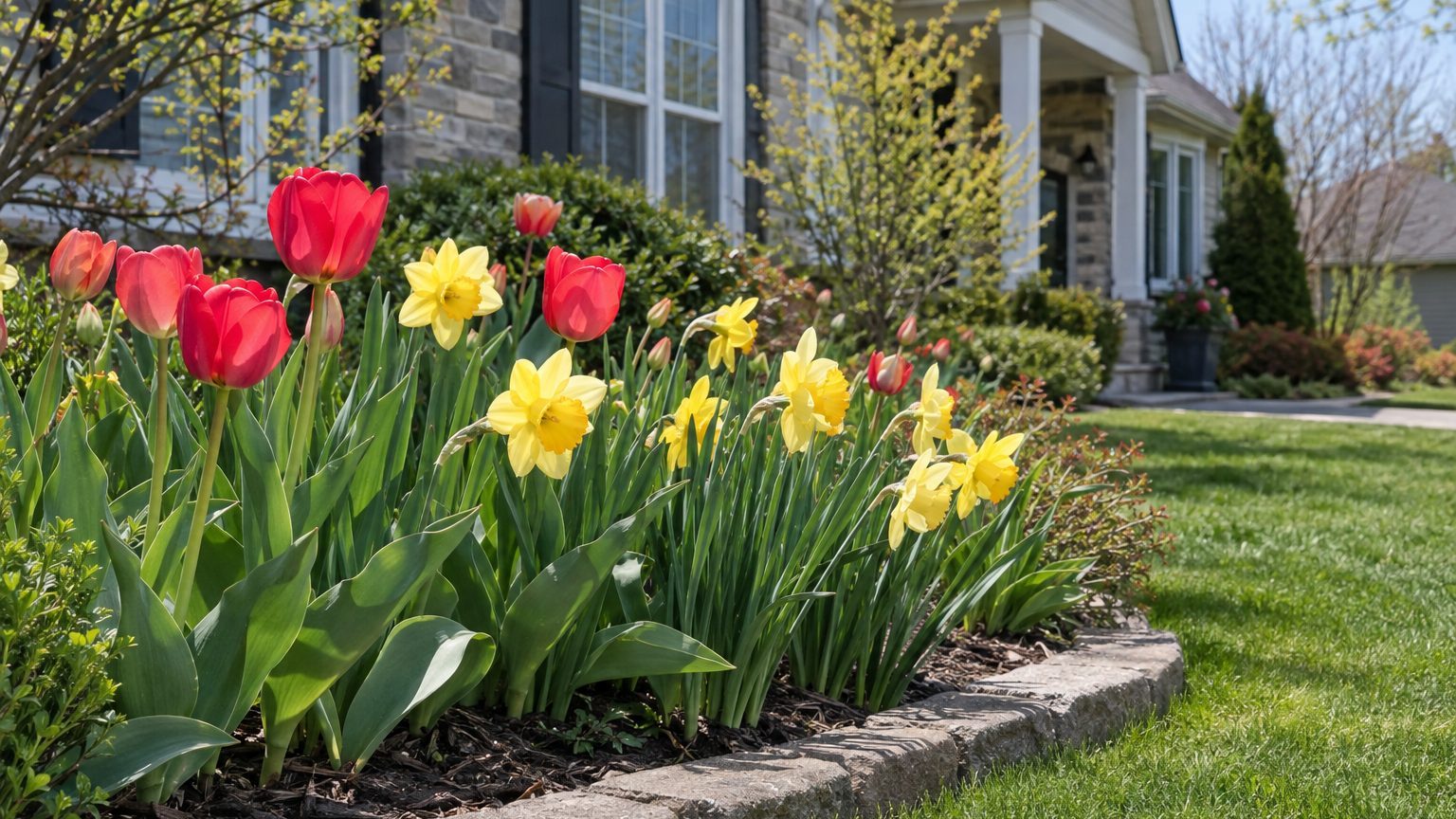
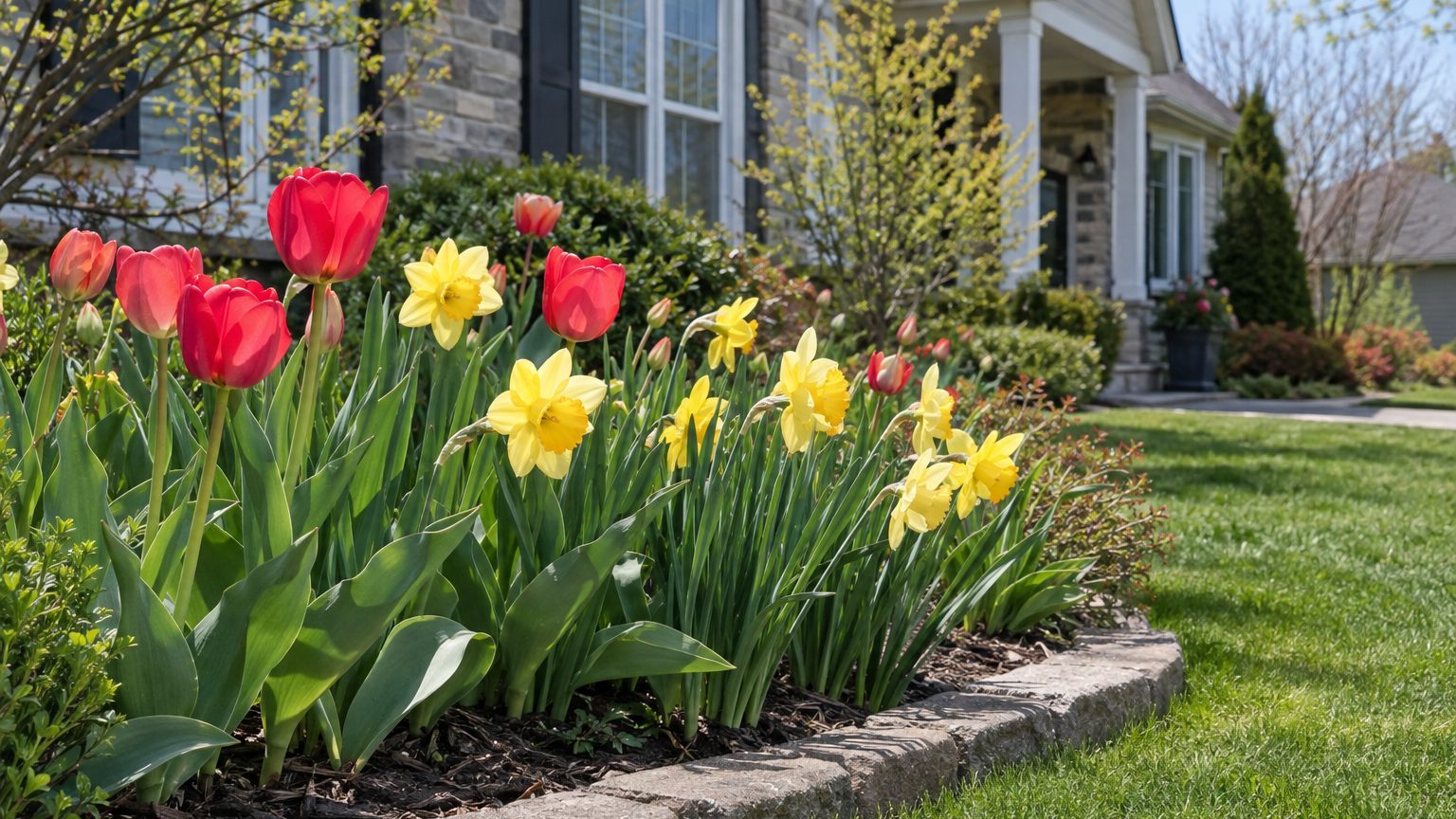
Healthy spring bulbs in bloom

Daffodils, fosteriana tulips, alliums and crocus suit Quebec, with daffodils as the dependable core because they return year after year and animals leave them alone. Most spring bulbs need about 12 to 16 weeks of cold to flower, and Quebec winters supply it, so the refrigerator chilling used in mild climates is not part of your routine.

Daffodils

Daffodils last longer in the garden than tulips and are the more reliable perennial bulb. Voles, squirrels, rabbits and deer leave them alone, so they are the safe pick for beds that critters visit.

They also naturalize well, especially in partly shady areas. Plant them under deciduous trees or along a fence line and let them spread.

Fosteriana Tulips

Most tulips fade after a few seasons, but fosteriana tulips perennialize well. If you want tulip color without replanting every autumn, this group is where to look.

They still appeal to hungry animals, so a spot close to the house or a bed that deer rarely cross helps.

Alliums

According to Iowa State University Extension, alliums, the ornamental onions, like other spring bulbs, need the cold of winter to bloom. They come at the tail end of the bulb season, after the earliest flowers are finished.

Crocus

Crocus are among the bulbs that voles, squirrels, rabbits and deer find most tempting, along with tulips. Plant them where you can watch over them, such as near a door or a window, and expect to replace a few.

How to Choose Spring Bulbs for Your Quebec Garden

Start with the problem in your own yard. A bed that deer cross every night calls for different bulbs than a shady corner you rarely visit. The Montreal area sits in Canadian hardiness zone 5b, a Canadian rating that does not convert to a USDA zone.

Match the bulb to the situation, then plant in October so the roots form before the ground freezes.

Your situation What suits it in Quebec Why
Very cold winter Daffodils They are the more reliable perennial bulb and last longer than tulips
Little time to replant Daffodils or fosteriana tulips Both return on their own, since daffodils naturalize and fosteriana tulips perennialize
Squirrels, voles, rabbits or deer Daffodils Animals leave them alone, while tulips and crocus get eaten
Partly shady spot Daffodils They naturalize well in partly shady areas
Need for winter cold Most spring bulbs, including alliums Most bulbs want 12 to 16 weeks of cold, while alliums also need the cold of winter to bloom

Hyacinths follow the same cold rule as tulips, so they also rely on the winter to do the chilling for you.

Which Spring Bulbs Suit Different Parts of Quebec

Quebec is not one climate, and your spring bulb choices shift a little from the St. Lawrence plain to the uplands and the far north.

  • Montreal area: This is the milder end of the province and the place the reference climate figures describe, so the full range of daffodils, fosteriana tulips and alliums is open to you.
  • Laurentians: Upland ground warms later, so spring comes behind Montreal and bloom follows later too. Daffodils, which take hard winters well, are the safest foundation here.
  • Saguenay and Lac-Saint-Jean: Winters run colder and spring arrives later still. Favor daffodils and alliums, and keep tulips and crocus to a smaller, protected corner.

Wherever you garden, a later spring only pushes the show back and does not change which bulbs earn their place.

Spring Bulb Buying Mistakes to Avoid in Quebec

Counting on Tulips to Return

Tulips are often short-lived in the garden, so a bed planted once and left alone thins out. Voles, squirrels, rabbits and deer also eat them. Plan on replacing them, or lean on daffodils and fosteriana tulips for the long haul.

Planting While the Soil Is Warm

Bulbs set in too early can sprout in the fall, and that growth does not survive winter. Wait until the soil has cooled below about 16°C (60°F), then plant in October so the roots settle before the ground freezes.

Saving Bulbs in the Bag

A bulb still in its bag is better planted late than stored over the winter. In Quebec, November or even December still works as long as the ground can be dug and is not frozen. Bulbs left unplanted soften and lose their flowering strength.

Where to Get Spring Bulb Advice in Quebec

Quebec has no local extension page on bulb timing, so the dates here follow the nearest comparable climate. Confirm local timing with people who garden near you.

  • The provincial agriculture ministry, MAPAQ, is the place to look for provincial growing guidance before the planting season opens.
  • A local garden centre or garden society can tell you when the ground freezes in your district, so visit in late summer before you buy.
  • Provincial gardening groups and master gardener clubs hold fall sales and talks, a good time to ask about bulbs for your soil.

Common Questions

What Should You Do with Bulb Leaves After Bloom?

Leave the leaves on the plant until they turn brown, and remove only the faded flowers. The leaves feed the bulb for next year, so cutting or tying them while green weakens the next bloom.

When Do Tulips and Daffodils Bloom in Quebec?

Bloom runs April and May, and the earliest hardy bulbs can start in March. Later varieties come toward the end of that range.

Is Quebec’s Hardiness Zone the Same as a USDA Zone?

No. The Montreal area is in Canadian zone 5b, and the Canadian system uses several climate variables, so it does not convert to a USDA zone. Use it only when a bulb label names the Canadian system.
When Do Tulips and Daffodils Bloom in Quebec?

When Do Tulips and Daffodils Bloom in Quebec?

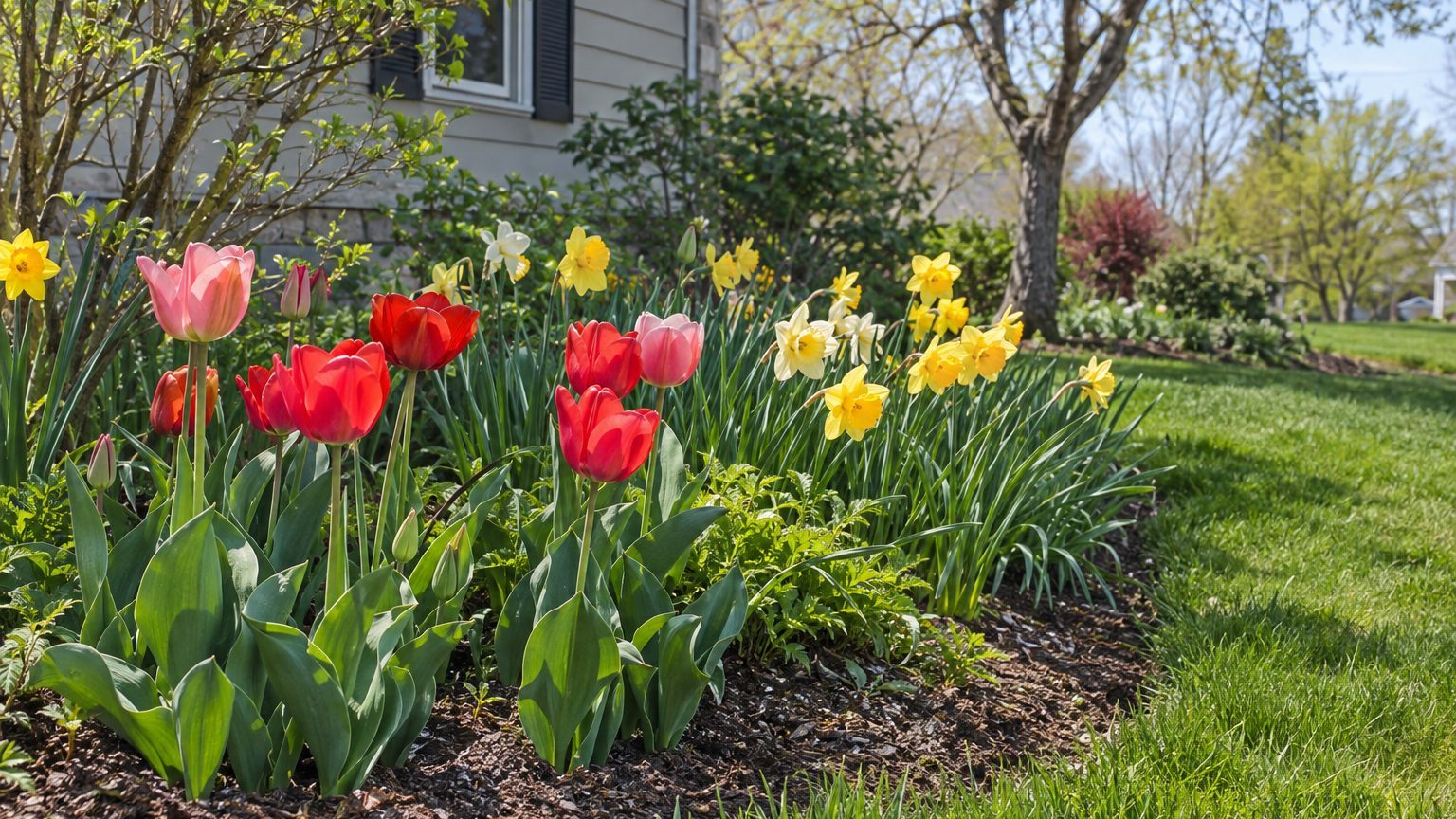
Wet snow melts off the south side of the house, and a ring of pale green spears appears in the bed where last fall’s bulbs went in. Tulips and daffodils run on spring’s warmth rather than the calendar, so Quebec’s bloom season shifts a little every year.

When Do Tulips and Daffodils Bloom in Quebec?

When Do Tulips and Daffodils Bloom in Quebec?

Tulips and daffodils bloom in Quebec mostly in April and May, and the first hardy bulbs can open as early as March. The pace follows how fast spring warms the soil, so a cold spring holds the flowers back and a mild one pulls them forward.

Quebec has no bulb-timing page of its own, so these months follow the nearest comparable climate. Confirm local timing with a garden centre, a garden society or one of the provincial gardening groups.

Bulb When it blooms in Quebec What sets the timing
Crocus and daffodils March into April Hardy types that open as the soil first warms
Earlier tulips April The variety and how quickly spring warms
Later tulips Late April and May Later-flowering varieties, plus a cool spring

Spring bulbs flower in a long succession, from snowdrops and winter aconites at the start of the season to alliums at the end. According to Iowa State University Extension, alliums need the cold of winter to bloom. Hyacinths fall somewhere between, opening as spring settles in.

How to Tell Your Bulbs Are About to Bloom

Bulbs announce themselves well before the first petal opens, and regular walks along the beds are enough to catch each stage.

  • Green tips poking through soil or old leaves mean the bulb has woken, so pull back heavy mulch gently and leave the tips in place.
  • Leaves that widen and stand upright show the plant is gathering strength, which is why they should never be trimmed.
  • A flower bud rising from the center of the leaves means bloom is close, and daffodil buds often hang at an angle inside a papery sheath.
  • Buds that swell and show a line of color while still closed will open soon, so this is the moment to plan for the display.
  • Tips that vanish overnight or leaves that look chewed point to animals, and tulips and crocus are the usual targets.

Around Montreal the last spring frost falls on average near May 6, and in one year out of two it comes later, so a cold snap after the buds color is a real possibility for later tulips.

What to Do After Tulips and Daffodils Bloom in Quebec

Snap off the faded flowers and leave everything else alone. The leaves keep feeding the bulb for next year’s bloom, so let them stay until they turn yellow and then brown. Do not braid, knot or tie them, however untidy the bed looks for now.

Tulips are often short-lived in the garden, while daffodils last longer and are the more reliable perennial bulb. Daffodils also have the advantage that voles, squirrels, rabbits and deer tend to leave them alone, while tulips and crocus are eaten.

Plan on replacing tulips as the display thins. New bulbs go in during October, so roots form before the ground freezes, and November or December still works if the soil can be dug. Hide the fading leaves by planting perennials that leaf out nearby.

How Bloom Time Shifts Across Quebec

Quebec is large, and the same bulb opens at noticeably different times from the southern lowlands to the northern districts.

  • Montreal: The St. Lawrence lowlands are warmer than much of the rest of the province, so bulbs here open earlier within the April to May window.
  • Quebec City: Spring arrives a little later than in Montreal, so tulips and daffodils flower behind their southern counterparts.
  • The Laurentians: Higher ground warms slowly, and snow lingers in the beds, which pushes the bloom later into spring.
  • Saguenay-Lac-Saint-Jean: Cold lasts longer here, so tulips often reach full bloom in May, well after Montreal gardens have finished.

Treat the dates in your own neighborhood as the guide, since a sheltered south-facing wall can open flowers sooner than an open lawn nearby.

Where to Get Bulb Advice in Quebec

Quebec has no county extension offices, so advice comes from the province and from local growers. The Ministère de l’Agriculture, des Pêcheries et de l’Alimentation du Québec is the provincial agriculture ministry, and it is the place to start.

  • The provincial ministry website offers general horticulture information, and it is worth a visit before ordering bulbs in late summer.
  • A local garden centre can tell you which varieties suit your district and when the ground usually opens up.
  • A garden society or master gardener group meets through the growing season, so visit in spring to see which bulbs thrive in nearby yards and write down the names.

Common Questions

How Much Cold Do Spring Bulbs Need to Flower?

Most spring-flowering bulbs need about 12 to 16 weeks of cold. Where winters are too mild, tulips and hyacinths are chilled in the refrigerator before planting, but Quebec’s winters supply the cold on their own.

Do Squirrels and Deer Eat Daffodils?

Daffodils are left alone, while voles, squirrels, rabbits and deer eat tulips and crocus. Planting daffodils around the edge of a bed can shield tulips from browsing deer.

Can You Plant Bulbs That Are Still in the Bag?

A bulb still in the bag is better planted late than stored over the winter. Plant it as soon as the ground can be dug, since a late bulb will usually still flower the following spring.

When to Plant Tulips and Daffodils in Quebec

When to Plant Tulips and Daffodils in Quebec

Tulips and daffodils in Quebec go in the ground in autumn, and the roots do their work long before the first snow. Timing the planting around the cold, not the calendar page, is what makes the spring show.

When to Plant Tulips and Daffodils in Quebec

When to Plant Tulips and Daffodils in Quebec

Plant tulips and daffodils in October, and if the ground has not frozen yet, November and even December still work. The dates here follow the nearest comparable climate, so confirm local timing with a garden centre, a garden society or the provincial gardening groups. A bulb’s year in Quebec runs like this:

  • In early autumn, buy bulbs while the bins are full, and choose firm ones with no soft spots or mold.
  • Through autumn, skip the refrigerator, because Quebec winters deliver all the cold that tulips and hyacinths need.
  • In October, plant once the soil has cooled below about 60°F (roughly 16°C), early enough for roots to form before the ground freezes and late enough that the bulbs do not sprout before winter.
  • In November and December, plant any bulbs left in the bag as long as a trowel still goes into the soil, because a late bulb beats a stored one.
  • Once the ground starts to freeze, spread a layer of mulch to keep the soil cold and steady through the thaws.
  • As the snow melts in spring, green tips push up, and flowers follow in April and May.

Around Montreal, the first fall frost arrives on average around October 5, which is only the midpoint, since in one year out of two it comes later. The city sits in Canadian hardiness zone 5b, a Canadian rating that does not convert to a USDA zone, and colder districts run behind it.

Which Spring Bulbs Do Best in Quebec?

Quebec winters give spring bulbs the long cold they need, so tulips, daffodils, crocus, hyacinths and alliums can all succeed. The real trouble is not frost but hungry animals. Voles, squirrels, rabbits and deer go after tulips and crocus, while daffodils are left alone.

Bulb type How it does in Quebec Why
Daffodils Reliable year after year Hardy in cold winters and ignored by animals
Tulips Good flowers, often short-lived Rodents and deer eat them
Crocus Pretty but often nibbled Voles and squirrels like them
Alliums Dependable late bloomers Ornamental onions finish the bulb season

Hyacinths follow the same autumn schedule as tulips and also need the winter cold to flower. Daffodils naturalize well, especially in partly shady spots, which makes them the safest choice for a lawn edge or a bed under trees.

When to Plant, Chill and Care for Spring Bulbs in Quebec

The year for a bulb has only a few jobs, and each has a clear moment. Most spring bulbs need about 12 to 16 weeks of cold to flower, and a Quebec winter supplies that without any help from you.

Task Best timing in Quebec Why then
Plant October, or November and December while the ground can be dug Roots settle before the ground freezes
Chill in the refrigerator Not needed Outdoor winter cold does the job
Bloom April and May, from March for the hardiest early bulbs Warming soil triggers the buds
Leave the leaves As long as they are green, until they turn brown They feed the bulb for next year

After bloom, remove only the faded flowers and let the foliage fade on its own. Never braid or cut green leaves.

How Bulb Planting Time Changes Across Quebec

Quebec stretches far enough that one planting date does not suit every garden, and the shift always runs the same way: colder places plant earlier.

  • Montreal and the Montérégie: October suits these gardens, and the late-planting fallback into November and December is most likely to be useful here.
  • Quebec City: winters set in a little sooner than around Montreal, so aim for the early part of the October window.
  • The Laurentians: higher ground cools faster, so plant at the very start of the planting window, before the soil hardens.
  • Saguenay and Abitibi: cold arrives earlier in these northern districts than in the south, so get bulbs in as soon as the soil has cooled and expect spring to come later.

Wherever you live, a soil thermometer is a better guide than the date on the wall.

Where to Get Bulb Advice in Quebec

Canada has no county extension offices, so advice comes from the province and from local growers. Take a bag of bulbs, a photo or a soil sample with you and ask directly.

  • The provincial agriculture ministry, MAPAQ, publishes gardening and plant health information for the province.
  • A local garden centre or garden society can tell you how your own neighborhood’s soil and frost behave, and is worth a visit before bulbs go in.
  • Master gardener groups and provincial gardening clubs answer questions about pests, drainage and soil testing, so contact them when something looks wrong.

Common Questions

Do Tulips Come Back Every Year in Quebec?

Often they fade after a few seasons, while daffodils last longer and are the more reliable perennial bulb. Fosteriana tulips perennialize well, so choose that group if you want tulips that stay.

Can You Plant Daffodils Under Trees?

Yes. Daffodils naturalize well in partly shady areas, so the dappled light under deciduous trees suits them, and they spread slowly into a clump over the years.

Do Alliums Need to Be Chilled Before Planting?

No. According to Iowa State University Extension, alliums need the cold of winter to bloom, so they go straight into the ground with the other bulbs in autumn and never need the refrigerator.

Best Grass Seed for Quebec

Best Grass Seed for Quebec

A Quebec lawn that greens up fast in May and still looks tidy after a snowy winter relies on cool-season grass. Kentucky bluegrass, fine fescues, perennial ryegrass and tall fescue are the species that suit the province, and the right pick depends on how much sun, foot traffic and mowing your yard sees.

Which Grass Grows Best in Quebec?

Cool-season grasses grow best in Quebec, because winters are long and cold and these species grow actively in spring and fall, then rest through hard freezes. Warm-season grasses are not an option here. Around Montreal, the Canadian hardiness zone is 5b (a Canadian rating that does not convert to a USDA zone), and colder districts run lower.

Kentucky Bluegrass

Kentucky bluegrass is the dependable choice for sunny front yards. It handles deep freezes well and spreads by underground stems, so it slowly fills in thin spots on its own.

It wants full sun and regular watering in summer. Seed it alone or blend it with fine fescue if part of the yard gets shade.

Fine Fescues

Creeping red, Chewings and hard fescue are the grasses to choose for shade, dry soil and low-maintenance lawns. They stay fine-textured and need less mowing and feeding than bluegrass.

They cope with cold easily. Their weak point is heavy foot traffic, where they wear faster than bluegrass or ryegrass.

Perennial Ryegrass

Perennial Ryegrass — Best Grass Seed for Quebec

Perennial ryegrass sprouts quickly, which makes it handy for patching and for blends that need fast cover. It can suffer winter damage, so it does best mixed into a blend rather than sown alone.

In a harsh winter with little snow cover, pure ryegrass patches can thin out by spring. Keep it as a minor partner in the mix.

Tall Fescue

Tall fescue has deep roots and stands up to summer heat and drought better than bluegrass. That is useful on dry, sunny slopes and busy play areas.

It grows in clumps and does not spread well, and it can struggle in the coldest districts. Plant it in milder southern areas and overseed gaps when they appear.

How to Choose Grass Seed for a Quebec Yard

Start with the light, because sun versus shade quickly narrows the field. Then think about how much the lawn gets walked on, whether you can water through summer, and how often you are willing to mow.

Many yards do well with a blend, since the grasses can cover one another’s weak spots. Read the seed label for the species names, and skip bags that list only generic “lawn mixture.”

Your yard Grass that fits Why
Full sun, regular watering Kentucky bluegrass Dense, self-repairing turf
Shade under trees Fine fescues Tolerate low light and dry roots
Heavy foot traffic Bluegrass with ryegrass Ryegrass fills in fast, bluegrass recovers
Little watering Tall fescue or fine fescues Deep roots or low water needs
Minimal mowing Fine fescues Slow growth, fewer cuts

Whatever you choose, press the seed lightly onto bare soil and cover it with no more than 6 mm (0.25 inch) of soil. Seed buried deeper struggles to reach daylight.

Which Grasses Grow Where in Quebec

Quebec is large, and the lawn grass that thrives in one corner may struggle in another.

  • Montreal and the St. Lawrence Lowlands: This part of the province has an earlier spring than colder and higher districts. Bluegrass blends, ryegrass mixes and tall fescue all have a fair chance here. Around Montreal, May 6 is the average last spring frost, and frost arrives later in roughly half of years.
  • Quebec City and the Laurentians: Winters are colder and snow lasts longer, so bluegrass and fine fescue blends are safer than tall fescue or ryegrass.
  • Saguenay and the north: Seasons are short and frost arrives early. Choose a cold-hardy fine fescue and bluegrass mix, and plan for a late start in spring.

Expect your own yard to run earlier or later than Montreal depending on elevation and distance from the river.

Grass Seed Mistakes to Avoid in Quebec

Picking a Grass That Cannot Take the Winter

Warm-season grasses and unlabeled cheap mixes can fail in a hard winter. Check that the bag names Kentucky bluegrass, fine fescues, perennial ryegrass or tall fescue, and match the species to your sun and shade.

Sowing at the Wrong Time

August and September are the main seeding months, when warm soil and cool air help seedlings root before winter. May also works if you missed the fall window. Frost arrives on average around October 5 near Montreal, and that is a midpoint, so frost can come earlier. Seed sown too late will not root well.

If winter arrives before you have sown, dormant seeding in November is a fallback. The seed sits through the cold and sprouts in spring.

Sowing Too Thick or Too Thin

Thin seeding leaves gaps for weeds, while heavy seeding crowds seedlings that then fight each other and fall to disease. Follow the rate printed on the bag and spread it evenly in crossing passes. For seed sown into warm soil, keep the seedbed evenly moist until the grass is established.

Where to Get Lawn Advice in Quebec

Canada has no county extension offices, so local help comes from other places. Start with the provincial agriculture ministry, then look closer to home.

  • The Ministère de l’Agriculture, des Pêcheries et de l’Alimentation du Québec offers provincial agricultural guidance, useful before you plan a large seeding.
  • Local master gardener groups answer questions about your soil and neighborhood, and are worth a visit in early spring.
  • A nearby garden center can tell you which blends sell well for your district, so ask before you buy seed in August.

Common Questions

Can You Plant Grass Seed in Spring in Quebec?

Yes. May also works once the soil has warmed, though weeds compete harder than in late summer. Use a starter feed, keep the seedbed moist, and hold off on crabgrass preventer where you have seeded, since it blocks grass seed too.

Is Clover a Good Addition to a Quebec Lawn?

Clover stays green in dry spells and feeds the soil, so some homeowners mix it with fine fescue. It spreads where it likes, so add it only if you accept a mixed look.

When Should You Fertilize a New Lawn in Quebec?

September is the main month for fertilizing, but May and October also work. A fall feeding helps roots build up before winter.

Lawn Problems and Solutions in Quebec

Lawn Problems and Solutions in Quebec

Gray, matted circles after the snow melts, a lawn that lifts like a loose carpet in late summer, coarse crabgrass spreading through thin spots: these are the repeat visitors on Quebec lawns. The causes often include long snow cover, a short growing season, or habits in mowing, watering and feeding. Each one is easier to fix once you can name it.

Lawn Pests and Diseases in Quebec

Snow Mold

Snow Mold — Lawn Problems and Solutions in Quebec

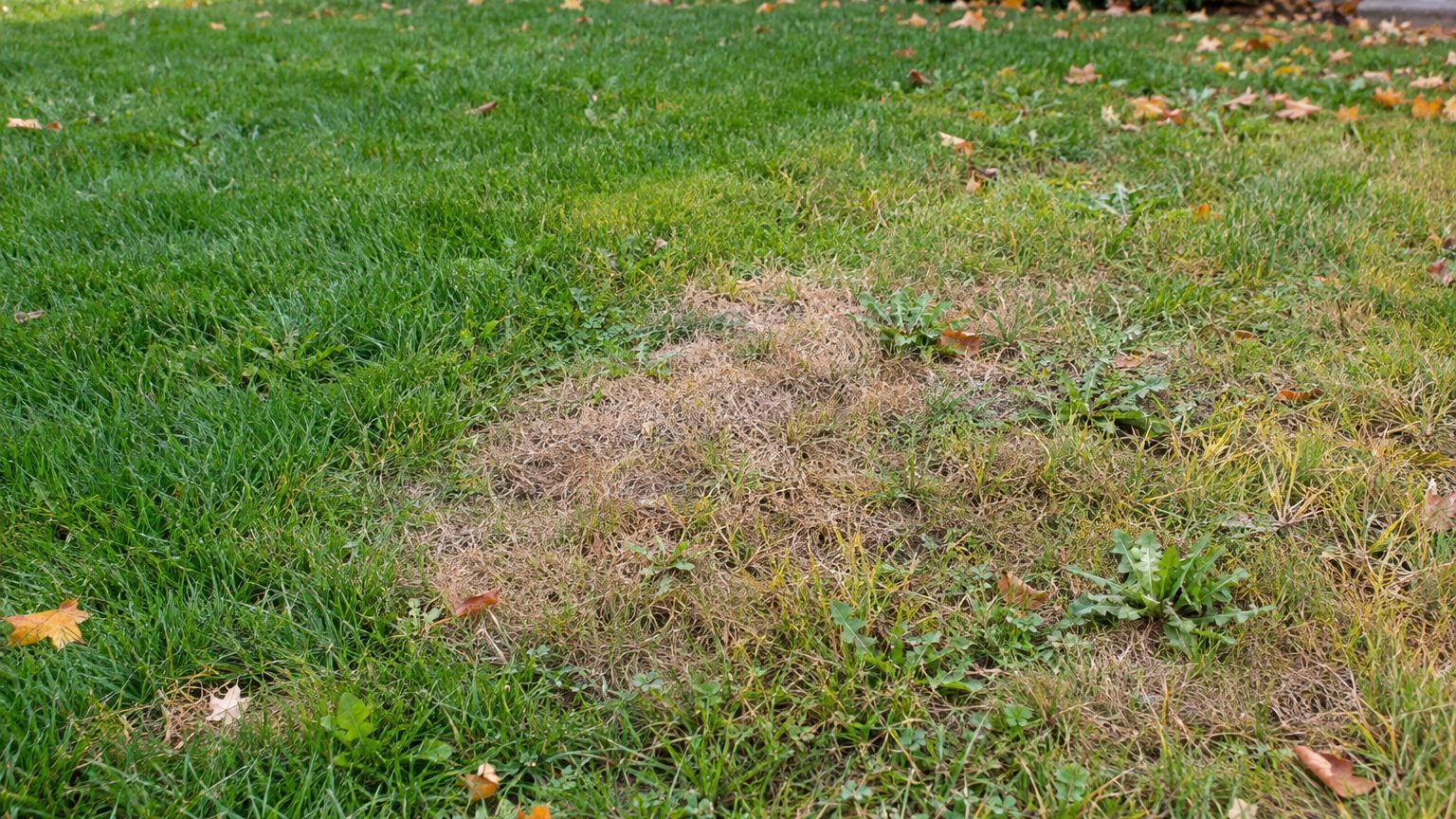
As the snow melts, you may find circular patches of flattened, gray or pinkish grass that feel crusty. Deep, long-lasting snow cover over unfrozen ground allows it, and those conditions occur in Quebec.

Rake the patches gently to lift the mats and let air in. The grass may recover on its own as the weather warms.

Crabgrass

Crabgrass shows up as coarse, light green blades spreading flat from a center point, mostly in thin or bare spots along driveways and sidewalks. It sprouts in warming soil, long after frost has passed.

A pre-emergence preventer works best in May, before the seedlings appear. Once the plants are up, the preventer no longer helps, so thicker grass becomes your main defense.

Chinch Bugs

In hot, dry summer weather, irregular yellow to straw-colored patches may appear in the sunniest part of the lawn, usually along hot edges near pavement. The patches slowly widen and do not green up after watering.

Separate chinch bug damage from drought by parting the grass at the edge of the patch and looking for insects. Cutting back thatch removes the hiding places these insects like.

White Grubs

Late in summer, grass that lifts like a loose carpet, with pale, C-shaped larvae in the soil beneath, points to grubs. Crows, skunks or raccoons digging up the turf is another sign that they are feeding there.

Healthy, deeply rooted grass is more resilient to grub damage. Heavy damage is a reason to bring in a garden centre or a local lawn professional, who can advise on timing and approach.

Thick Thatch

Thatch is the spongy layer of dead stems and roots between the green blades and the soil. A layer up to 1.3 cm (1/2 inch) is healthy. Above that, dethatch or core aerate, because a thick mat sheds water and shelters both grubs and fungus.

How to Tell Which Lawn Problem You Have

A clue is rarely enough. Pair what you see with where it happens and when, then run a simple test: tug the grass, press a screwdriver into the soil, or part the blades at the edge of a patch.

Shade versus full sun and the time of year narrow the list quickly.

Sign Quick test Points to
Gray, crusty circles right after snowmelt Rake lightly and see if new blades show Snow mold
Coarse, sprawling blades in thin spots in warm weather Check if the plant roots from a central point Crabgrass
Straw-colored patches in full sun that keep spreading after watering Part the grass at the edge of the patch and look for tiny insects Chinch bugs
Turf that rolls back in late summer, with animal digging Pull a small flap and look for pale larvae White grubs
Spongy feel underfoot and water running off Cut a plug and measure the brown layer Thatch

Thin grass under mature maples is usually shade and root competition rather than a pest, and it calls for shade-tolerant seed or a bed of mulch instead of more treatments.

Where Lawn Problems Are Worst in Quebec

Quebec is not one climate, so the same problem arrives at different times across the province. The Montreal reference point is in Canadian hardiness zone 5b, and districts farther north or uphill run later in spring.

  • Montérégie and the Montreal plain: Crabgrass and chinch bugs can establish on sunny, hot lawns during the growing season.
  • Laurentians and Eastern Townships: Higher ground holds snow longer and warms later, which favors snow mold and delays seeding and the first mowing.
  • Quebec City and Saguenay-Lac-Saint-Jean: Cold winters and deep snow cover mean snow mold and winter injury are the usual spring complaints, while summer problems start later.

If your lawn thaws later than a neighbor’s across the river, hold your spring tasks until the soil is truly workable.

Lawn Care Mistakes That Invite Problems in Quebec

Mowing Too Short

Scalped grass has shallow roots and leaves bare soil for crabgrass to colonize. It also stresses the lawn in hot spells.

Mow regularly from May to October, with blades sharp and the deck set high. Keep mowing as needed through October; in November, mow only if the grass is still growing.

Watering Lightly and Often

Short daily sprinklings keep roots near the surface and the thatch damp, which suits fungus and weeds. Quebec lawns need extra water mostly in June to August.

Water deeply when the grass shows signs of dryness, then let the surface dry before watering again.

Feeding at the Wrong Time

Heavy feeding in midsummer pushes soft top growth that drought and insects hit hardest. A feeding in May also feeds crabgrass if the lawn is thin.

September is the strongest moment for fertilizer, when roots are building ahead of winter. If you miss it, October still works; you can also fertilize in May.

Where to Get Lawn Advice in Quebec

Quebec has no county extension offices, so advice comes through the province and local growers. Start with the provincial agriculture ministry, then ask people who know your soil and your street.

  • The Ministère de l’Agriculture, des Pêcheries et de l’Alimentation du Québec is the provincial starting point for agricultural and turf information.
  • A local master gardener or horticultural society can look at your lawn in person, best when problems first appear in spring or summer.
  • A neighborhood garden centre can identify a grub or a weed if you bring a sample in a bag, and advise on the right seed for your shade or sun.

Common Questions

When Should You Aerate a Lawn in Quebec?

September is the best time, while the grass is still growing and can fill in the holes. If you miss it, May also works while the lawn is growing.

Can You Seed a Lawn in Quebec in November?

Yes, as a dormant seeding. The seed sits on cold soil through winter and sprouts in spring. For a stronger start, seed in August or September, when the soil is still warm.

Is It Safe to Seed in Spring Once the Snow Is Gone?

May works as a fallback, but frost can still return after the snow melts, especially in uphill and northern districts. Watch soil warmth rather than the calendar, and expect spring seedings to need more watering than late-summer ones.

Quebec Lawn Care Schedule, Month by Month

Quebec Lawn Care Schedule, Month by Month

Spring raking in Quebec reveals a lawn that spent months under snow, and what you do next depends on the condition of the grass as much as the calendar. Mowing, feeding, seeding and watering each have a season when they pay off, and poor timing can set the lawn back.

What to Do Each Month in a Quebec Lawn

Quebec lawns spend a good part of the year asleep, so the work bunches into spring and early fall. Dates here follow the Montreal area, and colder districts run later.

Month In the lawn
January Rest. The grass is dormant under snow, so keep foot traffic and plow piles off the turf.
February Rest. The grass is still dormant. Watch for icy crusts that linger and for salt thrown onto the edges.
March Rest. Meltwater pools in low spots, and walking on soggy, thawing turf compacts it, so stay off.
April Rake off debris once the ground firms up. A first light mow works in April if the grass has started to grow.
May Put down crabgrass preventer now, before the weed sprouts. Mowing settles into a routine. Core aeration, feeding and seeding also work in May if you missed fall.
June Mow regularly and start watering when rain falls short. Deep soaking builds roots before summer heat.
July Keep mowing and watering. Heat slows the grass, so leave the blades a bit longer to shade the soil.
August Dethatch if the thatch layer feels spongy, then start seeding bare patches while the soil is still warm. Keep watering and mowing.
September The big month. Core aerate, fertilize, seed and dethatch, while warm soil and cooler air help the lawn recover. Mowing continues.
October Fertilize now if September slipped by. Keep mowing until growth stops, and clear fallen leaves so they do not smother the grass.
November Make a last mow if the grass is still growing. Dormant seeding works in November, with seed that waits on cold soil and sprouts in spring.
December Rest. The grass is dormant and snow is on the way, so put the mower away.

Warm soil and cooler air help seed establish in August and September, which is why those months carry so much of the work.

When Does the Lawn Season Start and End in Quebec?

Grass wakes up when the soil warms, not when the calendar flips. Seed germinates once soil sits between 10 to 18 °C (50 to 65 °F), and Quebec’s cool-season grasses such as bluegrass and fescue grow actively in spring and fall, then ease off in July heat.

Frost dates matter mostly for young seedlings. In Montreal, the last spring frost falls on average May 6, which means frost can still come later in about one year out of two. Treat that date as the middle of a window, never a safe date, and hold back tender new seedlings until it has clearly passed.

In Montreal, the first fall frost arrives on average October 5, again a midpoint with plenty of year-to-year swing. Seed sown in August or September has weeks to root before that, while seed sown later risks being nipped. Established grass keeps growing after the first frost and only stops when the cold settles in.

How the Lawn Calendar Shifts Across Quebec

Quebec is far too big for one schedule, and the Montreal-area timing above slides earlier or later as you move.

  • Montérégie and the Montreal area: Use this area as the baseline, then shift the schedule later in colder districts.
  • Quebec City and the Beauce: Spring arrives somewhat later and fall cold comes sooner, so push spring tasks back and aim to finish seeding early in the fall window.
  • Laurentians and Eastern Townships hills: Higher ground stays cold longer, so the snow lingers and mowing starts later. Seed in the earlier part of the fall window.
  • Saguenay and the Lower St. Lawrence: Short seasons and a late thaw compress everything, so the spring jobs shift well past the Montreal dates.

Whatever your district, let the soil and the grass guide the first mow, and use the Montreal timing only as a starting point.

Lawn Care Timing Mistakes to Avoid in Quebec

Seeding Too Late in Fall

Seeding Too Late in Fall — Quebec Lawn Care Schedule, Month by Month

Seed that goes down after the fall window has too little time to root before freezing weather. Young seedlings heave out of the soil or die over winter. Aim for August and September, and treat November only as a dormant seeding option, where seed waits until spring.

Raking and Walking on Thawed Turf

Spring thaw leaves the soil saturated and soft. Working on it too early compresses the ground and tears crowns that have not yet grown. Wait until the surface firms up; around Montreal, that may happen in April.

Missing the Crabgrass Window

Crabgrass preventer works only before the weed germinates, so May is the time to apply it. Spread it after the weed has emerged and it does nothing. Seeding the same spot in spring also calls for care, since preventers can block grass seed from sprouting as well.

Where to Get Lawn Advice in Quebec

Canada has no county extension offices, so Quebec lawn questions go through the province’s agriculture ministry, local gardening groups and nearby garden centers.

  • The Ministère de l’Agriculture, des Pêcheries et de l’Alimentation du Québec is the place to start for provincial guidance, and it is worth a visit before you plan fall work.
  • A local horticultural society or master gardener group can speak to your own soil and microclimate, so ask them in early spring.
  • A neighborhood garden center can recommend grass seed suited to your district, so stop in before the August seeding window opens.

Common Questions

Can You Fertilize a Quebec Lawn in Spring?

Yes, May works if you skipped fall, though September is the stronger time because roots are building. October is a fallback, and the feeding goes on the lawn before growth stops.

Is It Too Late to Seed in October?

It is late. September is the better month, and by October the first frost is close. If you still have bare patches, dormant seeding in November is the safer way to get grass in the following spring.

When Should You Water a Lawn in Quebec?

Water in June, July and August, when rain falls short and heat slows the grass. Soak deeply and not often, so roots reach down into cooler soil.

Quebec Lawn Care: What to Do and When

Quebec Lawn Care: What to Do and When

When the last snow melts off a Quebec lawn, the grass underneath is flattened, pale and a little matted, and the work of the year starts with a gentle rake. Lawns in Quebec have a short growing season, with cold winters and warm summers, and suitable cool-season grasses grow actively in spring and early autumn. Knowing when to seed, feed and mow keeps the effort small.

Frost Dates and Growing Season in Quebec

In the Montreal area, the last spring frost falls on average May 6, so in roughly half of years frost still arrives later and a young seedling is never safe on that date. The area sits in Canadian hardiness zone 5b, a rating that does not convert to a USDA zone. Northern and higher districts run later.

  • In early spring, once the snow is gone and the soil has dried, rake lightly to lift matted blades and let air in. Mowing can begin in April as soon as the grass has greened and started to grow.
  • In May, the soil warms enough for crabgrass preventer, and seeding or core aeration also work if you missed the autumn. New seedlings this early can still be nipped by a frosty night.
  • From June through August, the lawn is in full growth and mowing is regular. Watering matters most in these months when rain thins out.
  • In August and September, warm soil and cooling nights favor seeding, dethatching and aeration; fertilize in September. Roots form quickly and the grass has time to settle in before winter.
  • In October, mowing continues as long as the grass grows, and a final feeding is still possible. Growth slows with each cold night.
  • In November, the lawn goes dormant. Seed can still go down on cold soil, where it waits and sprouts in spring.

On average, the first fall frost in the Montreal area arrives October 5, which is why seeding belongs in late summer and not later. Frost only marks risk. The grass itself grows when the soil is warm and slows as it cools.

Cool-Season or Warm-Season Grass in Quebec?

Cool-season grass is the one that lasts here. Winters are long and cold enough to kill most warm-season species, and those that survive spend much of the year brown. Cool-season grasses stay green in spring and fall, then rest through winter.

Summer heat and dry spells are their weak point, so the choice among them comes down to shade, traffic and how much you water.

Grass How it does in Quebec Why
Kentucky bluegrass Dense, dark green lawn that handles winter well Spreads by underground stems and fills small bare spots
Fine fescues (creeping red, chewings, hard) Reliable in shade and on poorer soil Fine leaves need little feeding and tolerate low light
Perennial ryegrass Quick to sprout, good for repairs Germinates fast but is less hardy in the coldest winters
Tall fescue Stands up to summer dryness Deep roots reach moisture when the surface dries

Seed mixes often combine these grasses, so a lawn with sun, shade and a play area can use each where it fits.

When to Seed, Fertilize and Aerate a Lawn in Quebec

September is the busiest month for lawn work here. Warm soil, cool air and steadier rain give seed and fertilizer the best return, and spring offers a fallback for most tasks.

Mowing runs for most of the season, and the other jobs cluster at either end of it.

Task Timing in Quebec Why then
Seeding August, September (May also works) Seed germinates quickly in warm soil and roots form before winter
Dormant seeding November Seed on cold soil stays put and sprouts in spring
Fertilizing September (May and October also work) Feeds roots as the grass recovers from summer
Core aeration September (May also works) Opens compacted soil while grass is growing strongly
Dethatching August, September The lawn recovers fast in warm soil
Crabgrass preventer May Goes down before crabgrass seed germinates
Watering June, July, August Summer heat and dry spells stress cool-season grass
Mowing May through October (April and November also work) Follows active growth, with the edges of the season for the first and last cuts

If you miss September for fertilizing, October still works. Aeration and seeding pair well on the same day, since seed falls into the holes and meets bare soil.

Lawn Problems to Watch for in Quebec

Matted Patches After Snowmelt

Matted Patches After Snowmelt — Quebec Lawn Care: What to Do and When

Gray or straw-colored circles that look pressed flat, and that show up where snow lay longest, are the usual sign of snow mold. Long snow cover over unfrozen ground gives it a damp, dark place to grow.

Rake the patches gently once the soil is firm, so the blades stand up and dry. Most lawns recover on their own, and reseeding in spring covers any thin spot that stays bare.

Brown Grass in Summer Dry Spells

Grass that turns tan across a sunny slope, and springs back when the weather cools, is probably dormant from heat and dryness rather than dead. Cool-season grasses slow down in midsummer to protect themselves.

Watering regularly and deeply through June, July and August keeps the roots alive. Letting the grass grow a little taller shades the soil and holds in moisture.

Salt Burn Along Pavement

A brown, thin strip along a driveway, sidewalk or street edge in spring points to road salt. Winter plowing and de-icing push salt into the lawn beside the pavement, where it dries the roots.

Flush the area with plenty of water as the soil thaws, then rake out dead grass and reseed bare ground in late summer when conditions favor sprouting.

How Lawn Care Dates Change Across Quebec

The calendar above follows the Montreal area, and the season shifts as you move away from it.

  • Montreal and the St. Lawrence lowlands: an earlier spring and a longer season than much of the province, with seeding in late summer and mowing into autumn.
  • Quebec City and the Eastern Townships: spring arrives a little later and autumn comes sooner, so seeding is best done at the early end of the late-summer window.
  • The Laurentians and other higher ground: snow lingers and autumn frost returns earlier, so spring work starts later and dormancy begins sooner.
  • Saguenay and Lac-Saint-Jean: a shorter season still, with a late thaw and an early autumn chill. Plan to seed early and keep spring tasks light.

Watch the soil and the grass itself and treat the dates as a guide. If the lawn is slow to green, your calendar slides later too.

Where to Get Lawn Advice in Quebec

Quebec has no county extension office. Local advice comes from the provincial agriculture ministry, horticultural and master gardener groups, and garden centers that know the soil and the seed mixes sold nearby.

  • The provincial agriculture ministry, MAPAQ, publishes guidance and points to regional services for soil and plant questions.
  • A local master gardener or horticultural society can look at a photo or a sample and help you tell disease from drought.
  • A garden center can direct you to a lab for a soil test, which is worth doing before the September feeding.

Common Questions

Does a Canadian Hardiness Zone Match a USDA Zone?

No. The Canadian system draws on seven climate variables and the USDA system on one, so the numbers do not convert. A single Canadian zone can overlap nine different USDA zones, which is why Quebec lawns are better judged by frost dates and the grass types above.

Can You Dethatch a Lawn in Spring in Quebec?

Spring is a poor time. The soil is soft and the grass is just waking up, so raking hard pulls out live blades. Wait for August or September, when growth is strong and the lawn fills in quickly.

How Soon Can You Walk on a Lawn After Snowmelt?

Wait until the soil is firm and no longer squishy. Walking or raking on saturated ground compacts it and tears the crowns of the grass, which slows the spring green-up.

Hydrangeas That Grow Well in Quebec

Hydrangeas That Grow Well in Quebec

Panicle and smooth hydrangeas top the list for Quebec yards, tolerating winters that test Canadian zone 5b around Montreal without much trouble. Bigleaf hydrangea struggles here, since its flower buds rarely survive the cold intact. The difference comes down to one detail, whether the shrub blooms on new wood grown each spring or old wood set the summer before, and that detail decides whether a Quebec garden flowers most years or sits green and bare.

Hydrangeas that grow well in Quebec: The Short Answer

Panicle and smooth hydrangeas hold up best around Montreal, where Natural Resources Canada’s Plant Hardiness Site puts the region at zone 5b in the Canadian system, a scale built on seven climate variables rather than the single-variable USDA zones used south of the border. Bigleaf hydrangea sits at the other end of that list, since its flower buds rarely make it through a Montreal winter whole.

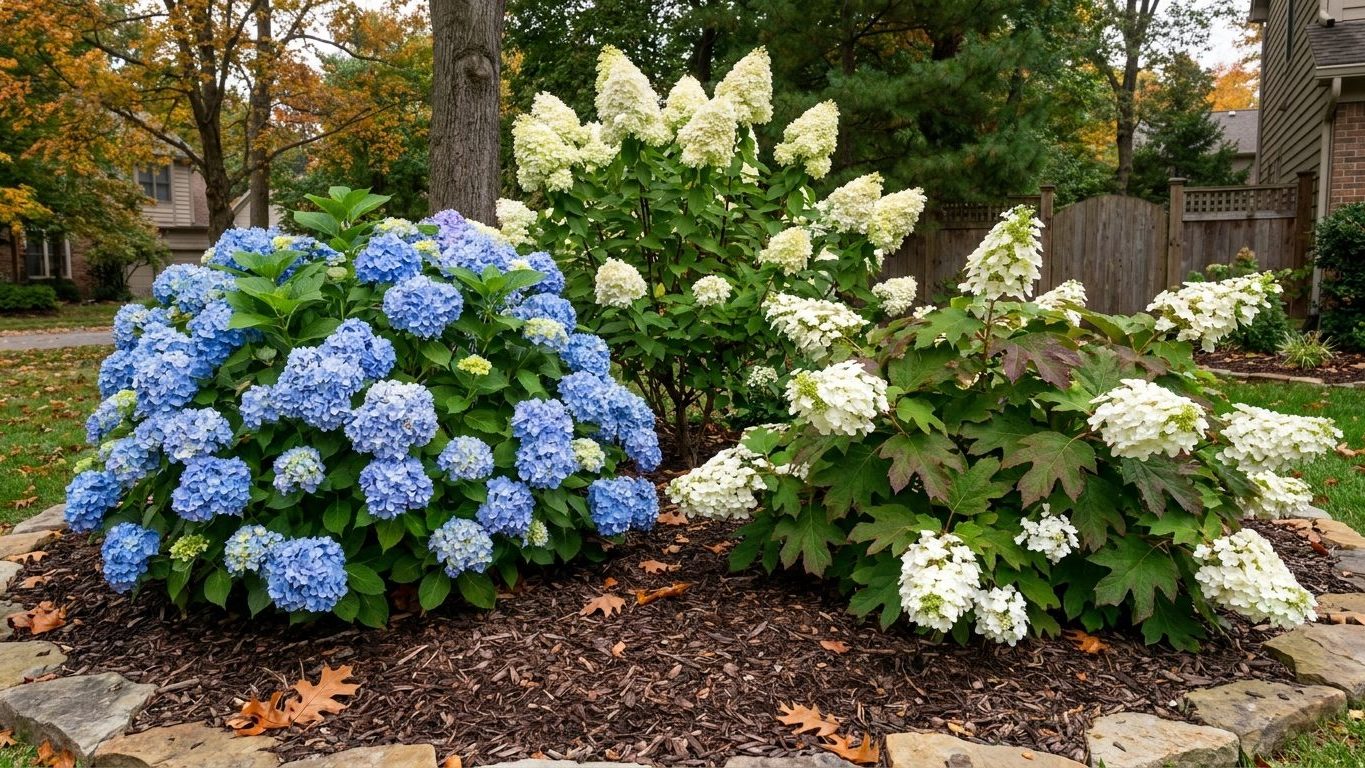
Panicle hydrangea (Hydrangea paniculata)

Panicle hydrangea (Hydrangea paniculata) — Hydrangeas That Grow Well in Quebec

It flowers on new wood grown fresh each spring, so even a hard winter that kills the top growth back barely costs it a season of bloom. Full sun and ordinary soil are about all it asks for here.

Smooth hydrangea (Hydrangea arborescens)

Smooth hydrangea (Hydrangea arborescens) — Hydrangeas That Grow Well in Quebec

Native across eastern North America, this species treats a Quebec winter as routine weather rather than a threat. It also blooms on new wood, and it tolerates more shade than paniculata, which makes it useful under the maple canopy so many yards already have.

‘Limelight’ panicle hydrangea

'Limelight' panicle hydrangea — Hydrangeas That Grow Well in Quebec

A named selection of the hardy species above, ‘Limelight’ brings reliable lime green blooms that age toward pink without any extra winter wrapping. Gardeners on cooler, upland sites report it performing almost as well as those close to the city center.

‘Annabelle’ smooth hydrangea

'Annabelle' smooth hydrangea — Hydrangeas That Grow Well in Quebec

This selection produces oversized white blooms every summer no matter how rough the preceding winter was, since it shares the new wood habit of its parent species. Its stems are soft though, so a spot sheltered from wind matters more than any frost concern.

Oakleaf hydrangea (Hydrangea quercifolia)

Oakleaf hydrangea (Hydrangea quercifolia) — Hydrangeas That Grow Well in Quebec

This one sits in the middle of the list. Its flower buds form on old wood the year before, so a severe winter can erase a coming summer’s bloom even while the shrub itself lives on. A wall-sheltered corner and the fall foliage color make it worth the gamble.

Bigleaf hydrangea (Hydrangea macrophylla)

Bigleaf hydrangea (Hydrangea macrophylla) — Hydrangeas That Grow Well in Quebec

This is the shrub that disappoints most first-time buyers here. It flowers mostly on old wood set the previous year, and Quebec’s winter routinely takes those buds before spring, leaving a healthy green plant that skips flowering entirely some years. Reserve it for the most sheltered, heavily mulched corner of the yard.

How to Work Out the Dates for Your Own Yard

Working out whether a specific hydrangea will thrive in your own yard, rather than in a province-wide average, comes down to matching its wood type and root hardiness against the numbers for your own microclimate.

  1. Check your own frost window: Environment and Climate Change Canada’s Climate Normals put the mean last frost across the Montreal area at around May 6, though half of all years run later than that, so treat the following two or three weeks as still risky for tender new growth.
  2. Count backward from first fall frost: the mean date sits around October 5, which gives roughly five months of growing season before wood needs to harden off for winter.
  3. Match the bloom type to the wood: panicle and smooth hydrangeas bloom on new wood grown after May, so a late frost barely costs them a season, while bigleaf and oakleaf set buds on old wood the previous fall and can lose them outright in a hard winter.
  4. Plant inside the state’s planting months: stick to May, June, August, or September, skipping peak midsummer heat so roots establish before the next stress arrives.
  5. Fertilize only in the two feeding months: May and July line up with active growth, and feeding outside that window pushes soft late growth that winter kills.
  6. Prune bigleaf only in June or July: pruning any later removes the buds that would have carried next year’s bloom.

Take ‘Limelight’ as the name that clears every check here: new wood, forgiving of the May frost window, and reliably in bloom by August most years. Bigleaf hydrangea fails the same test in most Quebec yards, since buds set the previous September rarely survive intact to June.

Quebec North to South: How the Dates Shift

Quebec’s frost dates don’t apply evenly from the St. Lawrence Valley to the boreal edge, and elevation or nearness to open water shifts them further than most gardeners expect.

  • The Montreal and Monteregie lowlands (Montreal, Longueuil, St-Hubert): the mildest planting window in the province.
  • The Quebec City corridor and Eastern Townships (Quebec City, Sherbrooke, Estrie): farther from the moderating St. Lawrence flow, so frost lingers a bit longer into spring and returns a bit sooner in fall.
  • Saguenay-Lac-Saint-Jean and the north shore (Saguenay, Chicoutimi, Baie-Comeau): colder air pools here well before it reaches Montreal, pushing safe planting weeks behind the provincial reference dates.
  • The Gaspésie coast (Gaspé, Rimouski, Matane): exposed to wind off the gulf, which delays spring warmth but also softens the sharpest winter lows near the water.

Whichever part of the province you garden in, your own yard’s exposure decides the final week.

Mistakes Quebec Punishes

Planting bigleaf in an open, windswept spot

Cold air pools in low, exposed yards, and Quebec winters push straight through unprotected bigleaf hydrangea, killing buds set the year before. Choose a wall-sheltered or fence-sheltered corner instead, and mound mulch over the crown before the ground freezes.

Pruning bigleaf hydrangea in fall

Cutting back bigleaf or oakleaf after summer removes the buds meant to open the following June, since both set flowers on old wood. Save pruning for June or July only, right after bloom, and stop once September planting winds down.

Fertilizing outside the two feeding months

A late summer feeding pushes soft new growth that has no time to harden before the mean fall frost arrives. Stick to May and July only, then let the plant slow down naturally into fall.

Quebec Extension Offices and County Contacts

The zone 5b figure for Montreal is a starting point, not a verdict on your own street, and Quebec’s agricultural ministry carries the local detail from there.

  • Quebec hydrangea calendar: month-by-month planting, feeding, and pruning windows for this province.
  • What goes wrong with hydrangeas in Quebec: the pests and cold-damage symptoms specific to this climate.
  • MAPAQ: Quebec’s agriculture ministry connects to regional offices for soil and pest questions by county.

Common Questions

Will bigleaf hydrangea survive winter in Quebec?

The plant itself usually survives, but its flower buds often don’t, since they form on old wood the previous fall. A heavily mulched, wall-sheltered spot improves the odds, but expect some years with green growth and no blooms at all.

When should I plant hydrangeas in Quebec?

Stick to the state’s planting months, May, June, August, or September, so roots have time to settle before summer heat or winter cold arrives. Planting outside those windows gives the shrub less time to establish before stress hits.

Do hydrangeas need winter protection in Quebec?

Panicle and smooth hydrangeas rarely need it, since they rebuild their blooms from new wood every spring. Bigleaf and oakleaf benefit from a thick mulch mound over the crown before the ground freezes, left in place until new growth starts.

Hydrangea Pests and Diseases in Quebec

Hydrangea Pests and Diseases in Quebec

In Quebec, hydrangea trouble follows the calendar more than the plant itself. Winter bud kill shows up first, then aphids and mildew once summer humidity settles over the St. Lawrence valley, and yellowing leaves from alkaline clay run through the whole season. Montreal/St-Hubert’s cold winters cause most of what a bigleaf hydrangea shows here.

Hydrangea pests and diseases Quebec: The Short Answer

Natural Resources Canada’s Plant Hardiness Site puts Montreal/St-Hubert at zone 5b on the Canadian scale, and that number explains why the most common problem on a Quebec hydrangea isn’t a bug at all: it’s cold injury to last year’s flower buds. The second most common problem is fungal, powdery mildew or leaf spot, showing up once July humidity settles over Montérégie and the Eastern Townships.

Bare stems, no flowers in June

Bare stems, no flowers in June — Hydrangea Pests and Diseases in Quebec

Most bare bigleaf hydrangeas in Quebec lost last fall’s flower buds to a hard cold snap, not to disease, since zone 5b winters routinely dip below what those buds tolerate. Scratch a stem for green wood before cutting, and mulch crowns heavily going into next winter.

Curled new growth in early summer

Curled new growth in early summer — Hydrangea Pests and Diseases in Quebec

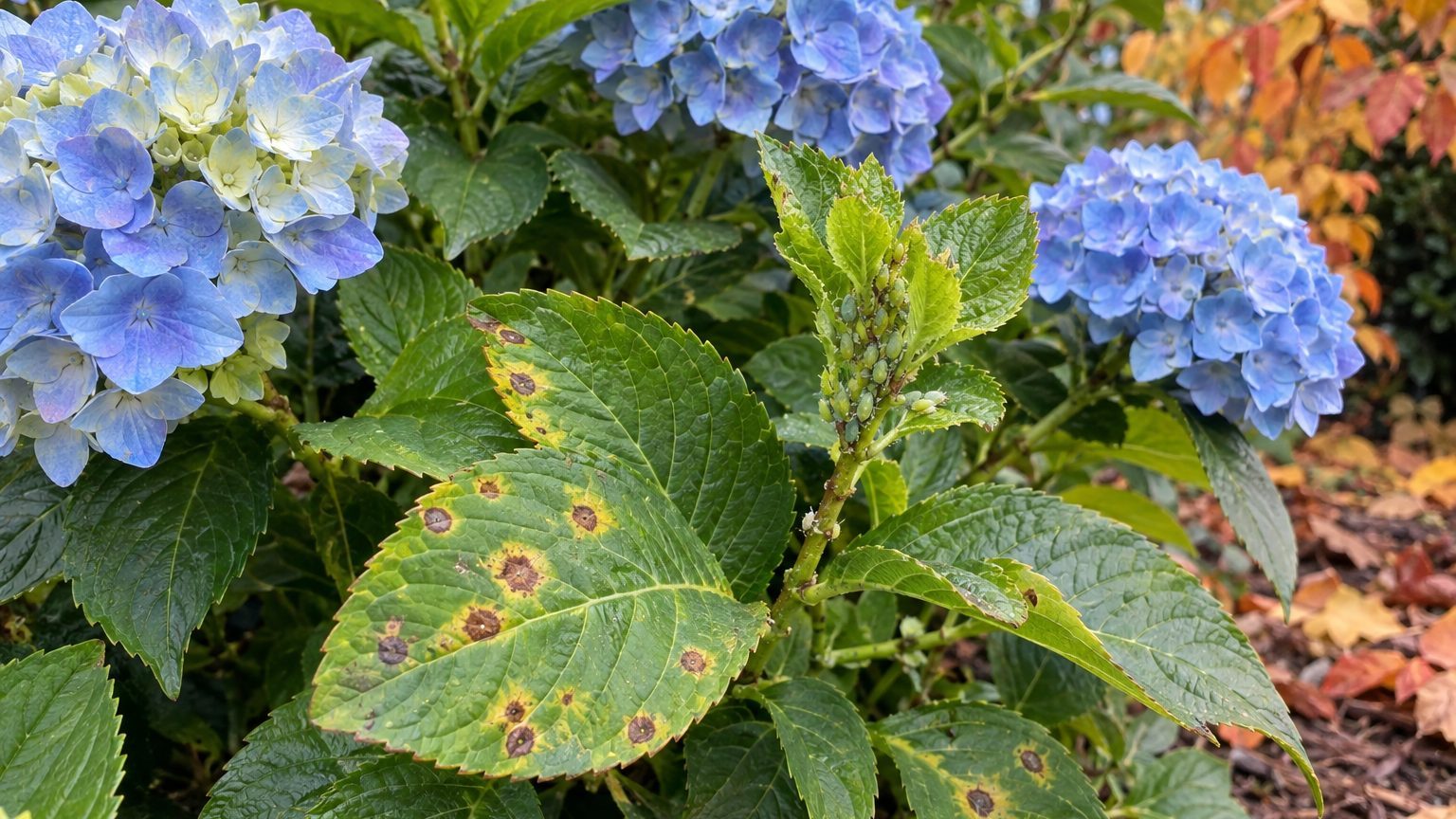
Aphids cluster on tender shoot tips as soon as June growth flushes, leaving sticky honeydew and sometimes sooty mold on the leaves below. A strong jet of water from the hose knocks most colonies off, and insecticidal soap clears out the rest without harming visiting bees.

White dust on upper leaves by midsummer

Powdery mildew moves in once July nights stay humid, coating leaves in a pale film that rarely kills the shrub outright but weakens it before fall dormancy sets in. Spacing plants for airflow and watering the soil instead of the foliage keeps most infections from taking hold.

Brown spots ringed in purple

Brown spots ringed in purple — Hydrangea Pests and Diseases in Quebec

Cercospora leaf spot shows up on the lower, older leaves first, then spreads upward as late summer rain splashes spores from leaf to leaf. Pulling off the worst leaves and binning rather than composting them keeps the fungus from overwintering in the debris at the base.

Gray, fuzzy patches on blooms

Gray, fuzzy patches on blooms — Hydrangea Pests and Diseases in Quebec

Botrytis blight favors the cool, wet stretches Quebec gets in early fall, turning flower clusters soft, brown, and gray almost overnight. Cutting spent blooms and clearing damp leaf litter before the average first fall frost on October 5 keeps the fungus from settling in for winter.

Sunken, dark cankers on stems

Sunken, dark cankers on stems — Hydrangea Pests and Diseases in Quebec

Botryosphaeria dieback girdles a cane below a winter crack or pruning wound, killing everything above it while the rest of the shrub still looks healthy. Prune the dead cane back to clean white wood a few inches below the canker, disinfecting shears between every cut.

Leaves yellow between green veins

Iron chlorosis comes from Quebec’s often-alkaline clay soils locking up nutrients the roots can’t absorb, not from any pest or fungus. A simple soil test confirms the pH, and an iron chelate drench greens the leaves back up within a few weeks.

How to Work Out the Dates for Your Own Yard

Diagnosing a Quebec hydrangea problem is mostly a matter of matching the symptom to the calendar, since most of what goes wrong here is tied to a specific stretch of the season rather than random bad luck.

  1. Check the timing first: a shrub bare of flowers in late May points to winter bud kill, not disease, because that’s before any fungus on this list gets going.
  2. Look at which leaves are affected: spots or mildew on lower, older leaves first mean a soil-borne fungus, while curling at the newest growth tips in June points to aphids instead.
  3. Count the days since the last rain: powdery mildew and Cercospora both need days of humidity to establish, so a dry stretch followed by symptoms usually rules out a fresh infection.
  4. Test before you treat for chlorosis: yellowing between green veins looks alarming but is a soil pH issue in Quebec’s clay far more often than a pest, so a soil test before buying a spray saves money.
  5. Watch the average frost windows: Environment and Climate Change Canada’s Canadian Climate Normals put Montreal/St-Hubert’s last spring frost at an average of May 6 and its first fall frost at an average of October 5, and cold damage clusters right around those windows while fungal issues cluster in the humid weeks between them.
  6. Match the fix to the prune window: since bigleaf pruning here runs June and July, cutting out dead or diseased wood inside that window avoids opening fresh wounds right before a cold snap.

Running through this order takes a few minutes and usually narrows six possible problems down to one before you touch a spray bottle.

Quebec North to South: How the Dates Shift

Quebec’s hydrangea problems don’t hit every region on the same week, since the province stretches from the mild St. Lawrence lowlands to boreal country further north.

  • Montérégie and Montreal’s south shore (closest to the Montreal/St-Hubert reference station): bud kill is mildest here and the fungal window runs longest, since humidity and mild winters both favor bigleaf hydrangeas.
  • Estrie and the Eastern Townships (hillier, cooler nights): expect more winter bud kill and a shorter fungal season, since cool nights slow the fungi even as they stress flower buds more.
  • Capitale-Nationale and Quebec City (a step colder than Montreal): bud kill becomes the dominant problem, and gardeners here often see almost no flowers on bigleaf types most years.
  • Saguenay-Lac-Saint-Jean and points north (short, cool summers): fungal disease pressure drops off sharply, but winter injury is severe enough that panicle and smooth types outperform bigleaf almost every year.
  • Gaspésie and the Côte-Nord (maritime cold, short season): winter injury and cold-related dieback dominate, while the fungal issues common near Montreal barely have time to develop before frost returns.

Whichever part of the province you garden in, your local frost window shifts these problems earlier or later than the reference dates for Montreal/St-Hubert on the state page.

Mistakes Quebec Punishes

Pruning bigleaf hydrangeas in fall

Cutting bigleaf stems back in September or October removes next year’s flower buds along with the wood, since those buds are already set for the following summer. Save pruning for June or July instead, and let winter dieback guide what comes off in spring.

Planting too late in the season

A hydrangea set into the ground in late September has almost no time to root before the first fall frost, and shallow roots rarely survive a zone 5b winter. Stick to the May, June, August, and September planting windows and get roots established well before the cold arrives.

Skipping mulch before winter

Bare soil around the crown lets frost reach roots and buds directly, and that’s often the real cause of a bare shrub the following June, not a pest at all. A thick layer of shredded leaves or bark laid down before the ground freezes protects the base through the coldest months.

Quebec Extension Offices and County Contacts

Zone 5b and the Montreal/St-Hubert frost dates are a starting point, not the whole picture, since soil, drainage, and microclimate vary from block to block. MAPAQ, the province’s agriculture ministry, tracks pest and disease alerts by region.

  • Your state page: the Quebec calendar with frost dates and the bigleaf pruning window for where you live.
  • Which ones hold up here: the hydrangea varieties that tolerate zone 5b winters without dying back to the ground.
  • MAPAQ: provincial guidance on local pests, soil testing, and extension contacts by region.

Common questions

Do I need to spray a Quebec hydrangea for pests every year?

No. Aphids and mildew show up most summers in some form, but a healthy shrub with good spacing and morning watering often shrugs them off without any spray at all, so treat only what you actually see.

Why does my hydrangea leaf out fine but never flower?

On bigleaf types in Quebec, that’s almost always winter bud kill rather than a growing problem, since the leaves come from buds lower on the stem than the flower buds that died over winter.

Can one product treat both chlorosis and a fungal leaf spot?

No. Chlorosis is a soil pH problem that needs an iron treatment and possibly a pH adjustment, while leaf spot needs sanitation and airflow, so a soil test first prevents treating the wrong problem.

When to Prune Hydrangeas in Quebec

When to Prune Hydrangeas in Quebec

In the Montreal area, the safe stretch for putting a hydrangea in the ground runs across four months on the provincial planting calendar: May, June, August, and September. That window sits inside a hardiness zone of 5b under the Canadian system, and it hugs the space between a mean last spring frost and a mean first fall frost that bookend the growing season here.

When to prune hydrangeas in Quebec: The Short Answer

Environment and Climate Change Canada’s Canadian Climate Normals put the mean last spring frost for the Montreal area, recorded at station Montreal/St-Hubert A, at May 6, and the mean first fall frost at October 5. Between those two dates, the province’s own planting calendar keeps hydrangeas out of the ground everywhere except May, June, August, and September, with bigleaf pruning confined strictly to June and July.

Here’s how those months break down across the full year:

  • January: The ground is frozen and the shrub is fully dormant, so there is nothing to plant or prune. A layer of snow over the root zone does the insulating for you.
  • February: Still deep winter here, so order any new hydrangea stock now for spring shipping. Resist pruning this early, since wounds this far from the growing season invite dieback.
  • March: The mean last frost is still roughly two months out, so soil stays too cold and wet to dig. Use the month to check drainage where you plan to plant.
  • April: Frost risk stays real this close to the May 6 average, so hold off on setting new shrubs. Watch buds on established plants for winter dieback instead.
  • May: The plant window opens, and fertilizing starts too, but the mean last frost falls on May 6 itself, meaning frost lands later than that in about half of years. Plant late in the month once soil has firmly warmed.
  • June: Planting continues, and this is also the first month of the bigleaf pruning window. Cut spent flowers back to a strong bud pair, never into old wood beyond that.
  • July: Fertilizing opens a second time, and bigleaf pruning is still on the table. Water deeply through the month, since summer heat pulls moisture fast from new plantings.
  • August: The plant window reopens, giving roots a full two months to settle before the ground cools. Skip pruning now, since next year’s buds are already forming on bigleaf wood.
  • September: This closes the plant window, so anything going in needs roots settled before frost returns. Hold off on fertilizer, since new growth this late won’t harden off in time.
  • October: The mean first fall frost lands on October 5, so treat the whole month as past the safe planting date. Mulch generously once the ground firms up.
  • November: The shrub heads into dormancy, and this is the month to build winter protection around bigleaf varieties relying on old wood for blooms. No pruning, no fertilizing.
  • December: Fully dormant, the plant needs nothing beyond keeping heavy ice off the branches. Let the snow do its job as insulation.

None of this replaces watching your own yard. A microclimate against a south-facing wall can push the safe planting date earlier than the mean, while a low spot that collects cold air can hold frost well past October 5.

How to Work Out the Dates for Your Own Yard

The zone number and frost dates on the provincial overview are averages from one station, so translating them to your own property takes some counting back and a walk around the yard.

  1. Start from the mean last frost: Environment and Climate Change Canada’s Canadian Climate Normals set that date at May 6 for the Montreal-area station, so treat it as the middle of the window, not a guarantee.
  2. Push the safe window two to three weeks later: since roughly half of years see frost fall after that mean date, the safer stretch for tender new stock sits closer to late May.
  3. Check the plant window itself: the calendar for this province opens planting in May, June, August, and September, so anything outside those four months works against you regardless of the thermometer that week.
  4. Count forward to the first fall frost: at a mean of October 5, September plantings need roughly four to six weeks of root growth before that date to settle in properly.
  5. Match pruning to the plant, not the month alone: bigleaf hydrangeas get their cut in June or July here, timed to when the current year’s wood has already set next year’s flower buds.

None of this is a fixed formula, since a slope that drains fast or a lawn that pools water can shift these dates a week or two either way. Walk the ground yourself before trusting any calendar, including this one.

Quebec North to South: How the Dates Shift

The May 6 and October 5 dates cited here belong to one station near Montreal, and the province is too large and too varied in terrain for that pair of dates to hold everywhere.

  • The Montreal and Monteregie lowlands: closest to the reference station itself, so the frost dates in this guide apply most directly here, with the mildest and longest growing window in the province.
  • The Laurentians and the Eastern Townships uplands: higher elevation and colder night air push both frost dates later in spring and earlier in fall, shrinking the safe planting stretch on either end.
  • The Outaouais and the Ottawa River corridor: a milder river valley keeps this pocket closer to the Montreal timing than its latitude alone would otherwise suggest.
  • The Gaspésie, the North Shore, and points further north: colder air arrives sooner in fall and lingers longer in spring, so gardeners there should expect this whole calendar to run behind by a noticeable margin.

Your own yard’s frost pattern matters more than the region it sits in, so treat this as a general lean. Check the provincial overview page for the reference numbers, then weigh your own microclimate against them.

Mistakes Quebec Punishes

No flowers on a healthy shrub

No flowers on a healthy shrub — When to Plant and Prune Hydrangeas in Quebec

This almost always traces back to pruning bigleaf hydrangeas outside the June and July window, cutting off buds already set for next season. Stick to that window only, and if a plant needs a hard reset, do it right after it finishes blooming.

Leaves scorched on the sunny side

A hydrangea planted in full, unbroken afternoon sun struggles once Quebec’s summer heat sets in, especially on the fast-draining soil common in many yards here. Give bigleaf types afternoon shade and mulch to keep roots cooler through July.

Roots frozen before they can settle

Planting in April, weeks before the mean May 6 last frost, puts new roots in the ground before they can establish, and a late freeze finishes them off. Hold new plantings to the May through September window on the provincial calendar, no matter how mild an early spring feels.

Quebec Extension Offices and County Contacts

The May 6 and October 5 dates above start the conversation, not end it. MAPAQ and your local horticultural society fill in what a single averaged station can’t.

  • MAPAQ: the provincial agriculture ministry carries soil and climate resources built for Quebec growing conditions.
  • Your local horticultural society: most Quebec municipalities have one, and they know the frost pattern on your exact street better than any station average.
  • The provincial overview page: the zone 5b rating and the full frost window for the Montreal reference station live there.

Common questions

Can I plant hydrangeas in Quebec after October?

No. The plant window closes in September on the provincial calendar, and the mean first fall frost on October 5 leaves no time for roots to settle before dormancy sets in.

Is Quebec’s hardiness zone the same as a USDA zone?

No. Zone 5b here comes from Natural Resources Canada’s Canadian system, built on seven climate variables rather than the single one the USDA system uses, so the number doesn’t convert directly to a US zone rating.

Do I need to prune hydrangeas every year in Quebec?

Not necessarily. Bigleaf types only need cutting in June or July when reshaping or removing old wood, and skipping a year rarely hurts a healthy, established shrub.

The almanac, state by state. Every date on this site comes from a state’s own frost facts and its extension service’s calendar — and says where it comes from.