Skip to content
  1. Jan
  2. Feb
  3. Mar
  4. Apr
  5. May
  6. Jun
  7. Jul
  8. Aug
  9. Sep
  10. Oct
  11. Nov
  12. Dec
State
Nunavut
Hardiness zones
0a
Last spring frost
June 19
First fall frost
September 13
Annual rain
12 in
Lawn zone
cool-season
Source
Environment and Climate Change Canada — Canadian Climate Normals 1981-2010, station RANKIN INLET A · Rankin Inlet

The year in Nunavut, from the calendar

  1. Jan—
  2. Feb—
  3. MarPrune fruit trees
  4. AprPrune fruit trees
  5. MayFeed hydrangeas · Feed roses · Prune roses
  6. JunPlant hydrangeas · Prune bigleaf hydrangeas · Seed the lawn · Lilacs bloom · Prune lilacs
  7. JulFeed hydrangeas · Plant hydrangeas · Prune bigleaf hydrangeas · Prune lilacs · Peonies bloom
  8. AugPlant spring bulbs · Plant hydrangeas · Peonies bloom · Mow · Plant trees
  9. SepPlant spring bulbs · Plant peonies · Plant trees · Mow
  10. Oct—
  11. Nov—
  12. Dec—

From the state frost facts and extension calendars: University of Alaska Fairbanks · Clemson HGIC factsheet — Hydrangea · NDSU Extension — Dakota Gardener (lawns) · University of Alaska Fairbanks Cooperative Extension.

When to Plant Tulips and Daffodils in Nunavut

When to Plant Tulips and Daffodils in Nunavut

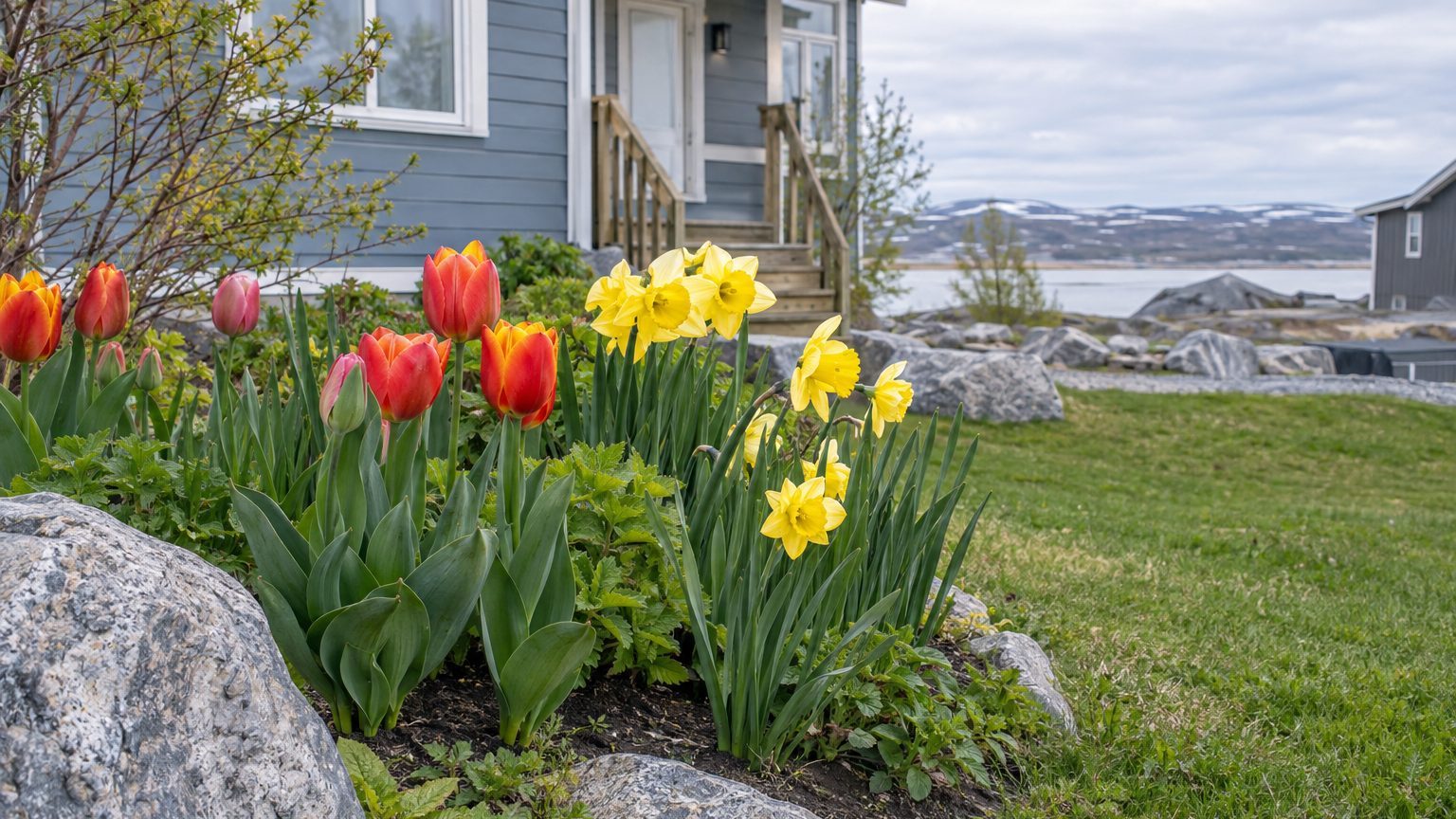
In the Arctic, the garden season is short enough that every bulb has to be in the ground before the soil turns hard. Spring bulbs in Nunavut are a gamble worth taking, and the timing comes down to late summer. The window for tulips and daffodils is brief, and it closes well before the ground freezes.

When to Plant Tulips and Daffodils in Nunavut

When to Plant Tulips and Daffodils in Nunavut

Plant tulips and daffodils in late August to early September, or as soon as the soil cools to the low to mid 50s °F (roughly 11 to 13°C). Here is how the year runs for a bulb.

  • In summer, ahead of planting, buy firm, heavy bulbs and keep them somewhere cool and dry until the soil is ready.
  • In late August to early September, set the bulbs in the ground so roots can form before the cold locks everything up.
  • In mid-September, the first fall frost arrives on average September 13 at Rankin Inlet, and in about half of years it comes later. The area sits in Canadian hardiness zone 0a, which is a separate scale from USDA zones.
  • Once the ground starts to freeze, spread a layer of mulch over the bed to even out thaws and freezes.
  • Through the winter, no refrigerator chilling is needed, because a Nunavut winter supplies the 12 to 16 weeks of cold that most spring bulbs ask for.
  • In spring, once the snow melts and the soil thaws, the first green tips push up through the mulch.

A bulb still in the bag after the window is better planted late than stored, so plant for as long as the ground can be dug. The frost date marks frost risk, not a planting day, so go by the soil.

Nunavut has no local extension page on bulb timing, so these dates follow the nearest comparable climate. Confirm the timing for your community with a local garden centre, a garden society or a territorial gardening group.

Which Spring Bulbs Do Best in Nunavut?

Winter cold is not the limit here, since the territory gives bulbs far more than they need. The real tests are ground that stays hard and cold, and hungry animals. Daffodils and alliums are the soundest choices, and small bulbs such as snowdrops are worth a trial.

Tulips and crocus can work, but expect them to need more attention.

Bulb type How it does in Nunavut Why
Daffodils Dependable perennial bulb They last longer than tulips, and animals leave them alone.
Tulips Worth trying, but exposed Voles, squirrels, rabbits and deer eat them, so protect the bed where such animals live.
Alliums Good candidate A showy allium called ‘Purple Sensation’ is a bulb to consider planting in the fall.
Snowdrops Hardy They are known to take cold well and are a sensible small bulb to test.
Scilla Likely to winter over It tends to stay in the ground through hard winters, and grape hyacinth sometimes does too.

Crocus belong on the same watch list as tulips, since the same animals dig them up. Hyacinths are better left until daffodils and alliums have proven themselves in your bed.

When to Plant, Chill and Care for Spring Bulbs in Nunavut

The bulb year here is simple, with one busy window in late summer and then a long wait. Skipping the refrigerator step saves work, and the leaf rule after bloom protects next year’s flowers.

Task Best timing in Nunavut Why then
Plant August to September, from late August to early September or when the soil is in the low to mid 50s °F Roots form before the ground freezes, and the bulbs do not sprout early.
Chill Not needed The winter itself provides the cold that tulips and hyacinths would otherwise get in a refrigerator.
Leave the foliage After bloom, for as long as the leaves are green The leaves feed the bulb for next year, so remove only the faded flowers.

Wait until the leaves turn brown before clearing them, even if the bed looks untidy for a while.

How Bulb Planting Time Changes Across Nunavut

Nunavut covers a huge span of tundra, coast and islands, so the planting date for one community is only a starting point for another. Watch the soil as much as the calendar.

  • Kivalliq coast, including Rankin Inlet: this is the area the frost dates describe, with its cold Hudson Bay shoreline. Treat the late August to early September window as a guide and check the soil first.
  • Iqaluit and southern Baffin Island: sea water and ice shape how fast the ground cools in fall, so the soil may reach planting temperature on a different schedule than on the Kivalliq coast.
  • Cambridge Bay and the high Arctic: northern communities run weeks behind the Kivalliq coast in spring and see frost sooner in fall, so the planting window is short and the soil needs checking early.

A cheap soil thermometer settles the question in any of these places.

Where to Get Bulb Advice in Nunavut

Nunavut has no county extension offices, so advice comes from the territory’s gardeners and from federal and territorial agriculture offices.

  • Agriculture and Agri-Food Canada, on its federal site, gives general growing information you can read before you shop for bulbs.
  • A local garden centre or garden society in your community can tell you what has worked in your own soil and when to plant.
  • Territorial gardening groups can share local tips on soil and animal pests before the late summer planting window.

Common Questions

Will Tulips Come Back Every Year in Nunavut?

Tulips are often short-lived in a garden, and a harsh site shortens their life further. Treat them as a bonus and plant fresh bulbs when they fade, while daffodils carry the long-term display.

Do Alliums Need a Cold Chill Before They Will Flower?

According to Iowa State University Extension, alliums do need a cold period to bloom, and they are planted in fall like other spring bulbs.

Does the First Frost Tell You When to Plant Bulbs?

No. A frost date only marks when frost becomes likely, and in about half of years it comes later than the average. Plant by the late summer window and the soil temperature instead.
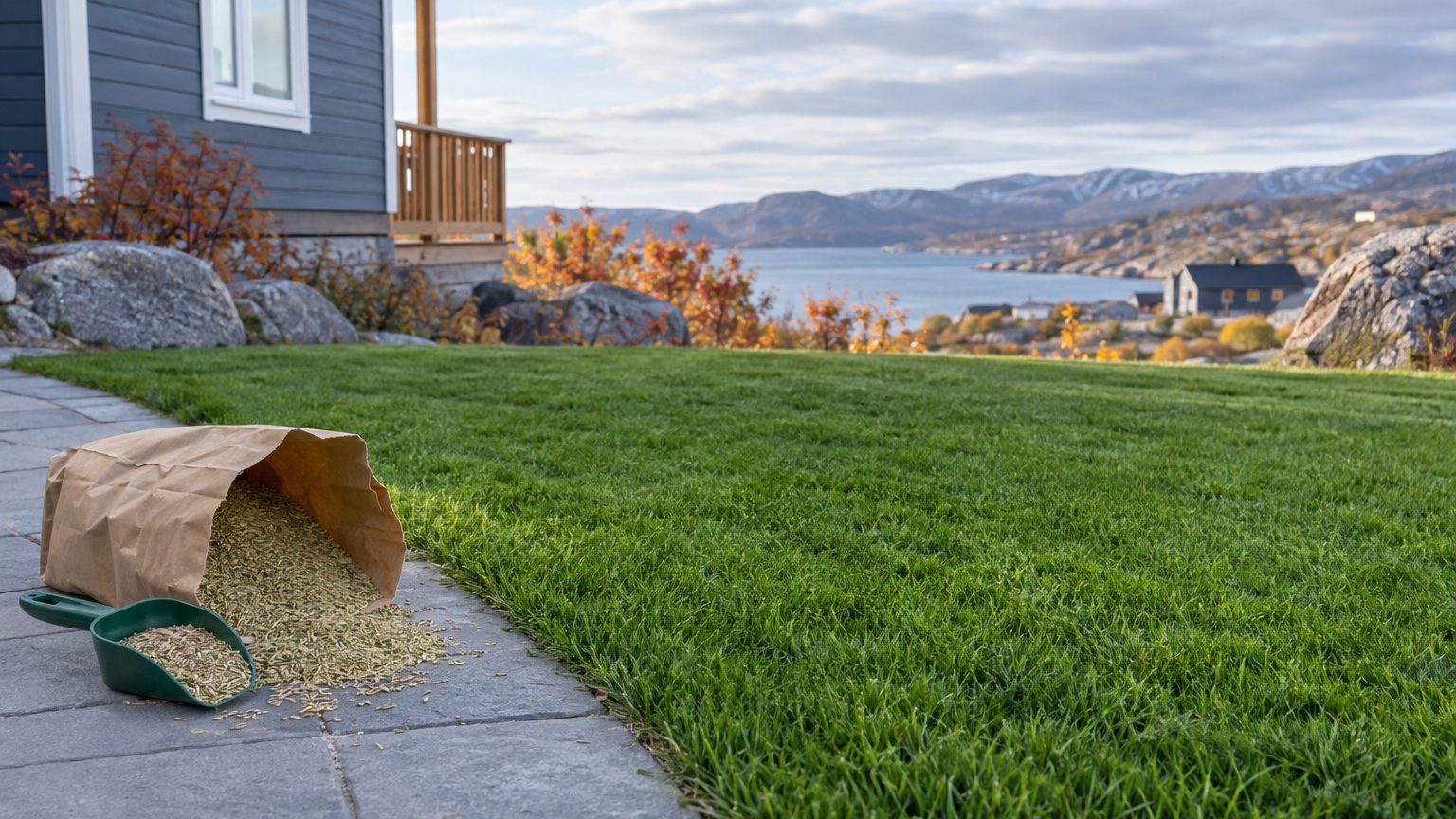
Best Grass Seed for Nunavut

Best Grass Seed for Nunavut

A Nunavut lawn starts with a short stretch of thawed ground and a lot of patience. Cool-season grasses are the only kind with a chance up here, and a blend led by fine fescues is the sensible place to begin. Expect a modest, slow-growing patch of turf rather than a southern carpet.

Which Grass Grows Best in Nunavut?

Cool-season grasses suit Nunavut because they grow in cold soil and shrug off long winters. Warm-season grasses need heat the territory never delivers. Rankin Inlet sits in Canadian hardiness zone 0a (a Canadian rating, not a USDA zone), and much of the territory is colder than that. Three lawn species are realistic.

Fine Fescues

Creeping red, Chewings, and hard fescues are practical choices for the territory. Their fine, narrow blades handle cold, thin soil and low fertility without fuss. They also tolerate shade better than bluegrass.

Choose fine fescues as the backbone of any mix, especially where the soil is poor or the site is sheltered but not rich.

Kentucky Bluegrass

Kentucky bluegrass is very winter hardy and spreads by underground stems, so it can fill thin spots on its own. The catch is speed. It is slow to germinate, and a short season leaves little room for a slow start.

Use it as a partner to fine fescues in sunny, sheltered spots where the lawn will see foot traffic. Alone, it is a gamble.

Perennial Ryegrass

Perennial Ryegrass — Best Grass Seed for Nunavut

Perennial ryegrass sprouts quickly, which is tempting when summer is brief. The trouble is that it is short-lived in Nunavut’s coldest winters.

A small share in a blend can give quick early green while the slower grasses catch up. Plan on reseeding it, because it will not last the way fescue does.

How to Choose Grass Seed for a Nunavut Yard

Match the seed to what your yard actually does. Sun, shade, foot traffic and how much you want to mow all point toward different species. Nothing here needs a brand name, only the right grass in the right spot.

Watering also matters. Seeding and the first summer of growth fall in June through August, so a yard where you can water through that stretch gives any of these grasses a better chance.

Grass Season Best for How it does here
Fine fescues Cool Shade, poor soil, infrequent mowing Practical in a low-input mix
Kentucky bluegrass Cool Sunny, sheltered, walked-on lawns Hardy but slow to start
Perennial ryegrass Cool Quick early cover in a mix Short-lived in the coldest winters

If you would rather mow rarely, lean on fine fescues and accept a shaggier look. If you want a tougher play area, add bluegrass and water it through the growing season.

Which Grasses Grow Where in Nunavut

Nunavut spans a huge area, and conditions shift a great deal from one community to the next. Seasons generally become colder and shorter toward the north, while the sea moderates or chills the coast depending on the ice.

  • Rankin Inlet and the Kivalliq coast: Hudson Bay keeps spring slow in this part of the territory. A mix of fine fescues and some bluegrass is reasonable.
  • Iqaluit and southern Baffin Island: Cold water and long ice cover delay the thaw. Stay with fine fescues and plan for a thin, slow lawn.
  • Cambridge Bay and the Kitikmeot: Cold, exposed and windy. A patch in the lee of a building has a better chance than open ground.
  • Resolute and the High Arctic: The season is so brief that a lawn is a long shot. A sheltered pocket planted with fine fescue offers a possible starting point.

Wherever you live, microclimate matters more than the map. A south-facing wall can make a small patch behave like a place farther south.

Grass Seed Mistakes to Avoid in Nunavut

Choosing a Warm-Season Grass

Warm-season grasses go dormant in cool weather and rarely survive a Nunavut winter. They also need sustained heat, and the summer here is brief. Buy a cool-season mix built on fine fescues instead, and check the label before you pay.

Seeding Too Late

Fall seeding does not work here because the season is too short. Seed in June once the ground has thawed, and if you miss it, July still works. In Rankin Inlet, frost can arrive later than the average last date of June 19, and in half of years it does, so cold nights may follow sowing.

Seedlings need time to root before freeze-up. In Rankin Inlet, the average first fall frost is September 13, and the earlier you seed, the more growth you get before it.

Burying the Seed

Grass seed is small and needs shallow coverage to establish. Rake it in so it is covered by no more than 6 mm (0.25 inch) of soil. Deeper than that, the seedlings use up their energy before reaching the surface. Press the seed in lightly and water gently so it stays put.

Where to Get Lawn Advice in Nunavut

Canada has no county extension offices, so advice comes from different places. Local conditions vary so much across the territory that a neighbor’s results can help you judge what will work.

  • Agriculture and Agri-Food Canada has general guidance on soil and plant information, which is useful before you buy seed in spring.
  • Local garden groups and greenhouse growers know which sites hold snow and which thaw early, so ask them before you mark out a patch.
  • Your nearest garden center or hardware supplier can tell you which cool-season seed they can get, so ask before the short season begins.

Common Questions

Is a Lawn Practical in Nunavut?

It can work in a sheltered yard with soil that thaws fully, but it will be thin and slow compared with a southern lawn. Start small and choose cool-season seed.

When Should You Water and Mow a New Lawn?

Water regularly from June through August, keeping the surface of the soil moist while seedlings establish. Mowing runs from June through September, once the grass is tall enough to cut.

When Should You Fertilize Grass in Nunavut?

Feed once the grass is growing, which means June this far north. If you miss June, August still works.

Lawn Problems and Solutions in Nunavut

Lawn Problems and Solutions in Nunavut

Pale, matted patches show up where the snowdrift melted last, and thin grass lingers in the low spots that stay soggy. In Nunavut, long cold and a very short growing season cause lawn trouble alongside insects and fungus. Knowing which problem you have tells you whether to wait, rake, drain or reseed.

Lawn Pests and Diseases in Nunavut

Snow Mold Patches

Snow Mold Patches — Lawn Problems and Solutions in Nunavut

Matted, grayish or pinkish circles appear right after the snow melts, where the drift sat longest on unfrozen grass. Cold and damp let the fungus work under the snow. Rake the patches gently to lift the blades and let air in. Most lawns recover without any treatment once the ground warms.

Frost Heave and Winterkill

Bare, bumpy ground with roots left exposed points to freezing and thawing, not to a pest. Canada’s hardiness system rates Rankin Inlet at zone 0a, a Canadian rating rather than a USDA zone. Press heaved sod back into place when the soil softens, then reseed bare spots in June.

Moss in Wet Spots

A green, spongy carpet where the grass has thinned usually means soil that stays wet, compacted or cold. Moss takes over because the grass has already given up there. Loosen the soil, improve drainage and reseed in June. Scraping out the moss without fixing the wet ground only brings it back.

Thatch Buildup

Cold slows decay, so dead stems and roots can pile up in a springy layer above the soil. A layer up to 1.3 cm (1/2 inch) is healthy. Beyond that, dethatch or core aerate so water and air reach the roots.

How to Tell Which Lawn Problem You Have

What you see can mislead you unless you pair it with when and where it appears. A gray patch means little until you know whether snow lay there. A thin area means little until you know whether the ground stays wet.

Pulling at the grass helps too. Blades that lift off easily in a mat suggest disease, while turf that rolls back with its roots showing suggests heaving.

What you see When and where Likely problem
Gray or pink matted circles Just after snowmelt, under old drifts Snow mold
Bumpy bare ground, roots exposed Spring thaw, on exposed or poorly drained ground Frost heave
Green, spongy mat replacing grass Summer, in wet or compacted spots Moss
Springy layer above the soil Any time, on older lawns Thatch

Dry, straw-colored grass in a windy open spot, with soil that feels hard and dusty below the surface, points to drought stress rather than disease. Check the soil before you reach for anything else.

Where Lawn Problems Are Worst in Nunavut

Lawns here are few and small, and conditions shift a lot among Nunavut’s regions. Frost dates for the northern and upland districts run weeks behind those of the Hudson Bay shore.

  • Rankin Inlet and the Kivalliq coast: In Rankin Inlet, the last spring frost falls on average June 19, so half of all years it comes later. Wind off Hudson Bay dries exposed turf and piles snow into drifts that invite snow mold.
  • Iqaluit and southern Baffin Island: Cool, damp coastal air and rock-and-gravel ground make wet pockets and moss more likely. Drainage matters more than feeding.
  • Cambridge Bay and the Kitikmeot: Colder, windier and treeless, with a still shorter season. Winterkill and heaving can threaten a lawn here, and a sheltered site gives the grass a better chance.

Wherever you live, a spot sheltered from wind and well drained gives grass a better chance.

Lawn Care Mistakes That Invite Problems in Nunavut

Mowing Too Short

Cutting low strips the blades the plant needs to gather energy in a brief season. Mow from June through September, and keep the grass on the tall side so it shades its own roots and shrugs off wind.

Watering at the Wrong Time

Soggy soil breeds moss, while a dry spell during the short summer stresses young grass. Water from June through August, only when the soil is dry a little way down, and skip it when the ground is already wet or the weather is cool.

Feeding Too Early or Too Heavily

Fertilizer applied before the grass is growing is wasted on cold soil. Give the first feeding in June, once the turf has greened up. If you miss the June feeding, a light feeding in August still works. Heavy doses push soft growth that the first fall frost, on average September 13 in Rankin Inlet, can damage.

Where to Get Lawn Advice in Nunavut

Canada has no county extension offices, so advice comes from different places. Nunavut conditions differ from the rest of the country, so ask someone who has grown grass in your community.

  • The federal department Agriculture and Agri-Food Canada offers general guidance on soils and growing, useful to read before spring thaw.
  • Local garden centers and greenhouse growers in your community know which seed mixes and soil fixes have worked nearby, so ask them in early June before you seed.
  • Territorial government staff and neighbors who keep a lawn can tell you how your local drifts and wet spots behave.

Common Questions

What Does Zone 0a Mean for a Lawn in Nunavut?

For Rankin Inlet, zone 0a is a Canadian hardiness rating, and it does not convert to a USDA zone. It signals very cold winters, so choose only the hardiest grass types and expect slow recovery after winter damage.

Can You Seed a Lawn in Nunavut in the Fall?

The season is too short for fall seeding. Seed in June once the ground has thawed, and if you miss that window, July still works.

When Can You Start Mowing in Nunavut?

Mowing runs from June through September. Start once the grass has actually grown tall enough to cut, and not before.

Nunavut Lawn Care Schedule, Month by Month

Nunavut Lawn Care Schedule, Month by Month

A Nunavut lawn gets a short burst of green once the snow has gone and the ground has softened, then it goes quiet again for most of the year. Nearly all the work fits into one stretch of summer. The schedule here covers the whole territory, with the weeks that matter for seeding, feeding, mowing and watering.

What to Do Each Month in a Nunavut Lawn

Lawn in Nunavut

Lawn work here is compressed into summer, and the rest of the year is rest. Seeding comes first, and everything else follows the grass once it is actually growing.

Month In the lawn
January Rest. The grass is dormant under snow and frozen ground.
February Rest. Nothing to do, and nothing to feed.
March Rest. The ground is still locked, so the lawn stays dormant.
April Rest. Snow is still the cover, and the soil has not begun to thaw.
May Rest. Watch the thaw, because bare spots appear as snow retreats, but the grass is not growing yet.
June Seed bare patches once the ground has thawed, since the season is too short for fall seeding. Water new seed and start mowing as the grass grows. A first feeding works now that growth has begun.
July If you missed June, July still works for seeding. Mow as needed and water through dry spells.
August Mow and water. If you skipped the June feeding, August also works for fertilizing.
September Keep mowing while the grass still grows. Watering is no longer on the schedule as growth slows.
October Rest. The grass is going dormant, and cold arrives quickly.
November Rest. The lawn sleeps under early snow.
December Rest. Dormant, with nothing to do until the thaw.

Treat June as the month that matters most. A seed sown then has the full summer to root, and a lawn started late has little time before the cold returns.

When Does the Lawn Season Start and End in Nunavut?

Grass wakes up when the soil warms, not when the calendar says so. Most lawn seed germinates once the soil reaches 10 to 18 °C (50 to 65 °F), and in much of Nunavut that only happens in the short summer after the thaw. The grass type matters too, since only hardy kinds cope with this much cold.

Frost dates tell you about risk to young plants, not about growth. At Rankin Inlet, the last spring frost falls on average around June 19. That is a midpoint, so in one year out of two the frost comes later, and northern districts run weeks behind it. A seedling that sprouts before then may still get nipped.

At the other end of the season, the first fall frost at Rankin Inlet comes on average around September 13, with half of all years later and half earlier. For a lawn, that means growth slows and then stops soon after. Seed sown in July needs to be well rooted before that frost arrives, which is why June is the better start.

How the Lawn Calendar Shifts Across Nunavut

Nunavut is huge, and the lawn season is not the same from one community to the next. The dates here lean on the Hudson Bay coast, so adjust for where you live.

  • Rankin Inlet and the Kivalliq coast: Cold water and sea ice from Hudson Bay hold the spring back, so the soil thaws late and the season is short and abrupt.
  • Iqaluit and southern Baffin Island: Sea air keeps summer cool, so growth is slow, and the calendar usually runs a little later than the coastal mainland.
  • Cambridge Bay and the Kitikmeot: Exposed, windswept ground thaws late and dries out fast, so sow as soon as the ground has thawed and water during dry spells.

The farther north you go, the later the thaw and the earlier the cold, so seed as soon as the ground has thawed and expect less growth overall.

Lawn Care Timing Mistakes to Avoid in Nunavut

Seeding in Fall

Fall seeding works in much of the country, but not here. The season is too short, and seed sown late has no time to root before the cold. Plan seeding for June, with July as the fallback.

Feeding Before the Grass Grows

Fertilizer put down on frozen or snow-covered ground just washes away or sits unused. The grass cannot take it up until it is growing. Wait for June, once the lawn is green and actively growing, and feed then. August also works if you missed it.

Trusting the Last Frost Date

The average spring frost date is the middle of a spread, not a safe line. Half of years bring frost later than that. If you seed in early June, be ready for a cold snap, and wait for settled weather before you count on the new grass.

Where to Get Lawn Advice in Nunavut

Canada has no county extension offices, so advice comes from other places. For crops and growing in general, Agriculture and Agri-Food Canada is the federal starting point.

  • Your territorial government agriculture contacts can tell you what grows locally, so ask them before you buy seed in spring.
  • A local garden group or hamlet greenhouse is worth a visit before you decide what to sow.
  • A garden center or supplier can help you choose hardy seed, ideally before the June thaw so it arrives in time.

Common Questions

Can You Use a USDA Zone for Nunavut?

No. Canada uses its own system, and Rankin Inlet sits in zone 0a on the Canadian scale. That does not convert to a USDA zone, because the two systems measure different things.

Does a Nunavut Lawn Need Any Winter Care?

No tasks are scheduled from October through May. The grass is dormant, so there is nothing to mow, feed or water until the ground thaws and growth resumes.

Should You Keep Watering into September?

Watering belongs to June, July and August. In September the grass is slowing down, so mowing is the main job and the hose can be put away.

Nunavut Lawn Care: What to Do and When

Nunavut Lawn Care: What to Do and When

Snowmelt on a northern lawn shows you what survived the winter: green blades where the grass held on, straw-colored patches where it did not. Lawns in Nunavut live on a short, cool season, and the work that matters falls into a few summer months, tied to when the ground thaws and the soil warms.

Frost Dates and Growing Season in Nunavut

In Rankin Inlet, the last spring frost falls on average around June 19, a midpoint rather than a safe date, so in about half of years frost arrives later and can still nip a young seedling.

  • In early spring, the ground is still frozen or soggy, so the job is to wait and keep traffic off the thawing turf, which tears easily when wet.
  • In June, once the ground has thawed, seeding is at its best, and the first feeding goes down as the grass starts to grow.
  • Through June, July and August, regular watering keeps the short season productive, and mowing begins as soon as the grass needs it.
  • In July, you can still seed if June slipped away, though the grass then has less warm time to root before the cold returns.
  • If you skipped feeding in June, August still works for a lawn that looks hungry, while mowing carries on.
  • In September, mowing continues; in Rankin Inlet, the first fall frost falls on average around September 13, a midpoint rather than a safe deadline for new work.

Frost dates mark risk to tender growth, not the day grass starts or stops. Growth follows soil warmth, and in this territory the soil warms late and cools early, so judge by the ground as well as the date.

Cool-Season or Warm-Season Grass in Nunavut?

Cool-season grass is the only kind that makes sense here. It tolerates long, hard winters and grows in mild summer weather, while warm-season grasses need a stretch of real heat that the territory does not supply.

Drought matters less than cold. The real test is whether the grass comes through winter with its crown alive, so choose the toughest cool-season types and expect a modest lawn.

Grass How it does in Nunavut Why
Kentucky bluegrass A standard lawn grass for cold regions Cool-season type that spreads to fill gaps
Fine fescues (creeping red, chewings, hard) Suited to cold, low-input lawns Cool-season types that cope with lean soil
Perennial ryegrass Short-lived in the coldest winters Less winter-hardy than bluegrass or fescue

A mix of Kentucky bluegrass and fine fescues gives the lawn a backup if one species struggles. Ryegrass can help a new lawn green up quickly, but plan to reseed it. Warm-season types, including St. Augustinegrass, have no place in a Nunavut yard.

When to Seed, Fertilize and Aerate a Lawn in Nunavut

Seed in spring, once the ground has thawed. The season is too short for fall seeding, because seedlings need the full run of summer to root before freeze-up.

Feeding waits until the grass is actually growing, which is later than in most of the country, and the other jobs follow the same short stretch of summer.

Task Best months in Nunavut Why then
Seeding June, and it also works in July Thawed ground and the whole growing season ahead
Fertilizing June for the first feeding, and August also works Grass is growing and can use the nutrients
Mowing June, July, August, September Cut whenever the grass is growing
Watering June, July, August Warm months, when the lawn is putting on growth

June does most of the work. If June slips away, July still works for seeding, and August still works for feeding. After that, mowing is the only job left.

Lawn Problems to Watch for in Nunavut

Winter-Killed Patches

Winter-Killed Patches — Nunavut Lawn Care: What to Do and When

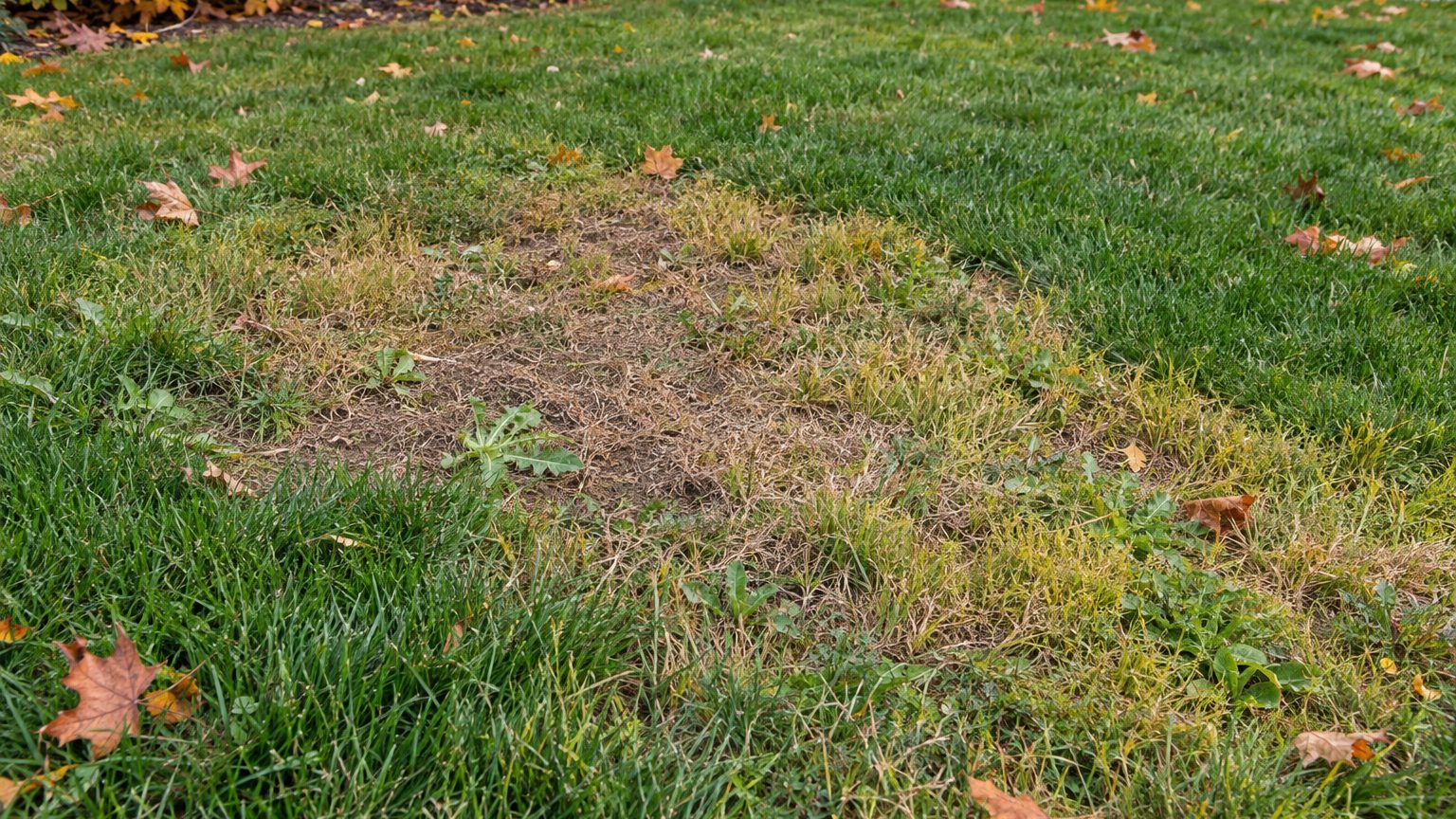
Straw-colored, matted patches that appear as the snow melts and stay brown while nearby grass greens up usually mean winter killed the turf. A gentle tug that lifts the grass with no roots supports that diagnosis, but it does not prove the cause.

Rake the dead grass away and reseed the bare spots early in the season, giving the new grass as much summer as possible. Perennial ryegrass suffers most in hard winters.

Pale, Slow Spring Growth

Grass that stays thin and yellowish-green well after thaw, especially in low, damp corners, is usually waiting on cold soil. Feeding does not cure it.

Hold off on fertilizer until the lawn is visibly growing, then give the first feeding. Pushing nutrients into cold ground wastes them.

Dry, Browning Blades

Grass that turns brown and crisp in a warm, windy stretch of summer may be short of water. Push a screwdriver into the soil; if it meets hard, dry ground beneath the surface, the lawn may need water.

Water deeply through the summer months and not just on the surface. Thin turf on shallow, gravelly soil dries out fastest.

How Lawn Care Dates Change Across Nunavut

Nunavut covers a huge area, so the dates here shift with latitude and with how close you are to cold water, and the farther north you go, the later spring comes.

  • Kivalliq: Rankin Inlet and Arviat sit on the west coast of Hudson Bay, where the cold water holds spring back along the shore. The dates in this article speak for Rankin Inlet.
  • Kitikmeot: Cambridge Bay faces the Arctic coast and tends to run later in spring and earlier in fall, so seeding gets a tighter window.
  • Qikiqtaaluk: Iqaluit on southern Baffin Island is exposed to the sea, and communities farther north on the island, such as Pond Inlet, run later still.

Treat every date as a starting point and let the thaw and the feel of the soil in your own yard decide when to begin.

Where to Get Lawn Advice in Nunavut

Canada has no county extension office, so advice comes from agriculture departments, gardening groups and garden centers. Local experience counts for a lot in a place where few people grow lawns.

  • Agriculture and Agri-Food Canada offers general guidance on soils and plant growth, useful when you are planning a seeding.
  • A local gardening group or garden center, if your community has one, can tell you what has survived winters in your town.

Common Questions

What Hardiness Zone Is Nunavut?

Rankin Inlet falls in Canadian hardiness zone 0a. That is Canada’s own system, which weighs several climate variables, and it does not convert to a USDA zone, so do not match it to a US map.

Can You Grow St. Augustinegrass in Nunavut?

No. It is a heat-loving grass that is never sold as seed, and the cool summers here would not support it. Stick with bluegrass and fine fescue.

Is a Lawn Practical Everywhere in Nunavut?

It depends on the community and the site. A sheltered, thawed patch with some soil can hold a small lawn, while exposed or rocky ground may not. Start with a small area and see how it winters.

Hydrangea Pests and Diseases in Nunavut

Hydrangea Pests and Diseases in Nunavut

Rankin Inlet, the reference station Environment and Climate Change Canada uses for Nunavut, posts an average last spring frost of June 19 and a first fall frost near September 13, a stretch too short for hydrangea wood to hold enough insects or fungus to matter. The real threat here is cold injury, not a bug or a blight.

Hydrangea pests and diseases Nunavut: The Short Answer

Rankin Inlet sits in Canadian hardiness zone 0a, and at that reading a hydrangea almost never overwinters outdoors long enough to build the kind of tissue an aphid colony or a fungal spore needs to settle in. What a homeowner in Iqaluit or Cambridge Bay reads as disease is, nearly every time, frost. The Nunavut hydrangea guide lays out the growing calendar behind these numbers.

No new growth after planting

No new growth after planting — Hydrangea Pests and Diseases in Nunavut

Soil at Rankin Inlet barely warms before the average last frost of June 19 passes, so roots set out too early just sit cold and stall. Hold new stock in a container until nights clear, then plant fast inside the June to August window. The planting calendar spells out the exact months.

Stems black by midsummer

What looks like a stem canker in July is usually a late frost bite from a spring that ran past June 19, the mean date, in one year out of two. Cut back to live wood once new leaves show and skip any fungicide, there is no blight to treat here.

Leaf edges yellowing in July

Marginal yellowing reads like a nutrient problem but is more often root chill, since soil temperature lags air temperature by weeks this far north. Feed only during the May or July windows, never later, so no soft new growth sits exposed before the first fall frost.

No flower buds at all

No flower buds at all — Hydrangea Pests and Diseases in Nunavut

Old wood rarely survives a Nunavut winter to set buds, so a shrub that never blooms is not diseased, it simply lost its bud wood to the cold. Pick a variety that flowers on new growth, covered on the varieties page, rather than search for a fungal cause that is not there.

Powdery white coating indoors

Powdery white coating indoors — Hydrangea Pests and Diseases in Nunavut

True powdery mildew needs humid, still air, conditions found only in a greenhouse or sunroom here, never outdoors in a season this short. Improve air flow between pots and water at the base, since Rankin Inlet’s outdoor air is too dry and too brief for the fungus to establish outside.

Sticky residue on leaves

Sticky residue on leaves — Hydrangea Pests and Diseases in Nunavut

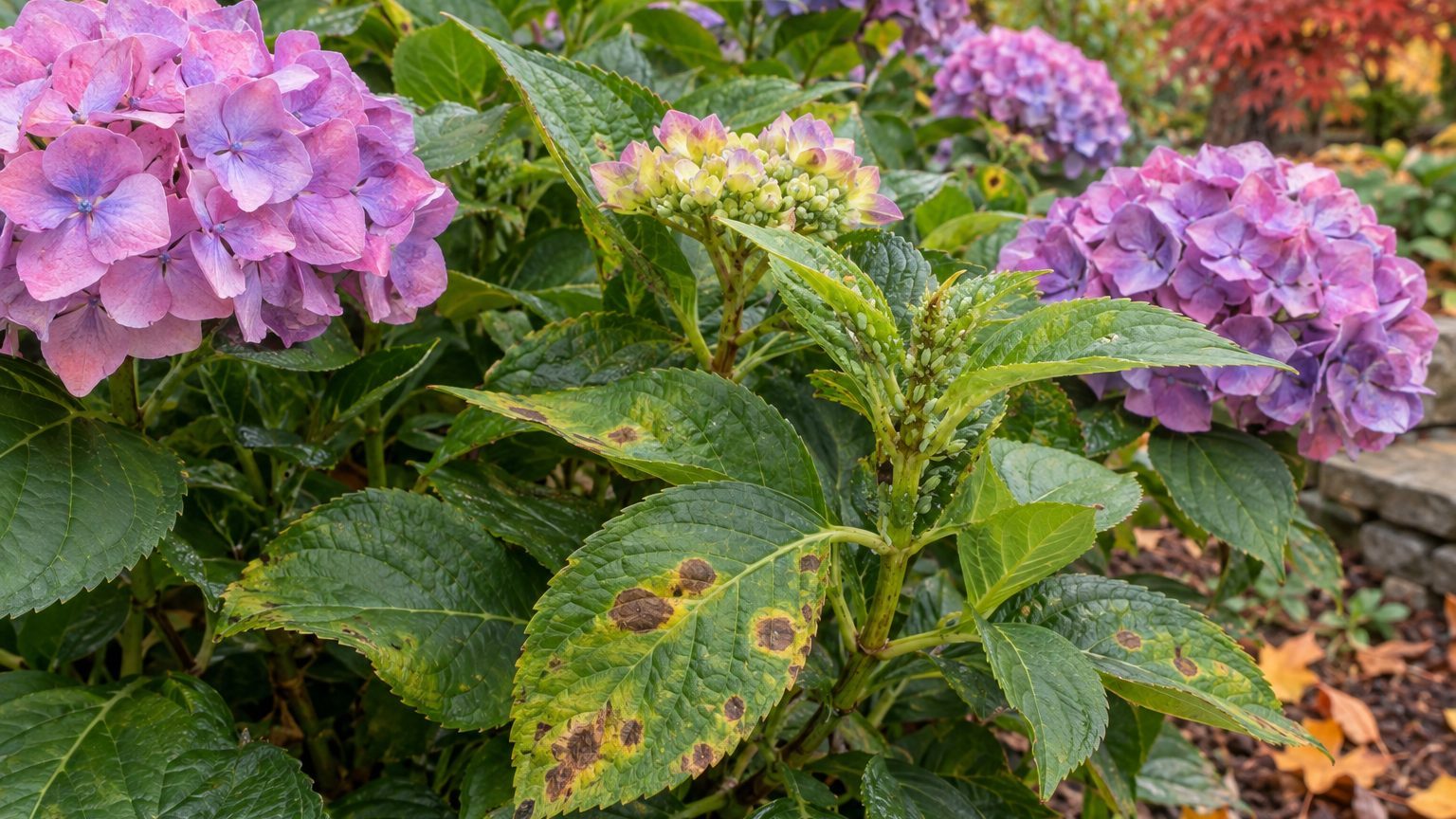
Aphids need weeks of mild weather to build a colony, and the gap between June 19 and September 13 rarely gives them that long. A light patch found on greenhouse-raised stock washes off with a hard spray of water, no insecticide is needed for a problem this short-lived.

How to Work Out the Dates for Your Own Yard

Work backward from the frost window instead of a fixed date, since Rankin Inlet only gives an average, not a guarantee.

  1. Anchor the last frost first: Environment and Climate Change Canada’s average of June 19 for Rankin Inlet is a midpoint, so half of all years run later, treat anything before late June as risk.
  2. Plant only in the open window: set hydrangeas out during June, July, or August, the three months this territory’s calendar allows, never earlier.
  3. Prune bigleaf wood in June or July: those are the only two months the calendar gives for pruning, cut later and new growth has no time to harden before fall.
  4. Feed inside May or July: fertilizing outside those two months pushes soft growth toward the September 13 average first frost, which then reads as disease.
  5. Match the variety to zone 0a: a panicle type bred to bloom on new wood tends to outlast a bigleaf type bred for old wood, check the varieties page before buying.
  6. Recheck symptoms after frost, not before: anything that appears after the first fall frost is almost always cold damage, not a pest needing treatment.

None of these dates move because a neighboring yard sits in a hollow or on a windy point, the next section covers that shift.

Nunavut North to South: How the Dates Shift

Nunavut spans three administrative regions, and none of them match Rankin Inlet’s numbers without some adjustment.

  • Kivalliq (Rankin Inlet, Arviat, Baker Lake): this is the reference region itself, so the frost window above applies closest to home here, though inland stations often run colder.
  • Qikiqtaaluk (Iqaluit, Pond Inlet, Cape Dorset): farther north and often coastal, expect the frost-free stretch to open later and close sooner than the reference window.
  • Kitikmeot (Cambridge Bay, Gjoa Haven, Kugluktuk): western Arctic exposure pushes both frost dates further apart from the reference window, shortening the usable season again.

Whichever region a yard sits in, the territory-wide hydrangea guide is the place to start before adjusting for local exposure.

Mistakes Nunavut Punishes

Planting before the window opens

Setting hydrangeas out in May, before the calendar’s June start, exposes roots to soil that has not caught up with air temperature, and a late cold snap near the June 19 average finishes them off. Wait for the June through August planting window instead.

Pruning outside June or July

Cutting bigleaf wood in August or later leaves fresh wounds with no time to callus before the September 13 average first frost, and the whole cut stem often dies back. Keep pruning inside June and July, the only two months the calendar allows.

Fertilizing into late summer

A feeding in August pushes soft new growth right into the fall frost, and that dieback then gets mistaken for a fungal disease. Stick to the May and July feeding windows only, and let anything after that go unfed.

Nunavut Extension Offices and County Contacts

Rankin Inlet’s numbers are a starting point, not the final word, and Nunavut has no county extension network, so the federal agriculture department is the closest official contact for a territory this size.

  • Your state page: the frost dates and the pruning window for the whole territory, gathered on the Nunavut hydrangea guide.
  • Which ones hold up here: the varieties page ranks options from safest to riskiest for zone 0a.
  • Agriculture and Agri-Food Canada: agriculture.canada.ca is the federal contact point, since the provincial office’s own site could not be verified.

Common Questions

Can hydrangeas actually survive winter in Nunavut?

Outdoors, rarely past a single season, since Canadian hardiness zone 0a at Rankin Inlet sits far below what any hydrangea type is bred to handle. Most gardeners here treat them as container plants brought indoors before the first fall frost.

What does frost damage look like versus a real disease?

Frost damage shows as sudden blackening or wilting right after a cold night, while true disease spreads gradually and often carries spots, powder, or a slow yellowing pattern. In Nunavut’s short season, sudden and sitewide almost always means cold.

Which pests are the biggest threat to container hydrangeas indoors?

Aphids and spider mites show up occasionally on plants wintered inside a heated sunroom, drawn by the same warm, still air that keeps the shrub alive. A hard rinse under the tap handles most early infestations without any spray.

Hydrangeas That Grow Well in Nunavut

Hydrangeas That Grow Well in Nunavut

None of the classic garden hydrangeas survive a winter outdoors in Nunavut. Rankin Inlet sits in Canadian hardiness zone 0a, and the frost-free window between June 19 and September 13 leaves barely enough summer for a container plant to leaf out, let alone root a shrub in open ground. Every variety named below is a container plant here, not a permanent border shrub.

Hydrangeas that grow well in Nunavut: The Short Answer

Natural Resources Canada’s Plant Hardiness Site rates Rankin Inlet, the reference city for this territory, at Canadian zone 0a, the coldest class the country maps. No hydrangea sold at a garden center is bred to finish a winter in that zone, so every plant has to live as a container specimen, moved indoors before the ground freezes.

Smooth hydrangea (Hydrangea arborescens)

Smooth hydrangea (Hydrangea arborescens) — Hydrangeas That Grow Well in Nunavut

This is the toughest of the group farther south, and it is the one worth trying first in a large pot. It dies back hard even in mild climates, so a Nunavut freeze that kills the top growth is not fatal as long as the roots spend winter somewhere that never drops below freezing.

Panicle hydrangea (Hydrangea paniculata)

Panicle hydrangea (Hydrangea paniculata) — Hydrangeas That Grow Well in Nunavut

It blooms on new wood, which matters here because a plant that regrows from the base each spring can still flower the same summer. It still needs the coldest months indoors, since Rankin Inlet’s climate sits far below anything the species handles outdoors.

Mountain hydrangea (Hydrangea serrata)

Mountain hydrangea (Hydrangea serrata) — Hydrangeas That Grow Well in Nunavut

Bred as a hardier cousin of the bigleaf types, it carries a reputation for slightly more cold tolerance in trials farther south. That reputation was built in places with a real autumn, not a three-month summer, so treat it as a sunroom plant that visits the porch in July.

Bigleaf hydrangea (Hydrangea macrophylla)

Bigleaf hydrangea (Hydrangea macrophylla) — Hydrangeas That Grow Well in Nunavut

This is the hydrangea most homeowners picture, with mophead or lacecap blooms, and it is also the least equipped for this climate. It flowers on old wood, so any stem that freezes over winter takes next year’s blooms with it, and here that means nearly the whole plant.

Oakleaf hydrangea (Hydrangea quercifolia)

Oakleaf hydrangea (Hydrangea quercifolia) — Hydrangeas That Grow Well in Nunavut

Grown for its cone-shaped blooms and fall color farther south, it needs a longer, warmer season than the one bounded by June 19 and September 13 to mature its wood before frost. Expect a plant that survives indoors but rarely flowers on the Nunavut calendar.

Climbing hydrangea (Hydrangea anomala subsp. petiolaris)

Climbing hydrangea (Hydrangea anomala subsp. petiolaris) — Hydrangeas That Grow Well in Nunavut

This woody vine wants years of undisturbed growth on a wall or trellis to reach blooming size, which makes it the least practical of the six for a plant that lives in a pot and moves indoors each fall. Try it only once the other five are already established.

How to Work Out the Dates for Your Own Yard

The two mean dates from Environment and Climate Change Canada’s Canadian Climate Normals give you a starting point, not a guarantee, so work through your own yard before you trust a pot to the outdoors.

  1. Start from the mean, not a calendar square: the average last spring frost at Rankin Inlet falls on June 19, but that is a midpoint, so in half of all years frost lands later.
  2. Add a margin for your own site: if you garden away from Rankin Inlet, on higher ground or farther from open water, push that date back a week or two before moving a container outside.
  3. Work backward from the fall mean the same way: the average first fall frost lands September 13, and again it arrives earlier in half of all years, so bring pots in at the first cold snap rather than waiting for the calendar.
  4. Time feeding and pruning to the same short season: fertilize in May and again in July, and prune a bigleaf plant only in June or July, while it still has weeks of light to recover before it goes back inside.

Of the six varieties above, smooth hydrangea gets through a Nunavut summer because it flowers on wood it grows fresh each June, matching the outdoor window exactly. Climbing hydrangea does not get through even one season here, since it needs years of undisturbed stem growth that a plant carried indoors every September never allows.

Nunavut North to South: How the Dates Shift

Nunavut is not one climate, and the Rankin Inlet dates describe only the Kivalliq region around it.

  • The Kivalliq coast (Rankin Inlet, Arviat, Whale Cove): nearby open water keeps the shoulder seasons a touch milder than inland sites at the same latitude, which is the only reason a container plant gets any outdoor time at all.
  • The Kitikmeot region (Cambridge Bay, Gjoa Haven, Kugluktuk): farther west of the reference station, expect the safe outdoor window to run shorter than the Rankin Inlet dates suggest.
  • The Qikiqtaaluk region (Iqaluit, Pond Inlet, Pangnirtung): this stretch covers the territory’s most southerly and most northerly communities at once, so a Baffin Island yard can sit closer to or far colder than the Kivalliq mean depending on exactly where it sits.

None of this changes the bottom line, it only changes how much margin to build in before trusting a pot to the outdoors.

Mistakes Nunavut Punishes

Planting a hydrangea straight into garden soil

The mistake comes from treating a Nunavut yard like a temperate one, where a shrub roots in and stays. At Canadian zone 0a, an in-ground hydrangea does not survive its first winter, so keep every plant in a pot that can move under cover before the season turns.

Trusting the fall date as a hard deadline

The mean first frost is not a promise, and in half of all years it lands earlier than the chart suggests. Watch the forecast instead of the calendar, and bring containers indoors at the first cold snap rather than waiting for a date to arrive.

Pruning a bigleaf plant in August

Cutting back old wood outside the June or July window leaves fresh cuts with no time to callus before the plant goes back indoors. Stick to the June or July pruning window, and leave August growth alone until the next cycle.

Nunavut Extension Offices and County Contacts

Rankin Inlet’s numbers are a starting point, and the federal department fills in what a single weather station cannot tell you about your own yard.

  • Agriculture and Agri-Food Canada: the federal department’s site, since Nunavut does not run its own public gardening line.
  • Your state page: the frost dates and the pruning window gathered in one place for Nunavut.
  • What goes wrong here: the pests and problems specific to growing a hydrangea in this climate.

Common questions

Can any hydrangea survive outdoors year-round in Nunavut?

No. Canadian zone 0a at Rankin Inlet is colder than any hydrangea species is bred to handle outdoors, so every plant needs to spend winter under cover.

Which hydrangea is the best starting point for a Nunavut container garden?

Smooth hydrangea, since it flowers on wood it grows fresh each June and tolerates a hard dieback better than the other five varieties named above.

How long is the outdoor growing season for a potted hydrangea in Nunavut?

The mean window runs from June 19 to September 13 at Rankin Inlet, and since that is an average, some years give less time and some give more.

When to Prune Hydrangeas in Nunavut

When to Prune Hydrangeas in Nunavut

In Nunavut, the honest window to plant hydrangeas runs June through August, with Rankin Inlet as the reference point. Frost breaks around June 19 on average and returns by September 13, so the growing season for anything woody stays short and unforgiving. Pruning bigleaf types, if you attempt them at all, falls in June and July only.

When to prune hydrangeas in Nunavut: The Short Answer

Environment and Climate Change Canada’s Rankin Inlet A normals put the average spring frost at June 19 and the first fall frost at September 13, so this month-by-month list treats those two dates as the pivot for every gesture below.

  • January: Ground stays frozen solid across Nunavut, so no planting or pruning gesture applies here. Order stock now if you plan to try a hardy shrub once the short summer arrives.
  • February: Frost still holds tight, weeks before the June 19 average breakup. Use the quiet month to research whether any hydrangea can survive zone 0a at all.
  • March: Snowpack usually still covers beds this far north. Hold off on any soil work until the ground visibly thaws around you.
  • April: The average spring frost remains nearly two months out. Check containers and winter shelters for damage before the short season starts.
  • May: The fertilize window opens this month, ahead of frost breaking. Feed only shrubs already established in a sheltered spot, never a new transplant.
  • June: Frost breaks on average around June 19, and the plant window opens the same month. Prune bigleaf hydrangeas now too, since this is the first of only two months the calendar allows it.
  • July: Planting continues, the second fertilize window opens, and bigleaf pruning finishes this month. This is the busiest stretch of the entire hydrangea year here.
  • August: The plant window closes by month’s end. Anything going into the ground this late needs the rest of summer to root before frost returns.
  • September: The first fall frost lands on average September 13. Wrap or bring in anything still exposed well before that date arrives.
  • October: Frost has already returned across most of the territory. Mulch roots heavily now and stop watering entirely.
  • November: Daylight shrinks fast and the ground refreezes for good. There is no gesture left to make outdoors this month.
  • December: Dormancy is complete territory-wide. Use the quiet month to plan next year’s sheltered planting spot.

Four months out of twelve carry any real gesture at all, and that scarcity is the actual answer to when to plant hydrangeas in Nunavut, with Rankin Inlet as the benchmark.

How to Work Out the Dates for Your Own Yard

The average dates only work as a starting point, and translating them onto your own lot takes a few extra steps beyond the calendar table above.

  1. Find your zone first: Natural Resources Canada rates Rankin Inlet at zone 0a, the coldest classification the country’s plant hardiness system uses, so start every decision from that number.
  2. Count backward from the mean spring frost: nothing goes into the ground before June 19 on average, and a colder microsite on your own lot can push that later still.
  3. Check your fall exposure next: work back from the September 13 mean fall frost to see how few weeks a young shrub actually has to root before cold returns.
  4. Match the shrub to that season length: with barely three months between the two averages, only the hardiest names are worth trying at all in this territory.
  5. Read your own site, not the average: a spot near open water or against a south wall can run days ahead of Rankin Inlet, while a low or shaded yard runs behind it.

None of these steps replace the calendar table. They just tell you where on that calendar your own yard actually sits, which can shift by more than a week either way.

Nunavut North to South: How the Dates Shift

Nunavut spans three vast administrative regions, and none of them soften the average dates the way lower latitudes do elsewhere.

  • Kivalliq (Rankin Inlet, Arviat, Baker Lake): this is the reference region the June 19 and September 13 averages come from, and even here a rough year pushes both dates further from summer.
  • Qikiqtaaluk (Iqaluit, Pond Inlet, Cape Dorset): sitting further north and closer to open Arctic water, this region tends to hold onto spring cold longer and see fall cold arrive sooner than Rankin Inlet does.
  • Kitikmeot (Cambridge Bay, Gjoa Haven, Kugluktuk): the most continental of the three, with a short, intense thaw that can compress the whole growing window even tighter than the Kivalliq average suggests.

Whichever region you garden in, treat every other part of the territory as running behind, not ahead, of the Rankin Inlet dates carried on the calendar above.

Mistakes Nunavut Punishes

Planting right on the average frost date

June 19 is a mean, not a guarantee, so a shrub planted that exact week can still meet a late frost. Push planting a week or two later into the June through August window, and give it every extra day of soil warmth available.

Choosing a shrub rated for a milder zone

Natural Resources Canada already places Rankin Inlet at zone 0a, the coldest rating the system uses, so a hydrangea bred for a warmer zone has almost no chance outdoors here. Check the varieties page before buying anything for this yard.

Pruning outside June and July

The calendar allows bigleaf pruning only in June and July, and cutting into a shrub before or after that stretch removes wood the plant needs to survive the next freeze. Wait for the window, prune once, then leave the shrub alone.

Nunavut Extension Offices and County Contacts

Rankin Inlet’s frost dates are only a starting point, and questions about your own soil or site need someone who has seen the ground firsthand. Agriculture and Agri-Food Canada keeps a working federal page since the territorial department’s own site cannot always be verified.

  • Your state page: the frost dates and the pruning window for Nunavut in one place.
  • Which ones hold up here: the varieties worth trying at zone 0a, and the ones to skip entirely.
  • What goes wrong here: the pests and problems this territory’s cold actually produces.

Common questions

Can hydrangeas actually survive outdoors in Nunavut?

Zone 0a is the coldest rating in the Canadian hardiness system, and most hydrangea varieties are not built to survive it unprotected. Most growers here treat them as sheltered or container plants brought indoors well before the average September 13 frost.

What is the shortest safe planting window in Nunavut?

The calendar for this territory only opens the plant gesture in June, July, and August, and frost returns on average by September 13. That leaves less than three months of open, workable ground.

Where does the June 19 frost date come from?

It comes from Environment and Climate Change Canada’s Rankin Inlet A station, using the 1981 to 2010 climate normals. It is a mean date, so in about half of all years the real frost falls later than that.

When to Plant Hydrangeas in Nunavut: Dates and Varieties

When to Plant Hydrangeas in Nunavut: Dates and Varieties

Growing hydrangeas outdoors year-round in Nunavut is not realistic. Rankin Inlet’s Canadian hardiness zone of 0a and a frost-free stretch of under three months rule out any variety left in the ground through winter. Every hydrangea here lives as a container plant, moved out for summer and back inside before the first fall frost.

Hydrangeas Care Calendar for Nunavut

Growing Hydrangeas in Nunavut: Dates and Varieties

Rankin Inlet’s mean last frost falls June 19 and the mean first fall frost falls September 13, per Environment and Climate Change Canada’s Canadian Climate Normals. Natural Resources Canada rates the area Canadian hardiness zone 0a, the coldest class on the scale, which rules out any hydrangea wintering in open ground here.

  • Dormancy: the safe window to repot or move a plant, roots undisturbed, runs through the cold months before growth starts near June 19.
  • Planting: wait two to three weeks past the mean last frost of June 19, once both the ground and the container mix have warmed.
  • Growth spurt: from late June into July the plant pushes new leaves fast, racing the short season.
  • Budding: buds set in July on whichever wood the variety uses, with barely six weeks of warmth to work with.
  • Bloom watch: flowers, if they come, open in August, well ahead of the mean first fall frost of September 13.
  • Frost prep: bring every pot indoors before September 13, since that date is only an average and an early frost can land sooner.
  • Winter storage: hold the dormant plant in a cool, frost-free space until the cycle starts again.

None of this works in open ground. With under three months between frosts and a Canadian zone of 0a, every hydrangea in Nunavut is a container plant, moved indoors for roughly nine months of the year.

Best Hydrangeas for Nunavut

Every widely sold hydrangea assumes a milder winter than Rankin Inlet’s, which Natural Resources Canada rates Canadian hardiness zone 0a, and a longer season than the run between the June 19 and September 13 mean frosts. None of the usual garden types are hardy outdoors this far north.

Type still matters, though, because it decides how a plant gets cut back and stored each winter, and whether it might actually rebloom on a windowsill or in a heated porch.

Kind Flowers on Verdict in Nunavut Why
Bigleaf Last year’s wood Container only, unreliable bloom Overwintered buds rarely survive the move indoors and back out
Panicle New wood Container, best odds Blooms on new growth, so a hard winter setback doesn’t cost the flowers
Smooth New wood Container, best odds Tolerates cold well and rebuilds fast from the base each spring
Oakleaf Old wood Not recommended Needs a longer warm season than the roughly twelve weeks between frosts
Climbing Old wood Not practical Needs years of established wood a yearly container cycle can’t provide

Panicle and smooth types tolerate cold best and rebloom most reliably indoors, which makes them the practical picks here. Oakleaf and climbing hydrangeas need more established wood than a yearly container cycle allows, and the other kinds are on their own pages.

When to Plant, Prune and Feed Hydrangeas in Nunavut

Environment and Climate Change Canada’s Canadian Climate Normals put Rankin Inlet’s mean frost dates at June 19 in spring and September 13 in fall, and those two dates set every task below.

With roughly twelve weeks between them, there’s no slack for a task done late, especially the move indoors ahead of the first fall frost.

Task Window here Counted from
Plant or repot Early to mid-July Two to three weeks after the June 19 mean last frost
Feed Late June through mid-July Right after new growth starts, stopped well before September 13
Prune Late August, before frost Two to three weeks ahead of the September 13 mean first frost

Skip a hard cutback this far north. A plant already surviving on a short season doesn’t need less wood to rebuild before it goes back indoors for winter.

Hydrangeas Problems in Nunavut and What Causes Them

No blooms on a healthy plant

The season between June 19 and September 13 leaves barely enough warmth for old-wood buds to form and open before frost. Choose a new-wood type instead, and check the page on which ones hold up here before buying.

Stems dead to the base each spring

Canadian zone 0a cold kills wood left outside past the mean first frost. Bring the whole container in before September 13 rather than waiting for a hard freeze, and see the calendar page for the exact window.

Weak, stretched growth over winter

Warm rooms and short daylight push soft, leggy stems on a dormant plant that should be resting. Move it to the coolest bright spot in the house and cut back on water until spring growth starts.

Nunavut North to South: How the Dates Shift

Rankin Inlet’s numbers are one station’s average, and Nunavut runs far wider than that single point on the map.

  • Coastal communities (near Hudson Bay and the Arctic coast): sea ice keeps spring cooler and pushes the safe planting window later than Rankin Inlet’s own dates.
  • Inland and higher ground: shorter, colder summers than a coastal reading suggests, with less margin before the first fall frost.
  • The far north of the territory: a shorter frost-free run than Rankin Inlet’s, which already sits under three months.

Check the territory page for how these local shifts play out where you are.

Nunavut Extension Offices and County Contacts

Rankin Inlet’s dates are a starting point, not a guarantee for every community in the territory. Agriculture and Agri-Food Canada is the federal contact point where a provincial or territorial office isn’t reachable online.

This month, the one gesture that matters is checking the calendar before moving anything outside or back in.

Common questions

Can a hydrangea survive winter outdoors in Nunavut?

No. Canadian hardiness zone 0a at Rankin Inlet is far below what any garden hydrangea tolerates in open ground, so container growing with an indoor winter is the only workable approach.

How short is the growing season really?

The mean last spring frost falls June 19 and the mean first fall frost falls September 13, a gap of roughly twelve weeks, and either date can shift since it’s an average, not a guarantee.

Which hydrangea type is easiest to keep alive here?

Panicle and smooth types, since they bloom on new wood and rebuild quickly each year even after a rough winter indoors, unlike types that depend on last year’s growth.

The almanac, state by state. Every date on this site comes from a state’s own frost facts and its extension service’s calendar — and says where it comes from.