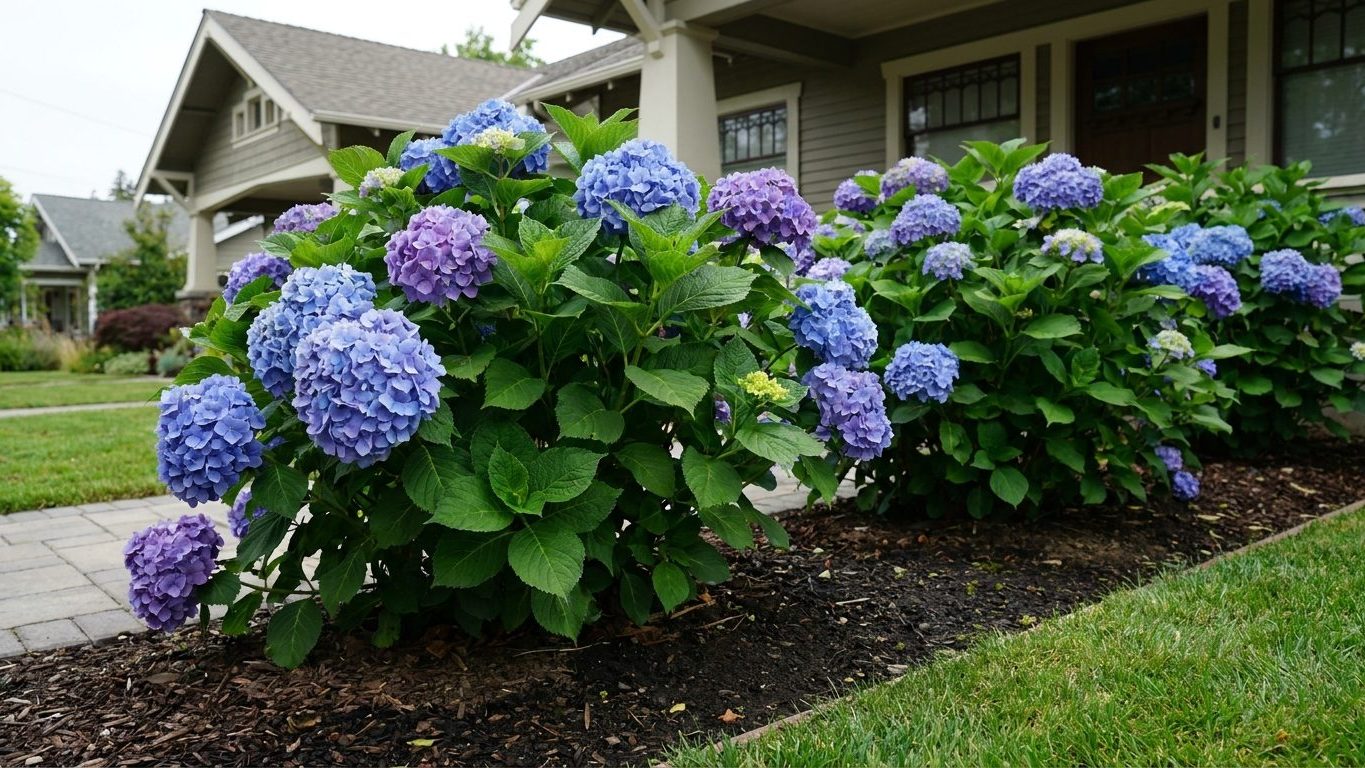
In Los Angeles and most of coastal and Southern California, hydrangeas can go into the ground in nearly any month, because a hard freeze almost never arrives. Across the rest of the state, the safest planting window sits in January, February, October and November, when roots can settle before summer heat or a Sierra frost takes over.
When to prune hydrangeas in California: The Short Answer
California breaks the usual frost-counting rule that works almost everywhere else on this list.
- January: inside the state’s plant window, cool soil and winter rain help new roots settle with little stress.
- February: still inside the plant window, the last easy month before spring growth and rising temperatures speed everything up.
- March: the first fertilize month, feed as new leaves push out after winter dormancy.
- April: no dated task on the calendar, so watch new growth and keep soil evenly moist as the dry season begins.
- May: the second fertilize month, a feeding checkpoint before the heat of summer arrives.
- June: the first month of the bigleaf pruning window, cut back right after the first flush of bloom fades.
- July: both a fertilize month and the second pruning month, feed and finish any bigleaf pruning before next year’s buds set.
- August: no dated task, deep watering matters more here than feeding, especially inland where valley heat peaks.
- September: no dated task, shift to deadheading rather than pushing fresh growth that won’t harden off in time.
- October: back in the plant window, cooler days make this one of the two best months to set new shrubs.
- November: the last plant month, get roots in before short days slow growth to a crawl.
- December: no dated task, a dormant month for minimal water and no pruning, since flower buds for next season are already set.
NOAA NCEI 1991-2020 Climate Normals record zero days at or below 32°F in Los Angeles across three decades, with a frost-free season listed as 365 days. That number explains why the state’s plant window is built around heat and rain, not frost, in most of California, while the Sierra, the Central Valley and Northern California still freeze and follow a different rhythm entirely.
California — the year and the numbers
- State
- California
- USDA zones
- 5a-11a
- Frost
- none in an average year
- Annual rain
- 12 in
- Lawn zone
- warm-season
- Source
- NOAA NCEI 1991-2020 Climate Normals · Los Angeles
How to Work Out the Dates for Your Own Yard
Without a frost date to count backward from in most of the state, the method here starts with zone instead.
- Find your zone first: USDA Plant Hardiness Zone Map places California from 5a in the high Sierra to 11a along the far south coast, and that range tells you whether frost is even a real factor where you live.
- Check whether frost applies to you at all: if your yard sits near the coast or in the Los Angeles basin, plan around heat and drought, not cold.
- Treat the plant window as protection either way: January, February, October and November give roots time to settle before either summer heat or, inland, a winter freeze arrives.
- Use the fertilize months as checkpoints: March, May and July are natural moments to check soil moisture at the same time you feed.
- Reserve the pruning window: schedule any bigleaf cutback for June or July, right after bloom, so you never remove next year’s buds by accident.
The core idea is simple. Match your yard’s actual zone number to the state’s plant window, then let that combination, not a generic frost date, decide your calendar.
California North to South: How the Dates Shift
A single state map hides enormous variation once you move from the coast to the mountains.
- The Sierra Nevada and high inland valleys (Truckee, Mammoth Lakes, South Lake Tahoe): winters here sit at the coldest end of the state’s range, closer to true frost-season gardening than anywhere else in California.
- The Central Valley (Sacramento, Fresno, Bakersfield): summer heat, not frost, is the main constraint, with occasional winter cold snaps that still matter for new plantings.
- The coast and Southern California (San Diego, Los Angeles, Santa Barbara): frost essentially never happens, so drought and water restrictions do the work a frost date would elsewhere.
- The Bay Area and North Coast (San Francisco, Eureka, Mendocino): coastal fog moderates both heat and cold, giving hydrangeas one of the gentlest ranges in the state.
USDA Plant Hardiness Zone Map spans 5a to 11a across these areas, a spread wide enough that a shrub thriving in Eureka can struggle in Bakersfield. For the exact reading where you garden, the state guide breaks the zone down further.
Mistakes California Punishes
Watering on an East Coast schedule
Regular summer rain never arrives here, so a watering habit built for a wetter climate drowns roots instead of feeding them. Switch to deep, infrequent watering timed to the dry season, and let the soil dry slightly between sessions.
Planting outside the window in July heat
New roots set during peak summer heat struggle before they can establish, since the calendar’s plant months sit in January, February, October and November for a reason. Wait for one of those months instead of planting on impulse.
Assuming frost protection is needed everywhere
Coastal and Southern California gardeners sometimes cover shrubs against a freeze that statistically never comes, while Sierra and Central Valley gardeners skip protection they actually need. Match the precaution to your zone, not to habits from somewhere colder.
California Extension Offices and County Contacts
The statewide window above is a starting point, not the final word for your particular yard. University of California Cooperative Extension keeps county-level detail the state figures can’t capture.
- Your county’s UC Cooperative Extension office: local frost history, soil results, and fog patterns specific to your address.
- The state guide: the zone range and coastal-to-Sierra breakdown for California in one place.
- Master Gardener helplines: free, yard-specific answers run through the same UC ANR network.
Call before you buy, and bring your yard’s zone number with you.
Common questions
Can I plant hydrangeas in California in summer?
It’s possible, but the calendar’s plant window skips summer entirely, running instead in January, February, October and November, since new roots set during peak heat struggle to establish before stress sets in.
Do hydrangeas need frost protection in Los Angeles?
No. NOAA NCEI 1991-2020 Climate Normals list a 365-day frost-free season for Los Angeles, so protection efforts there are better spent on shade and deep watering during heat waves.
Why does the same state have such different planting advice?
USDA Plant Hardiness Zone Map spans 5a in the high Sierra to 11a on the far south coast, a range wide enough that frost matters in one part of California and never at all in another.