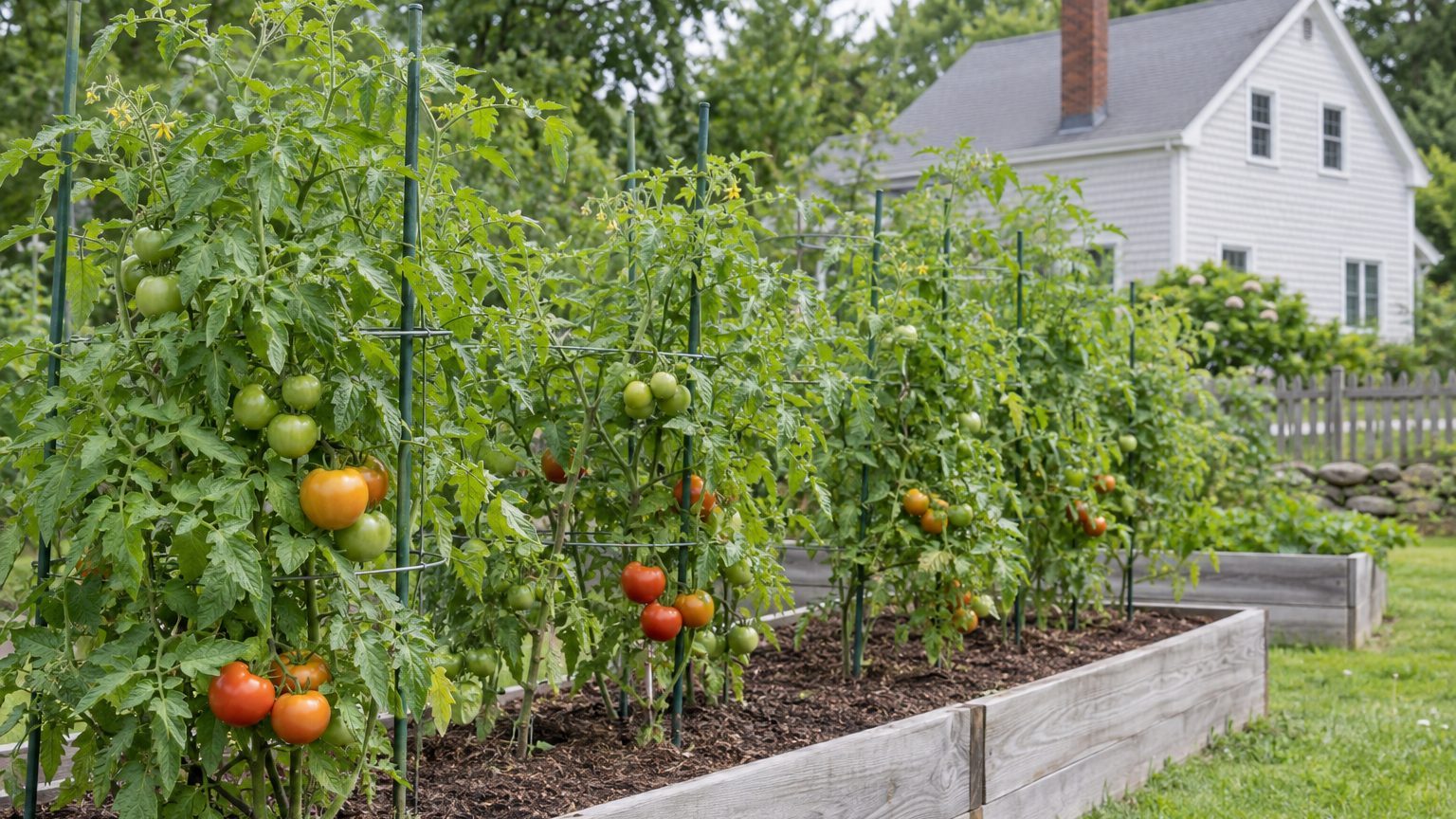
Tomato plants that go into New Hampshire soil too early sit there stunned, and one cold night can finish them. The reliable moment comes in late May to early June, once frost is behind you and the ground has warmed. That timing shapes everything else about the season, from seed trays in March to the last tomatoes pulled in fall.
When Is the Best Time to Plant Tomatoes in New Hampshire?

Plant tomatoes outside in May to June, and aim for late May to early June if your garden is in the cooler parts of the state. Frost kills the plants outright, and cold soil keeps them from growing. Through the year, the work runs like this:
- In March to April, start seeds indoors, with mid-March to mid-April working well so the seedlings are the right size when the weather opens up.
- In late spring, begin hardening off the young plants outdoors for one to two weeks, so leaves toughen to wind and sun before they meet the garden.
- In May to June, set transplants in the ground, once all danger of frost has passed and the soil has reached about 60°F.
- Through the summer, keep the plants growing steadily, since very hot spells can stop large-fruited tomatoes from setting fruit.
- Before the first fall frost, bring in what has ripened, because a freeze ends the plants quickly.
For Manchester, the last spring frost falls around April 16 to April 27, and the first fall frost around October 13 to October 26. Suburban and rural gardens usually see the last spring frost later and the first fall frost earlier than that, often by one to two weeks, and more at elevation. Check your own county before you commit. The state spans USDA hardiness zones 3b to 6a, so a garden in the North Country runs a good deal cooler than one in the southeast.
New Hampshire — the year and the numbers
- State
- New Hampshire
- USDA zones
- 3b-6a
- Last spring frost
- April 16 to April 27
- First fall frost
- October 13 to October 26
- Annual rain
- 40 in
- Lawn zone
- cool-season
- Source
- NOAA NCEI U.S. Climate Normals 1991-2020, 32F freeze probabilities · Manchester
When to Start Tomato Seeds for New Hampshire
Seeds go into trays indoors in March to April, and mid-March to mid-April is the sweet spot. Tomato seedlings are started about six to eight weeks before they go into the garden, which gives them sturdy stems by the time the soil is ready.
Starting a little too early leaves you with tall, leggy plants waiting by the window. Starting a little late means small plants in the ground. The page on starting tomato seeds indoors in New Hampshire covers trays, light and sowing depth in detail.
How to Plant Tomatoes in New Hampshire
A good planting day is calm, mild and a little overcast. The steps below run in the order you will do them.
- In the days before planting, harden off the seedlings outdoors for one to two weeks. Indoor-grown leaves scorch and tear if they go straight from a windowsill into full sun and wind.
- Once frost danger has passed, check that the soil has warmed to about 60°F. Tomatoes planted into colder ground stall, and roots barely grow.
- On planting day, set each plant deep, burying a good part of the stem. The buried stem sends out extra roots, which makes the plant steadier and better at finding water.
- At planting, put the stake or cage in right away. Pushing supports in later risks damaging roots that have already spread.
- After planting, water the plants in well so soil settles around the roots, then keep watering regularly as they establish.
- Once the soil is warm, spread mulch around the plants. It holds moisture, keeps soil from splashing onto lower leaves, and evens out swings in soil temperature.
Mulch laid on cold soil keeps the ground cold, so wait until it has warmed before covering it.
When to Seed, Plant and Harvest Tomatoes in New Hampshire
The tomato year here is short, so each task has a window. Seeds start in the dark days of late winter, plants go out when nights are reliably mild, and harvest ends when fall frost threatens.
| Task | Best timing in New Hampshire | Why then |
|---|---|---|
| Start seeds indoors | March to April, mid-March to mid-April | Seedlings reach planting size in six to eight weeks |
| Plant transplants outside | May to June, late May to early June | Frost danger is gone and the soil is near 60°F |
| Harvest before frost | Pick ripening fruit before the first fall frost | A freeze kills the plants and ends the crop |
New Hampshire does not offer a second summer planting for tomatoes. A gardener who misses the late-May window is better off planting a little later than skipping the season. For harvest, watch the forecast in autumn rather than the calendar, and bring in green fruit when a frost warning appears.
Where to Get Tomato Advice in New Hampshire
University of New Hampshire Extension answers home gardening questions, and its county offices know local conditions better than any statewide rule.
- Contact your county extension office for a soil test, ideally in early spring before beds are prepared.
- Bring a leaf or fruit sample to the office when a plant shows spots, wilting or other trouble, so a specialist can diagnose it in person.
- Ask about local frost timing in your town, since it can differ from the state’s reference city.
Common Questions
Can You Plant Tomatoes in New Hampshire in April?
April is for seed trays on a windowsill or under lights, not for the garden. Outdoor beds are still too cold, and frost can return after a mild spell. Wait for May to June, when the soil has warmed.
What Do You Do If a Late Frost Is Forecast After Planting?
Cover the plants overnight with a frost cloth, an old sheet or an upturned bucket, and take it off in the morning. Cover them completely, down to the soil, so heat held in the ground stays around the leaves.
Why Are Tomato Plants Not Setting Fruit in Summer?
Large-fruited tomatoes often stop setting fruit during hot spells, and flowers drop even though the plant looks healthy. If flowers fall during a heat wave and the plant is otherwise green and growing, the weather is the likely cause. Fruit set generally resumes when the heat eases.