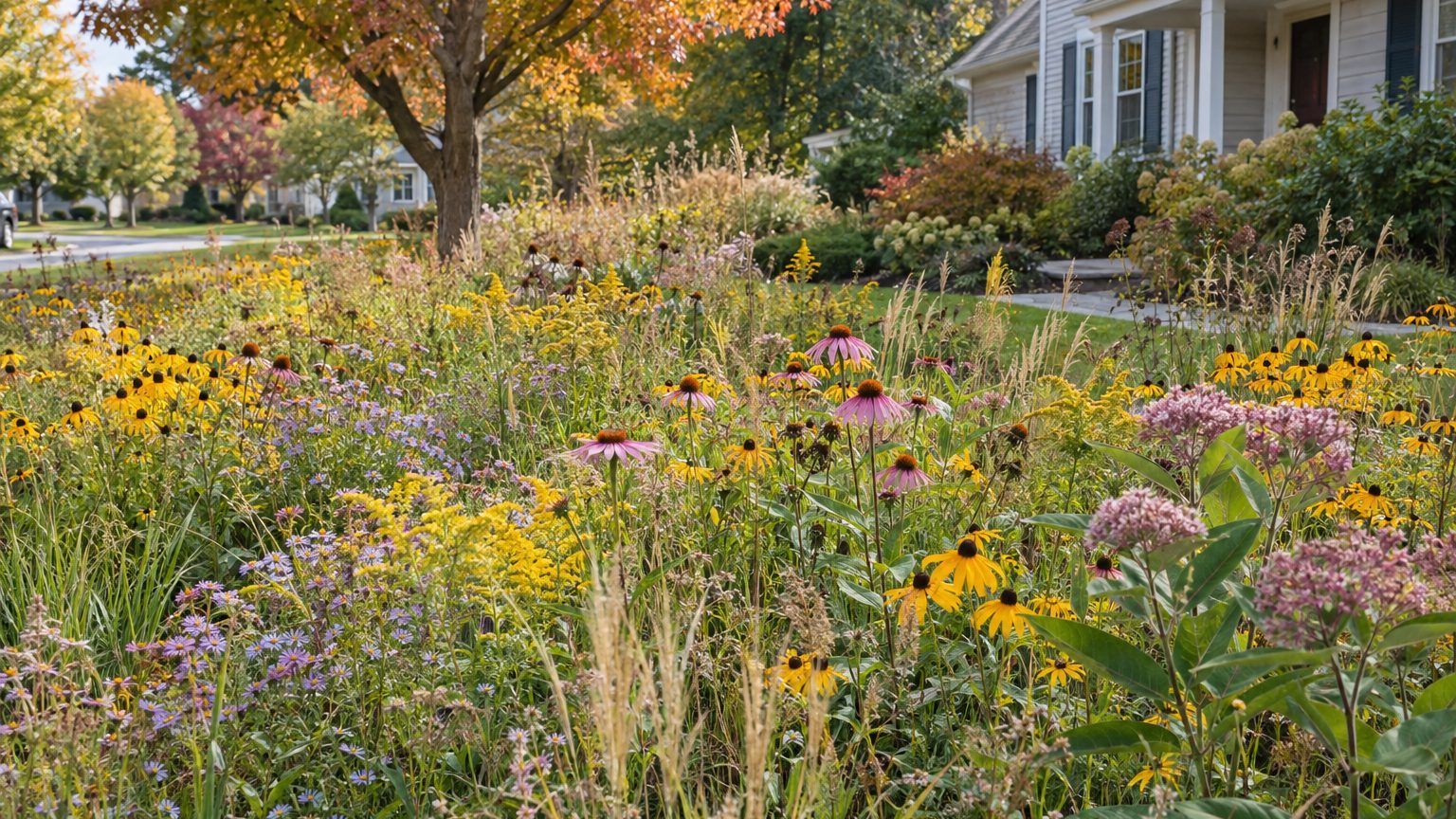
Early spring in an Illinois woodland brings the first color of the year, long before the lawn needs its first mowing. Wildflowers here follow a loose sequence, with woodland species opening first and prairie plants taking over as summer arrives.
When Do Wildflowers Bloom in Illinois?

Native wildflowers bloom in Illinois mostly in April and May, with March possible for the earliest woodland species and June for those that run a little later. Prairie species carry the show later in summer.
| Season | What blooms in Illinois | What to know |
|---|---|---|
| Spring | Woodland wildflowers in moist woods and clearings | Bloom runs from March to May, peaking in April and May |
| Summer | Prairie species, including butterfly milkweed | Later bloom than the woodland group, full sun and well-drained soil suit them |
Frost dates are a reference point only. At the Chicago airport station, the last spring frost falls between April 11 and April 22, and gardens in the suburbs or the country usually see it later. Check your own county before you plant anything tender.
Milkweed deserves a mention beyond the table, since several native plants of that kind are needed by native insects. Prairie dropseed, a native grass, pairs well with them and tolerates clay.
Illinois — the year and the numbers
- State
- Illinois
- USDA zones
- 5a-7b
- Last spring frost
- April 11 to April 22
- First fall frost
- October 24 to November 3
- Annual rain
- 38 in
- Lawn zone
- cool-season
- Source
- NOAA NCEI 1991-2020 Climate Normals, 32F freeze probabilities · Chicago
Why Wildflowers May Not Bloom the First Year
Annual wildflowers bloom the first year, because they live out their whole cycle in one season. Native perennials work differently. They spend the first stretch building roots, and they often take a year or two to bloom, so a bare-looking planting in its first summer is normal.
Many native seeds also need a cold, moist winter before they germinate. A fall seeding does not come up in fall, since the seeds wait in the soil and sprout the next spring. Spring sowings must be kept moist until germination.
While the roots settle, a new prairie planting is mowed high several times in its first summer to hold back weeds. Midsummer sowing in July and August is best avoided, because drought is common and late seedlings do not root well before winter.
What to Do After Wildflowers Bloom in Illinois
Once the flowers fade, leave the seed heads standing so the seeds can ripen and drop. That is how many native wildflowers fill in over the years, and it also leaves cover for native insects through the cold months.
Fall is also the time to add more. In Illinois, autumn is a good moment to spread seed into an existing prairie or a prepared bed, since the seeds meet the natural freeze and thaw cycle of winter and are ready to germinate the next spring.
The window for that fall sowing runs October through December. If fall slips by, late winter works too, in February and March. Spring sowing in April and May is the other route, and it can stretch into June and July if needed.
- Fall sowing, October through December, lets winter do the cold treatment.
- Late winter sowing, February and March, gives a shorter cold spell outdoors.
- Spring sowing, April and May, needs steady moisture until the seedlings appear.
Most native prairie plants do best on well-drained soil in full sun, so choose the spot before choosing the date.
Where to Get Wildflower Advice in Illinois
University of Illinois Extension publishes seasonal guidance on native plants and prairie gardens, and your county office can answer questions about local soil and frost timing.
- The extension website carries articles on starting a native prairie garden from seed.
- The county extension office can help with local conditions when you are planning beds.
Common Questions
Can You Plant Wildflowers in Illinois in Winter?
Yes, late winter in February and March works for sowing. The seeds lie on the soil and get the cold, moist conditions many natives need before they germinate.
Do Native Wildflowers Come Back Every Year?
Perennials return from established roots, and seed that drops from ripened heads adds new plants. Annuals bloom the first year and rely on reseeding to come back.
Do Wildflowers Help Pollinators?
Locally native plants attract native pollinators, and milkweed in particular is needed by native insects. A mix of early and later bloomers gives them something to visit across the season.