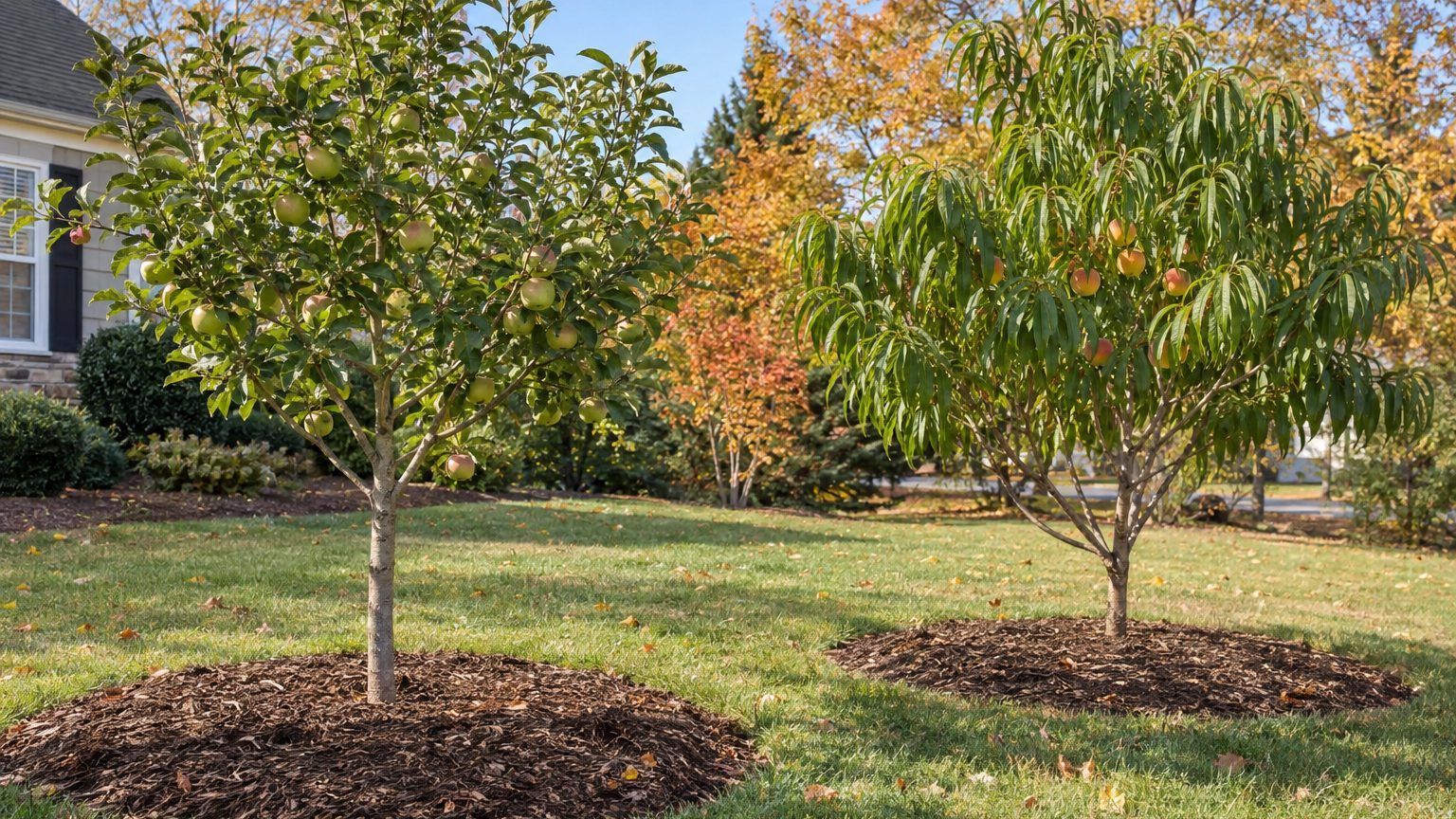
A well-pruned apple tree in late winter, bare of leaves and ready to wake with the first warm days, is a common sight in North Carolina yards. Apples are a dependable choice here, and native fruits such as American persimmon and paw paw also grow well. Peaches are the tricky one.
Best Fruit Trees to Grow in North Carolina

Apples
Most apples are a good choice in North Carolina, and the list of suitable varieties is long: Crispin (Mutsu), Gala, Empire, Golden Delicious, Red Delicious, Rome Beauty, Stayman Winesap and Yates among them.
In the Piedmont, Gala, Fuji, Golden Delicious and Red Delicious are the recommended plantings. Plant them in the dormant season, from January through March.
Apple Rootstocks
A modern apple tree is made by grafting a living bud from the variety you want onto a hardy rootstock. The rootstock gives the tree its roots, so a grafted tree from a nursery carries the rootstock’s toughness and the chosen variety’s fruit.
Native Fruits
American persimmon, paw paw and elderberry grow well here because they belong to the region. They suit a yard where native fruit is the priority.
American Crabapple
American crabapple is also on the list of native fruits that do well. The native Southern crabapple reaches about 20 to 30 feet tall and feeds bees in early spring. It prefers part shade and moist, well-drained soil.
Peaches
Peaches tend to perform poorly here most years, even though the common peach has many cultivars that give excellent peaches or nectarines. Treat a peach as an experiment, and give apples the main spot in the yard.
North Carolina — the year and the numbers
- State
- North Carolina
- USDA zones
- 5b-8b
- Last spring frost
- March 23 to April 5
- First fall frost
- October 30 to November 8
- Annual rain
- 44 in
- Lawn zone
- transition-season
- Source
- NOAA NCEI U.S. Climate Normals 1991-2020, 32F freeze probabilities · Charlotte
How to Choose a Fruit Tree for Your North Carolina Yard
North Carolina spans hardiness zones 5b to 8b in the USDA system, so mountain yards and coastal yards face different winters. Start from your own conditions, then match the tree to them.
Charlotte, in the Piedmont, sees its last spring frost between March 23 and April 5. The mountains to the west run later and the coast earlier.
| Your situation | What suits it in North Carolina | Why |
|---|---|---|
| Cold mountain winters | Apples | Most apples are a good choice, and they are planted dormant between January and March. |
| Piedmont yard | Gala, Fuji, Golden Delicious, Red Delicious | These varieties are the apples recommended for the Piedmont. |
| Hot, humid summers | Apples or native fruits | Native fruits such as American persimmon and paw paw grow well here, while peaches tend to perform poorly most years. |
| Little time for care | American persimmon, paw paw, elderberry | They are native fruits that grow well in the state. |
| Small space | Southern crabapple | The native crabapple stays near 20 to 30 feet, and grafting onto a hardy rootstock is how modern apples are produced. |
Scab, rust and fire blight trouble apples and crabapples, so look for cultivars resistant to them. Malus ‘Sutyzam’ is one of the better new disease-resistant crabapples.
Fruit Tree Buying Mistakes to Avoid in North Carolina
Buying a Peach Tree First
Peaches tend to perform poorly here most years, so a peach as the first tree can mean years of care for little fruit. Plant apples first. If you still want a peach, add one later and expect uneven crops.
Planting at the Wrong Time
Summer is the hardest time to plant a tree, because heat and dry soil stress new roots. Bare-root trees go in while dormant, before the buds open, within the January through March window. Container trees can go in most of the year with watering, though they settle best in the dormant season.
Pruning at the Wrong Moment
Pruning in fall or early winter invites new growth that may not harden before the cold. Prune in February for most fruit trees. Apples and pears can start from mid-January, while peaches and plums wait until mid-February to early March, since peach flower buds are easily hurt by cold.
Where to Get Fruit Tree Advice in North Carolina
State extension guides cover fruit growing in North Carolina. Your county office adds local knowledge of soil and microclimate.
- The NC State Extension site has guides on apples, pruning and variety choice, useful before you order trees in winter.
- Your county center can answer questions about your soil and elevation, so call before the dormant season begins.
Common Questions
When Should You Plant a Fruit Tree in North Carolina?
Plant bare-root and container fruit trees from January through March, while they are dormant. Shade and ornamental trees do best in October and November.
When Should You Prune Apple Trees in North Carolina?
Apples are normally pruned from mid-January into February, ahead of peaches and plums.
Can You Grow Native Fruit Trees in North Carolina?
Yes. American crabapple, American persimmon, paw paw and elderberry all grow well here.