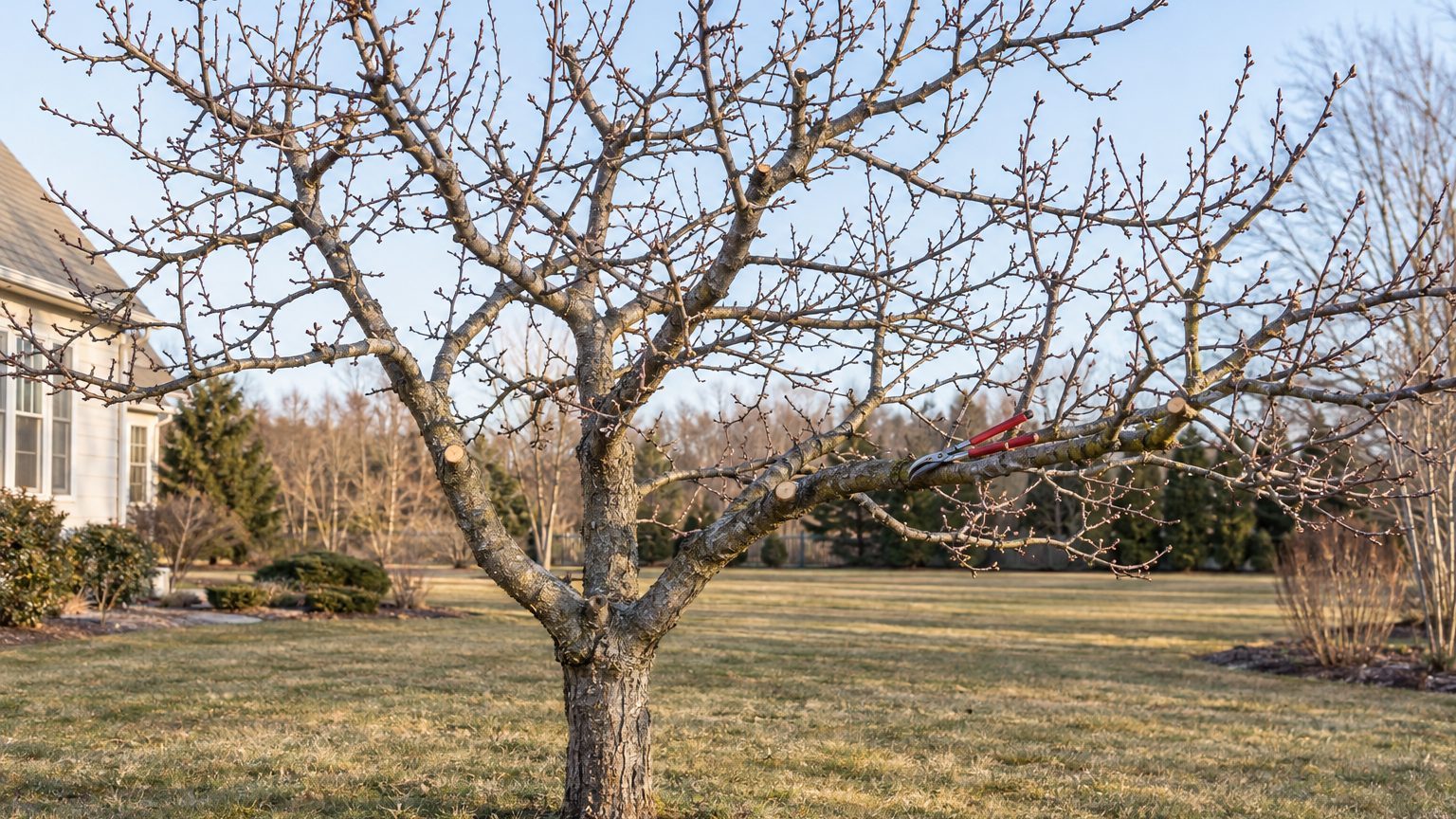
Bare branches against a gray late-winter sky are the signal for fruit tree pruning in Delaware. Apple, pear, peach, cherry and plum trees are cut while they sleep, after the hardest cold has passed and before the buds wake.
When to Prune Fruit Trees in Delaware

Prune fruit trees in Delaware while they are dormant, in February and March, just before growth begins. Pruning can also be done in April. Cuts made then heal quickly, and the tree has no soft new growth for a cold snap to catch.
Pruning in fall or early winter is avoided, because new growth may not harden before the cold. The table lays out each kind of tree.
| Fruit tree | When to prune in Delaware | Why |
|---|---|---|
| Apples and pears | February to March, while dormant | Apples go first, in the middle of the rest period, before any bud swells |
| Peaches and nectarines | Late March, after apples and pears | Their flower buds are easily hurt by cold, so they are cut last, closest to bloom |
| Cherries and plums | February to March, with April as a fallback | Cuts made just before growth starts close over quickly |
| Young trees | Not before February | Young, nonbearing trees are more likely to suffer winter injury if cut too early |
Delaware sits in USDA hardiness zones 7a to 8a, and the last spring frost at the Wilmington airport falls between April 3 and April 14. Gardens inland or out in the country often see frost somewhat later, so check with your county office before you count on those dates.
Delaware — the year and the numbers
- State
- Delaware
- USDA zones
- 7a-8a
- Last spring frost
- April 3 to April 14
- First fall frost
- October 26 to November 7
- Annual rain
- 45 in
- Lawn zone
- cool-season
- Source
- NOAA NCEI 1991-2020 Climate Normals, 32F freeze probabilities · Wilmington
How to Tell Your Fruit Trees Are Ready to Prune
The tree itself gives better timing than a calendar, and a few signs in the branches show when the window is open.
- The leaves are all gone, which means the tree is dormant and a cut will not drain energy from active growth.
- The hardest cold of winter has passed, so a fresh wound will not be hit by a deep freeze.
- The buds are still tight and closed, which tells you pruning can go ahead without knocking off swelling flower buds.
- Buds on apples and pears are just starting to fatten, a sign to finish those trees soon.
- Peach buds are showing color or swelling, a sign that those trees are now ready, since they are cut last.
Once leaves begin to open, the dormant window has closed, and any remaining work is better left until the tree is at rest again.
When to Prune Peach and Apple Trees in Delaware
Apples are pruned first, in the middle of the dormant season, usually in February or March. Their wood tolerates a cut well, and the earlier you work, the more time the tree has to seal the wounds before spring growth. Young apple trees wait until February or later.
Peaches come last, from late March. Their flower buds are easily hurt by cold, so pruning them close to bloom lets you see which buds survived the winter and trim around any damage. Cutting too early leaves open wounds and tender buds exposed to a late freeze.
Nectarines are even more prone to brown rot than peaches, so give them open, airy branches that dry quickly after rain. Delaware advice on summer pruning is not a part of the standard dormant routine, so keep the main cutting for the dormant season.
Where to Get Fruit Tree Advice in Delaware
Local help fits the way each yard differs, from soil to frost pockets. The state extension service and your county office can answer questions about your trees and your particular spot.
- University of Delaware Cooperative Extension offers fruit tree guidance for home growers, and it is a good first stop before winter ends.
- Your county extension office can tell you how local frost timing affects your pruning dates, so call before the buds start to swell.
Common Questions
Can You Prune Fruit Trees in Fall in Delaware?
Fall pruning is avoided, because it can push new growth that has no time to harden before cold arrives. Wait until the tree is dormant in late winter.
Should You Plant Fruit Trees at the Same Time You Prune?
Fruit trees go in the ground in March or April, with November also working. Bare-root trees are planted while dormant, before the buds open, so the planting and pruning seasons overlap in early spring.
Do Pear, Plum and Cherry Trees Need a Partner Tree?
Plant at least two of the recommended pear, plum and sweet cherry varieties, so the trees can pollinate each other and set fruit.