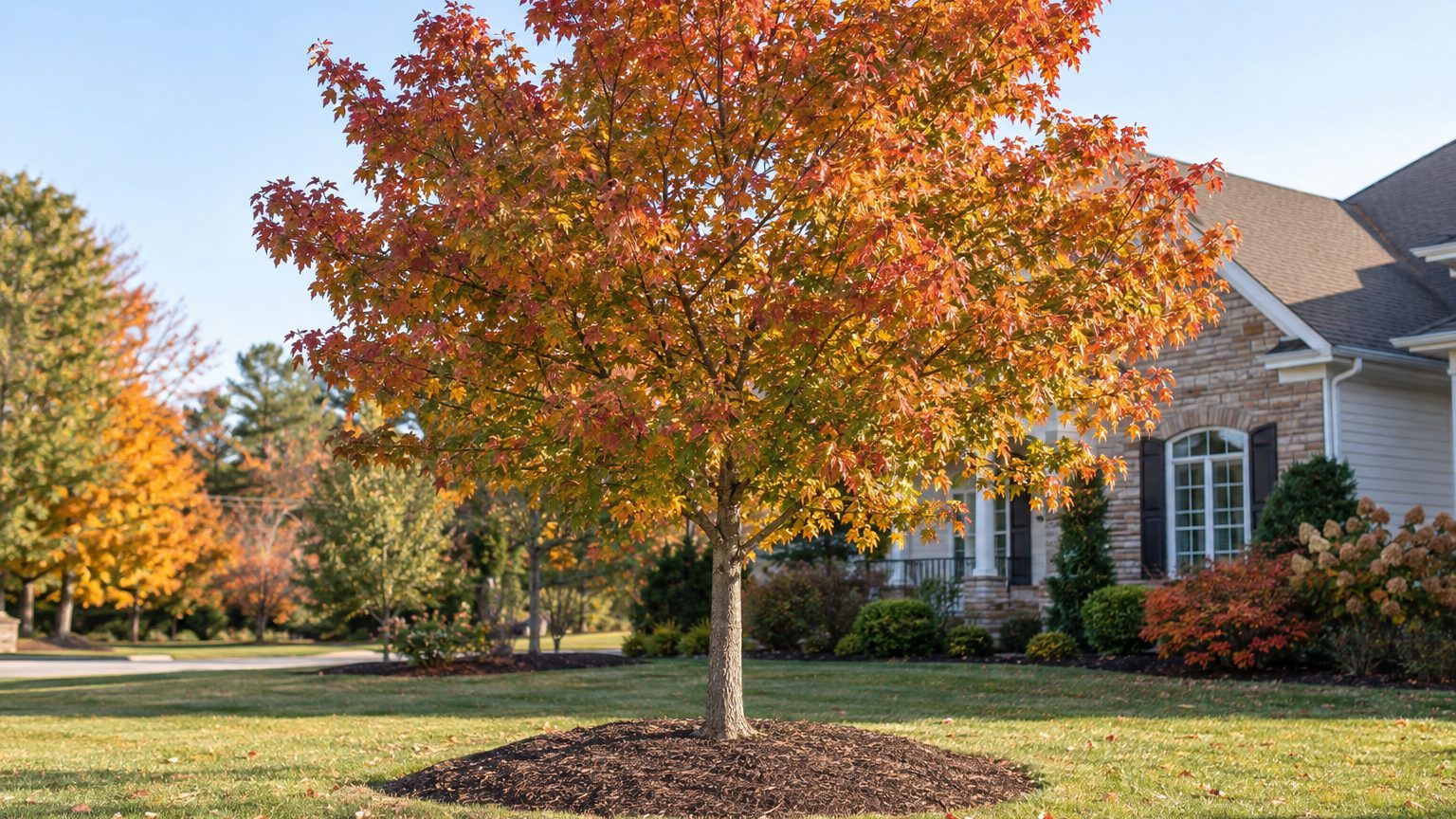
A young tree planted in the cool of fall spends the winter quietly growing roots, and by the following summer it is ready for the heat. In North Carolina, that rhythm shapes when to plant shade trees, ornamentals and fruit trees, and which ones suit the state’s yards.
When Is the Best Time to Plant Trees in North Carolina?

Fall is the season to plant shade and ornamental trees in North Carolina, with spring as the fallback and summer best avoided. Cooler air, warm soil and steadier rain let roots grow without heat stress. Through the year, it goes like this:
- In March, container and balled-and-burlapped trees can still go in the ground, and it is the main fallback when fall was missed.
- Through summer, planting is best avoided, because heat and dry soil stress new roots.
- In September, planting can begin, and the warm soil gives roots a head start.
- In October and November, conditions are ideal, with cool air, warm soil and more consistent rainfall.
- In December, planting is still possible while the ground stays workable.
Container trees can go in most of the year if you water them, but they settle best when planted while dormant. Bare-root trees go in while dormant, before the buds open. In Charlotte, in the Piedmont, the last spring frost falls between March 23 and April 5, and the first fall frost between October 30 and November 8. The mountains run several weeks later in spring and the coastal plain earlier. Hardiness zones in the USDA system run from 5b to 8b across the state.
North Carolina — the year and the numbers
- State
- North Carolina
- USDA zones
- 5b-8b
- Last spring frost
- March 23 to April 5
- First fall frost
- October 30 to November 8
- Annual rain
- 44 in
- Lawn zone
- transition-season
- Source
- NOAA NCEI U.S. Climate Normals 1991-2020, 32F freeze probabilities · Charlotte
When to Plant Fruit Trees in North Carolina
Plant fruit trees in January through March, while they are dormant. Apples, for example, are usually planted in that window. Bare-root trees in particular need to go in before the buds open.
Container-grown fruit trees are more forgiving, though they also settle best when planted in the dormant season.
| Kind of fruit tree | When to plant in North Carolina | Why then |
|---|---|---|
| Bare-root | January through March, while dormant | The tree is planted before the buds open |
| Container | January through March is best | It settles best when planted in the dormant season |
Container trees can go in at other times of year if you keep them watered, but summer is the hardest season for any new planting.
Best Trees to Plant in North Carolina
Native and understory trees do well here, especially in part shade and moist, well-drained soil. Crabapples and redbuds are good examples. Match any tree to the space, the sun and your hardiness zone before you buy.
| Tree | How it does in North Carolina | Why |
|---|---|---|
| Southern crabapple | Native, reaching about 20 to 30 feet tall | Does best in part shade and moist, well-drained soil, and feeds bees in early spring |
| Redbud | Grows well in part shade | It is an understory tree that likes moist, well-drained soil |
| Malus ‘Sutyzam’ crabapple | A disease-resistant crabapple | Resists rusts, fire blight and scab |
When you pick a crabapple, look for cultivars that resist rusts, fire blight and scab. For fruit varieties, apples are a solid choice in the Piedmont, where Gala, Fuji, Golden Delicious and Red Delicious are recommended. Peaches tend to perform poorly here most years.
When to Plant, Water and Prune Trees in North Carolina
Planting, watering and pruning each have their own moment. Plant in fall for shade trees and in the dormant season for fruit trees, then water new trees through their first stretch, especially in dry spells. Pruning of fruit trees waits for late winter.
| Task | Best timing in North Carolina | Why then |
|---|---|---|
| Plant shade and ornamental trees | October and November | Cool air and warm soil help roots grow |
| Plant fruit trees | January through March | The tree is dormant |
| Water a young tree | Regularly after planting, and through dry weather | New roots dry out fast, especially in summer heat |
| Prune fruit trees | February for most, while dormant and before the buds swell | Pruning in fall or early winter invites new growth that may not harden before the cold |
Apples and pears are pruned first, from mid-January, and peaches and plums from mid-February to early March. Peaches go last because their flower buds are easily hurt by cold. Remove burlap and wire baskets from balled-and-burlapped trees at planting so roots can spread. The page on when to prune fruit trees in North Carolina goes deeper on pruning.
Where to Get Tree Advice in North Carolina
NC State Extension and your county extension office can help with choosing a tree for your site and with soil testing.
- County offices can recommend trees suited to your local soil and conditions, and fall is a good time to ask before you plant.
- A soil analysis shows what the ground needs, and winter is a good time to send a sample.
Common Questions
Can You Plant a Tree in Summer in North Carolina?
You can, but you should expect more work. Heat and dry soil stress new roots, so a tree planted in summer needs steady watering. Waiting until fall gives it far easier conditions.
Do You Need to Remove the Burlap from a Balled-and-Burlapped Tree?
Yes. Take off the burlap and any wire basket at planting, so the roots can grow outward into the surrounding soil.
Which Apple Varieties Grow Well in the North Carolina Piedmont?
Gala, Fuji, Golden Delicious and Red Delicious are recommended for apples in the Piedmont. Other suitable varieties include Crispin, Empire, Rome Beauty, Stayman Winesap and Yates.