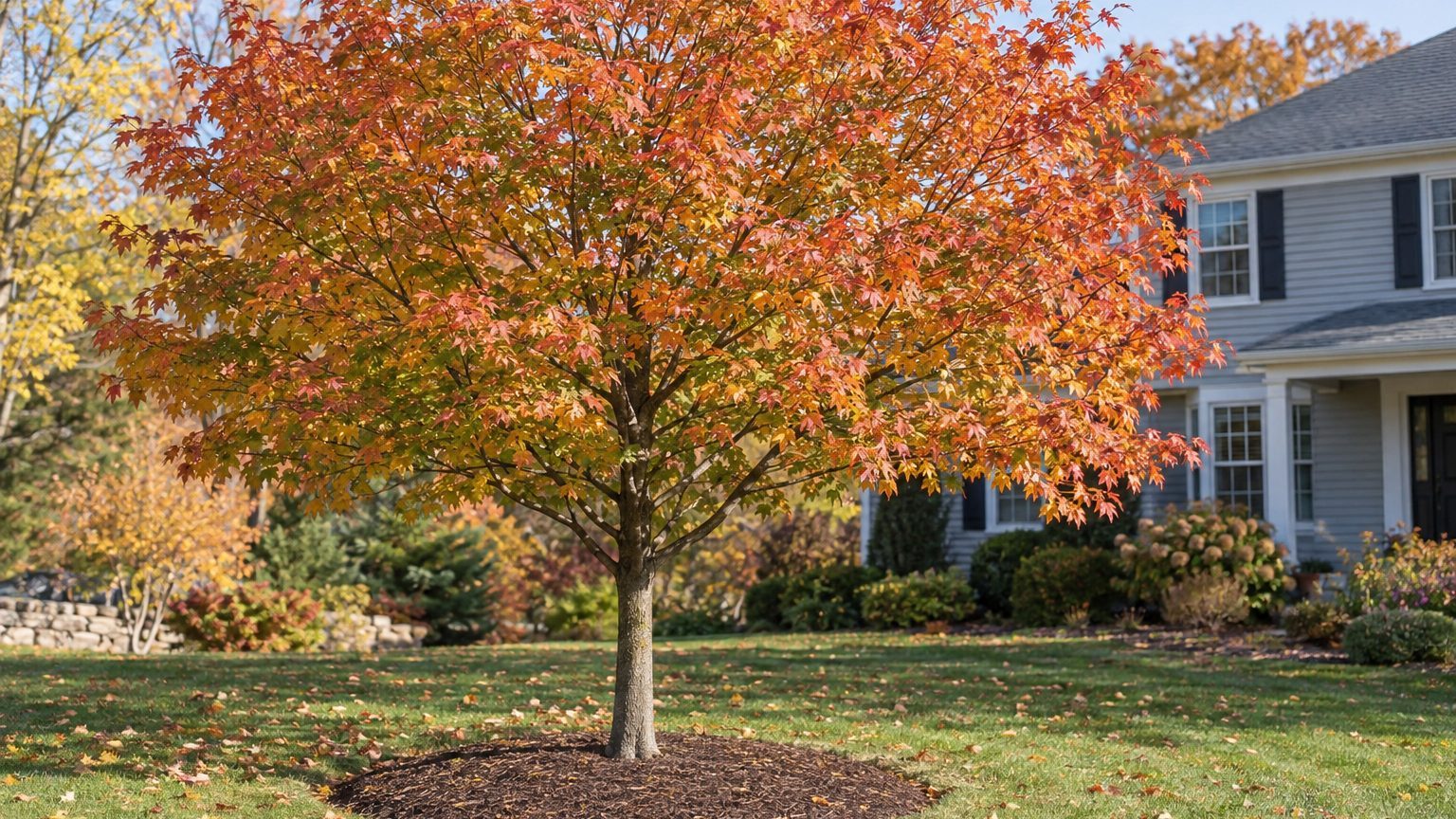
A young tree set into cool, thawed ground in spring spends its first months growing roots instead of fighting the heat. In Massachusetts, that window opens in April and runs through May, with a shorter chance in early fall. Your spot, from the coast to the Berkshires, shifts the details, and so does the kind of tree.
When Is the Best Time to Plant Trees in Massachusetts?

Shade and ornamental trees do best planted in April or May, with fall as a fallback, and the year breaks down like this.
- In April, plant container and balled-and-burlapped trees as soon as the frost has left the ground, since cool soil lets roots settle before leaves demand water.
- In May, planting carries on easily, and container and balled-and-burlapped trees can go in into late May or early June.
- In September and October, fall planting also works, as long as the tree is in the ground before the end of October.
- Through the weeks after a fall planting, water the tree regularly until the ground freezes, because roots keep working in cold soil that has not yet frozen.
- Bare-root trees go in while still dormant, before the buds open.
In Boston, the last spring frost falls around April 1 to April 8. Inland suburbs and the Berkshires frost later in spring and earlier in fall than the coast. The first fall frost in Boston arrives around November 3 to November 14. Hardiness zones in the state run from 5a to 7b on the USDA system, so a planting that suits the coast may need adjusting in the hills.
Massachusetts — the year and the numbers
- State
- Massachusetts
- USDA zones
- 5a-7b
- Last spring frost
- April 1 to April 8
- First fall frost
- November 3 to November 14
- Annual rain
- 44 in
- Lawn zone
- cool-season
- Source
- NOAA NCEI 1991-2020 Climate Normals, 32F freeze probabilities · Boston
When to Plant Fruit Trees in Massachusetts
Plant fruit trees in April or May, as soon as the frost has left the ground. Bare-root trees go in during April or early May, while they are still dormant and the buds have not opened.
Fall is off the table for fruit. Winters here are too cold for a newly planted fruit tree, which has not yet built the roots to cope.
| Kind of fruit tree | When to plant in Massachusetts | Why then |
|---|---|---|
| Bare-root | April to early May | The tree is dormant and the buds have not opened, so the roots can settle first |
| Container | April to May | The frost is out of the ground and the tree settles best in the dormant season |
Bare-root stock is usually less expensive than potted trees, and it establishes and grows well when planted on time. The trade-off is a short window, so have the hole ready the moment the ground can be worked.
Best Trees to Plant in Massachusetts
Native shade trees such as paper birch, aspen and red maple adapt to a range of soils, while others want more care in siting. Match each tree to the sun, drainage and space your yard offers.
Aspen behaves like paper birch, since both are shade-intolerant and survive best in full sunlight. Magnolia, tuliptree, oak and ginkgo are better suited to spring planting than fall.
| Tree | How it does in Massachusetts | Why |
|---|---|---|
| Paper birch | Does well in a variety of soils | Needs full sunlight to survive best |
| Red maple | Adapts to a variety of soils | Better planted in spring than in fall |
| Eastern redbud | Grows well in average, medium-moisture, well-drained soil | Thrives in full sun to part shade |
| Sugar maple | Handles a good yard but is fussy about its surroundings | Dislikes salt, compaction and heat |
| Oak | Suited to spring planting | Spring planting suits it better than fall |
Keep a sugar maple away from salted roadsides and packed, trampled ground, and give a paper birch an open, sunny spot.
When to Plant, Water and Prune Trees in Massachusetts
A tree’s year here follows its dormancy. Planting and pruning both happen when the tree rests, and watering matters most while new roots are still reaching out.
| Task | Best timing in Massachusetts | Why then |
|---|---|---|
| Plant shade and ornamental trees | April to May, or September to October | Spring planting happens once the frost is out of the ground, and fall planting needs to finish before the end of October |
| Plant fruit trees | April to May | Winters are too cold for a newly planted fruit tree in fall |
| Water a young tree | Regularly after planting, and in fall until the ground freezes | New roots need moisture to settle before the cold |
| Prune fruit trees | March to April, in late winter into early spring | The tree is dormant, which protects winter hardiness and tree health |
Prune apples first and peaches last, closest to bloom, because peach flower buds are easily hurt by cold. Avoid pruning fruit trees in fall or early winter, since new growth may not harden before the cold arrives. The page on when to prune fruit trees in Massachusetts goes into the cuts themselves.
Where to Get Tree Advice in Massachusetts
For a question about a particular tree or a soil that seems off, two local sources can help. Both know the conditions in your part of the state, from coastal sand to hill-country clay.
- UMass Extension offers guidance on choosing, planting and caring for trees, and it is a good first stop in winter when you are planning.
- The extension office serving your county can advise on which tree suits your site and on soil testing, ideally before spring planting begins.
Common Questions
Can You Plant a Tree in July in Massachusetts?
You can, but summer is the hardest time to plant a tree, because heat and dry soil stress the new roots. A container tree can go in most of the year if you keep it watered, yet it settles best when planted in the dormant season.
Can You Grow a Redbud in Massachusetts?
Yes, in a protected spot. Redbud is on the edge of hardiness in colder places, so plant it out of drying winds and where ice is less likely to break its brittle limbs.
Which Trees Are Better Planted in Spring than Fall?
Dogwood, sweet gum, hawthorn, poplars, cherries, plums and birch all do better in spring. If you want one of them, wait for April or May rather than gambling on fall.