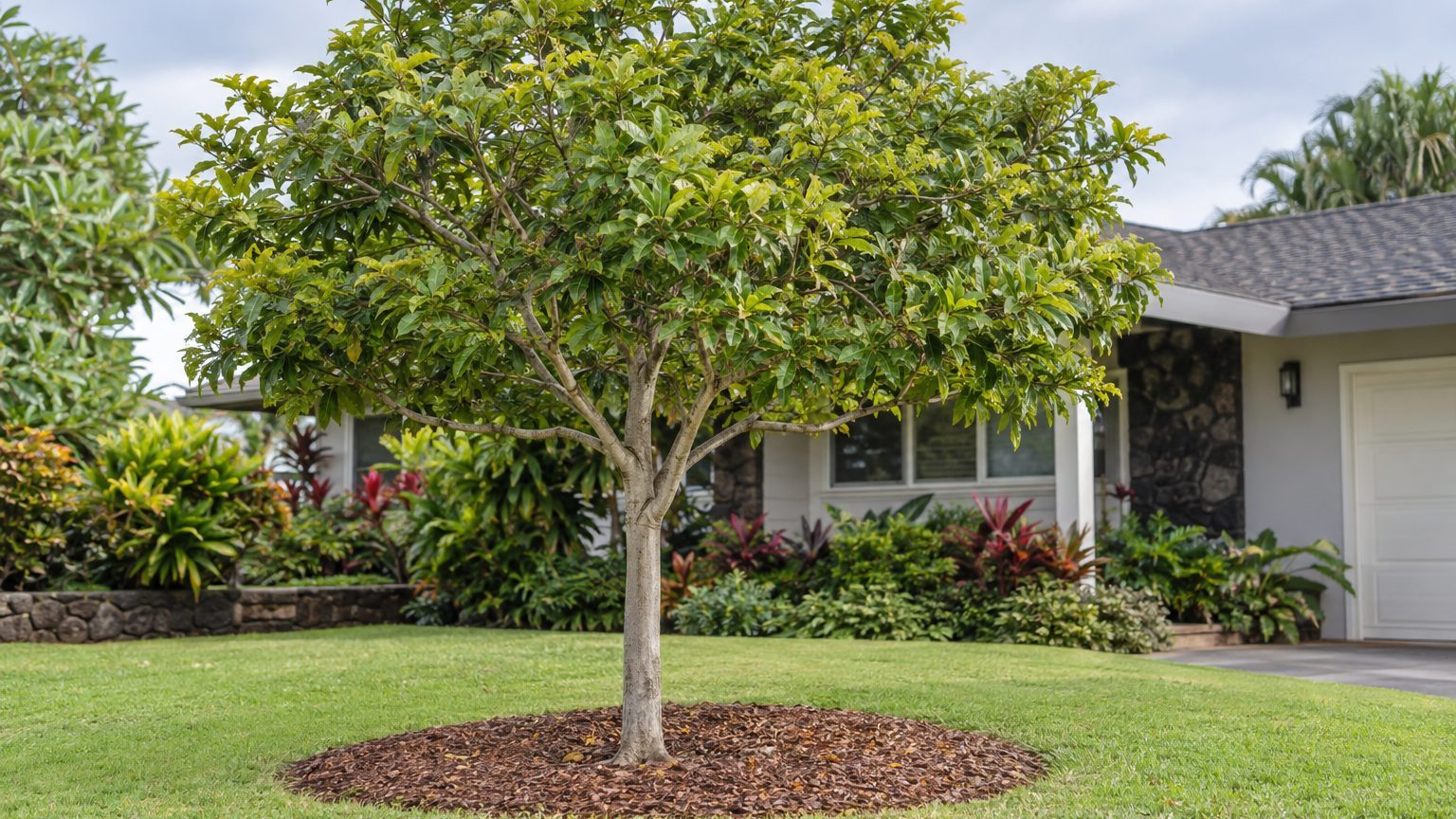
Trees go into Hawaiian ground without a winter pause, so the question is less about the cold and more about rain, elevation and which side of the island you live on. Planting here follows the wet season and the soil, and what you plant follows the exposure of your yard.
When Is the Best Time to Plant Trees in Hawaii?

Shade and ornamental trees can go in on almost any month of the year in Hawaii, because no freeze reaches the places where people live and the soil never locks up. What shapes the planting day is moisture and exposure, so work around rain and wind.
- In the rainy months, plant on the leeward and drier sides of the islands, where natural rainfall gives new roots steady moisture without much hand watering.
- On the windward sides, where rain falls often, choose a day when the soil is damp but not soggy, since roots sitting in saturated ground struggle.
- During the dry months, plant in the cooler early morning and water the root ball right away, because a young tree on a leeward slope can dry out quickly.
- At higher elevations, plant when the soil is workable and the weather is mild, since cooler air slows growth and roots settle at a gentler pace.
- Whenever a tree comes in a container, it can go in most of the year if it is watered, though it settles best when planted in a cooler, steadier stretch.
Frost is not a factor in lowland yards, as freezing temperatures occur only on the high summits of Mauna Kea, Mauna Loa and Haleakala. USDA hardiness zones across the state run from 9a to 13a, so other parts of the territory differ, and a tree that thrives at the beach may not suit a cool upland yard.
Hawaii — the year and the numbers
- State
- Hawaii
- USDA zones
- 9a-13a
- Frost
- none in an average year
- Annual rain
- 16 in
- Lawn zone
- warm-season
- Source
- NOAA NCEI 1991-2020 Climate Normals: not-computable flag for every freeze percentile at 32F and 36F, zero days per year at or below 32F, station USW00022521 — https://www.ncei.noaa.gov/access/services/data/v1?dataset=normals-annualseasonal&stations=USW00022521 · Honolulu
When to Plant Fruit Trees in Hawaii
Fruit trees follow the same logic as shade trees here: plant when the soil is workable and you can keep the roots moist. A bare-root tree goes in while it is dormant, before the buds open, and that sign matters more than any date.
Container-grown fruit trees are the usual form in Hawaii, and they can be planted most of the year as long as they are watered.
| Kind of fruit tree | When to plant in Hawaii | Why then |
|---|---|---|
| Bare-root | While dormant, before the buds open | Roots establish before new growth starts |
| Container-grown | Most of the year, with regular watering | The root ball stays intact, though it settles best in the dormant season |
Citrus rootstocks are worth a look when the soil is heavy. One rootstock grown in Hawaii tolerates cultivation in heavy soils and resists Phytophthora and citrus nematodes, which helps in wet ground.
Best Trees to Plant in Hawaii
Choosing a tree here comes down to room, sun and rainfall rather than winter cold, since the cold never arrives. Match the tree to the exposure of your yard, whether it is wet and windward or dry and leeward, and to how much space the mature canopy needs.
Fruit trees that come with a rootstock suited to heavy soil handle wetter ground better. Dwarf tropical fruit trees are another option for small lots, and the University of Hawaii CTAHR publishes guidance on managing them.
| Tree | How it does in Hawaii | Why |
|---|---|---|
| Citrus on a Phytophthora-resistant rootstock | Handles heavy soils | The rootstock tolerates cultivation in heavy soils and resists Phytophthora and citrus nematodes |
Beyond that, pick by the space you have, the sun on the site and your zone, and ask the extension office about the tree you have in mind.
When to Plant, Water and Prune Trees in Hawaii
Each tree job has its own sign. Planting follows moisture and workable soil, watering follows how fast the ground dries, and pruning of fruit trees follows dormancy.
| Task | Best timing in Hawaii | Why then |
|---|---|---|
| Plant a bare-root tree | While dormant, before the buds open | Roots grow before leaves demand water |
| Plant a container tree | Most of the year if watered | The root ball is undisturbed, and it settles best in the dormant season |
| Water a young tree | Regularly, especially in dry spells and on leeward sides | Young roots have not yet reached deep moisture |
| Prune a fruit tree | While dormant, before the buds swell | Cuts heal before growth starts |
Avoid pruning fruit trees in fall or early winter, since new growth may not harden. For peaches, prune last and closest to bloom. The page on pruning fruit trees in Hawaii goes deeper.
Where to Get Tree Advice in Hawaii
Local conditions vary a great deal from one valley or slope to the next, so local advice pays off. Two places can help with tree choice and soil questions.
- The University of Hawaii CTAHR extension answers questions on tree selection, pests and soil, and it is a good first stop before buying.
- Your county extension office can point you to soil testing and to advice for your own elevation and rainfall.
Common Questions
Can You Plant a Tree in Hawaii Year-Round?
Container-grown trees can go in most of the year if you water them, since there is no freezing season in lowland yards. Moisture and the amount of rain on your side of the island matter more than the month.
Do Trees in Hawaii Need Frost Protection?
Not in inhabited areas, since freezing temperatures occur only on the high summits of Mauna Kea, Mauna Loa and Haleakala.
Is Windward or Leeward Better for Planting Trees?
Each side has its own demands. Windward yards stay wetter, so drainage matters, while leeward yards dry out faster and a new tree needs regular watering until its roots spread.