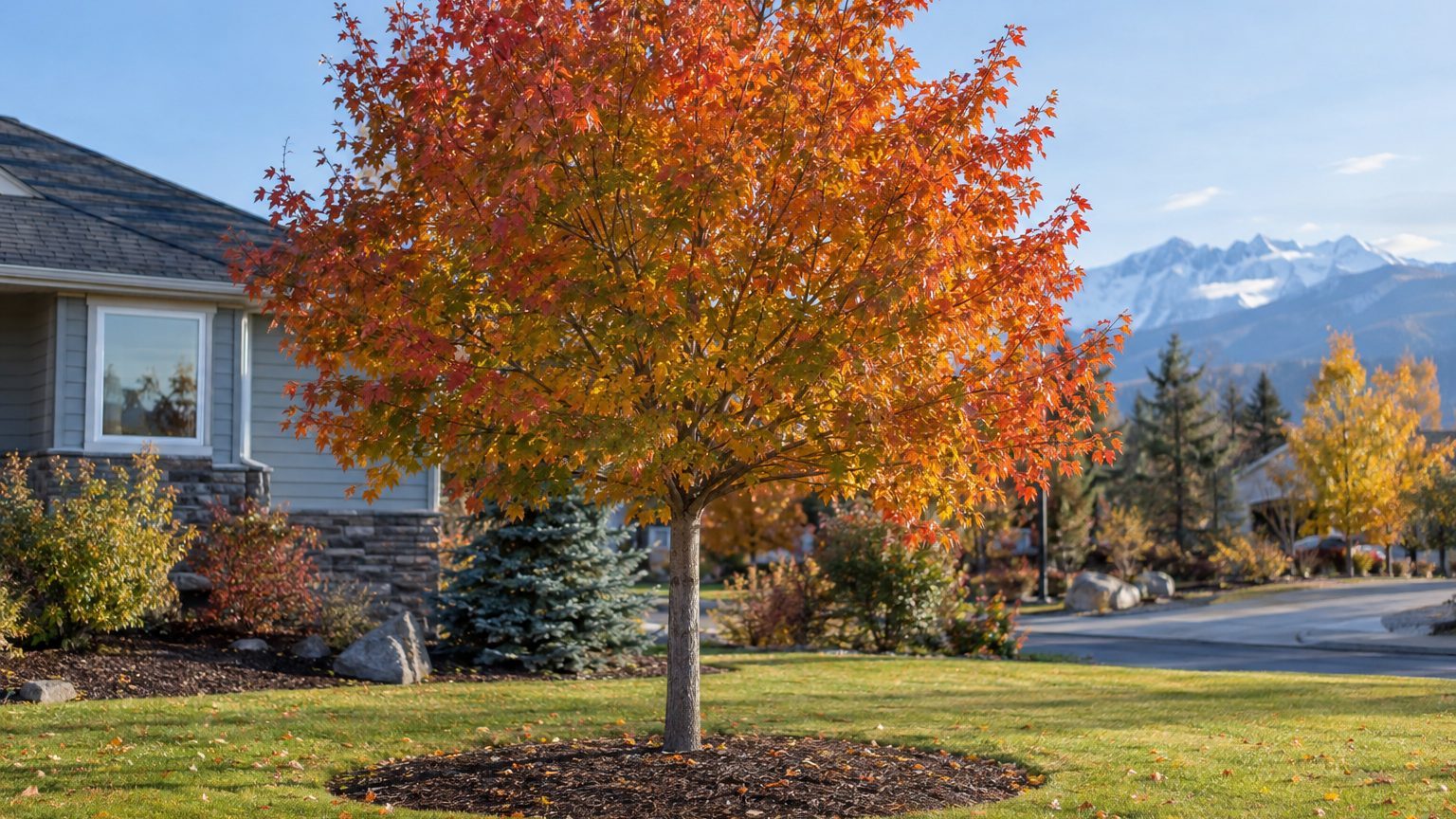
Walk a yard in Anchorage in September and you will see leaves turning gold while the soil underfoot still holds some warmth. That is the moment to set a tree in the ground. In Alaska, fall is the preferred season for planting, with early spring as the alternative.
When Is the Best Time to Plant Trees in Alaska?

September is the month for planting shade and ornamental trees, whether they come in a container or balled and burlapped, and May works as a fallback. The year runs like this for a tree going into Anchorage ground.
- In late winter, the ground is frozen and nothing goes in, so this is the time to choose a spot and decide on a tree.
- In May, a tree can still be planted while it is dormant, though leaves often start by the time the ground thaws enough to dig.
- Through summer, planting is the hardest on a new tree, because heat and dry soil stress young roots.
- In September, a tree planted into soil that is still warm has the fall dormancy period ahead of it, followed by time for a damaged root system to regrow and recover.
- After planting in fall, keep watering until the ground freezes so the roots go into winter with moisture.
Anchorage sees its last spring frost between May 3 and May 12 and its first fall frost between September 22 and October 1, which leaves about 143 frost-free days. Hardiness zones across Alaska run from 1a to 8a on the USDA system, so the Interior and the north are far colder and shorter in season than Anchorage.
Alaska — the year and the numbers
- State
- Alaska
- USDA zones
- 1a-8a
- Last spring frost
- May 3 to May 12
- First fall frost
- September 22 to October 1
- Annual rain
- 16 in
- Lawn zone
- cool-season
- Source
- NOAA NCEI 1991-2020 Climate Normals, 32F freeze probabilities · Anchorage
When to Plant Fruit Trees in Alaska
A bare-root fruit tree goes in while it is dormant, before the buds open. Waiting past that point asks roots to feed leaves that have already started.
A container-grown tree is more forgiving, since it can go in through most of the growing season if you keep it watered. It still settles best when planted in the dormant season.
| Kind of fruit tree | When to plant in Alaska | Why then |
|---|---|---|
| Bare-root | While dormant, once the soil can be worked, before the buds open | Roots establish before the tree has leaves to support |
| Container-grown | Most of the year with watering, best in the dormant season | The root ball is intact, but the tree still settles best at rest |
Hardiness matters as much as timing for fruit. Dwarfing rootstocks common with nurseries in the Lower 48 are not reliably winter-hardy in Alaska, so ask where a tree was grown and on what rootstock before you buy.
Best Trees to Plant in Alaska
Crabapples are the ornamental trees that Alaska extension pages name as dependable. Many hardy cultivars have come out of breeding and cultivation work, and some survive the -40°F winters found in Interior Alaska.
Siberian and Dolgo crabapples both grow well here and bear edible fruit slightly larger than wild crabapples. One crabapple species is native to the state.
| Tree | How it does in Alaska | Why |
|---|---|---|
| Siberian crabapple | Grows well | Hardy cultivar with edible fruit slightly larger than wild crabapples |
| Dolgo crabapple | Grows well | Bears edible fruit slightly larger than wild crabapples |
| Western crabapple (Malus fusca) | Native to Alaska | The one crabapple species that grows here naturally |
| Rescue (apple-crabapple cross) | Hardy in Zones 1 and 2 | Productive, an annual bearer, and bears very young |
| Norland apple | Hardy in Zone 2 | Very hardy semidwarf, grown in Fairbanks, Palmer and Anchorage |
Sour pie cherries are hardier than sweet ones and survive through Zone 3, doing best in well-drained sandy loam. In Southcentral Alaska, the Manchurian plum and Manchurian apricot are the varieties proven winter-hardy. Both are grown from seed, so fruit quality varies from tree to tree.
When to Plant, Water and Prune Trees in Alaska
Each tree job has its own season. Planting and watering follow the fall dormancy, while pruning of fruit trees waits for the end of winter, when the tree is still asleep.
| Task | Best timing in Alaska | Why then |
|---|---|---|
| Plant a shade or ornamental tree | September, or May as a fallback | Roots recover and regrow during dormancy |
| Water a young tree | After planting, until the ground freezes | Roots enter winter with moisture |
| Prune a fruit tree | March to April, while still dormant | Cuts are made before the buds swell |
Fall and early winter are avoided for pruning fruit trees, since new growth may not harden before the cold. Peaches are pruned last, closest to bloom, because their flower buds are easily hurt by cold, while apples go first. Details sit on the page for pruning fruit trees in Alaska.
Where to Get Tree Advice in Alaska
For a question about which tree suits your site or what your soil needs, local experts know the ground. University of Alaska Fairbanks Cooperative Extension and the nearest district office can help.
- The extension service publishes guides on transplanting trees, crabapples and growing tree fruits, worth reading in winter before ordering.
- The local extension office can advise on soil testing, so contact them to get results before fall planting.
Common Questions
Can You Plant a Tree in Summer in Alaska?
A container tree can go in if you keep it well watered, but the roots have a harder time in heat and dry soil. Waiting for September gives it an easier start.
Should You Remove Burlap from a Balled Tree?
Yes, cut away burlap and any wire basket from the top of the ball once the tree sits in the hole, so roots can spread freely into the surrounding soil.
Do Hardy Crabapples Need Special Care in Interior Alaska?
Choose a cultivar bred for cold, since some survive -40°F. Plant it in fall, water until freeze-up, and the tree handles the Interior winter.