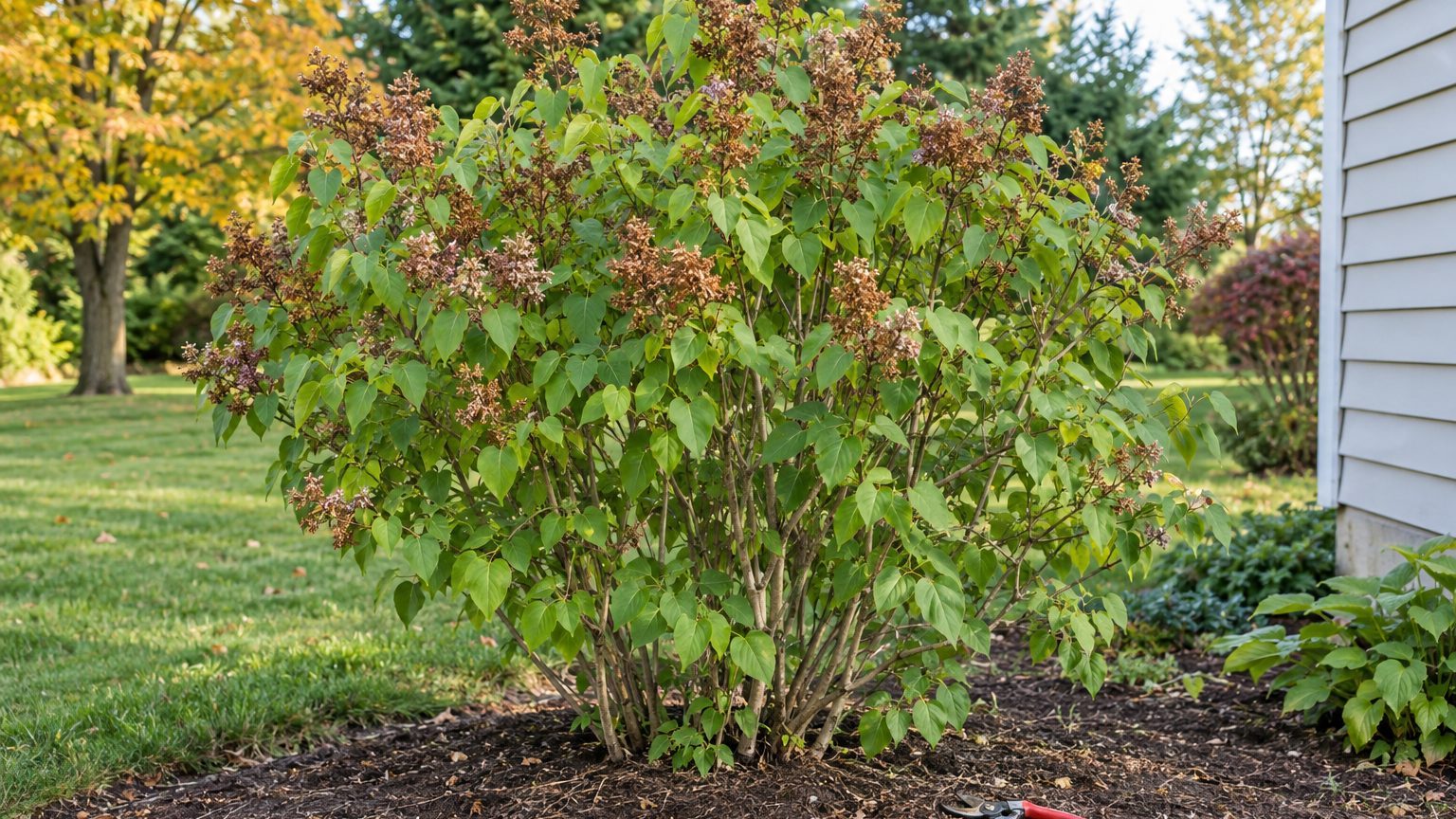
A lilac that dropped its last purple clusters is a lilac with next year’s flower buds already starting underneath. In South Carolina, where winters are mild and summers hot and humid, the pruning rule stays the same as anywhere: cut soon after the blooms fade, and do it with a light hand.
When to Prune Lilacs in South Carolina

Prune right after the last flowers fade, because the bloom follows the local spring and no calendar month is reliable here. Lilacs set next year’s buds on new growth in summer, so a cut made late in the season takes off the following spring’s flowers.
| Type of pruning | When in South Carolina | Why |
|---|---|---|
| Routine upkeep: spent blooms, crossing or weak stems | Right after the flowers fade | Next year’s buds form in summer on wood that grows after bloom |
| Thinning an old, crowded shrub | Right after bloom, with gradual thinning | Pruning in late summer, fall or winter cuts off the next spring’s flowers |
| Reblooming lilacs | Right after the main flush fades | Cutting later removes the buds that make the next round of flowers |
Lilacs need a cold winter rest to mature their flower buds, and South Carolina winters (hardiness zones 7a to 9a in the USDA system) often fall short of that. Expect sparse bloom, especially toward the coast. Heat and humidity also invite powdery mildew, so open up crowded stems for airflow.
South Carolina — the year and the numbers
- State
- South Carolina
- USDA zones
- 7a-9a
- Last spring frost
- February 28 to March 17
- First fall frost
- November 20 to December 5
- Annual rain
- 53 in
- Lawn zone
- warm-season
- Source
- NOAA NCEI 1991-2020 Climate Normals, 32F freeze probabilities · Charleston
How to Tell When Your Lilacs Are Ready to Prune
The plant gives clearer signals than any date, and in a mild state those signals matter more.
- Flower clusters that turn brown and dry out mean the show is over and the shears can come out.
- Petals dropping from most of the shrub tell you the window is open, so there is no reason to wait.
- Fresh green shoots starting below the old clusters are the wood that will carry next year’s buds, so cut above them and leave them alone.
- Stems that cross, rub, or crowd the center of the shrub are the ones to remove first, since they hold moisture and encourage mildew in humid weather.
- Old, thick, bare trunks that no longer flower can be removed gradually at the base.
If a shrub barely flowered, there is little to deadhead, so go straight to thinning crowded wood.
Should You Prune Lilacs in Fall or Winter in South Carolina?
No. A cut in fall or winter removes the buds that are already waiting for spring, and a lilac that has little winter chill to begin with cannot spare them. The shrub will grow back, but the flowers will not.
Dead wood is the exception, since it carries no buds. Remove broken or clearly lifeless stems whenever you see them. For anything beyond that, wait for the next bloom to finish.
A hard renewal cut in late winter is sometimes suggested for overgrown shrubs, but it costs the coming season’s flowers. In South Carolina, where bloom is already uncertain, gradual thinning right after flowering is the gentler path.
How Lilac Pruning Time Shifts Across South Carolina
The sign to watch stays the same statewide, but the season it arrives in changes with where you live.
- Upstate and the Greenville area: Winters are colder here, so common lilacs are more likely to bloom, and the flowers fade later than in the south.
- Columbia and the Midlands: Spring arrives earlier and summer heat builds sooner, so prune as soon as the blooms go and watch for mildew.
- Charleston and the Lowcountry: The peninsula is milder than the airport, which can make flowering weak here. Low-chill types suit the coast better than common lilacs.
Whatever the region, choose early-blooming varieties sold as Southern lilacs, which tend to grow and bloom in warm climates though they are less fragrant. Some Descanso hybrids, such as Angel White and Blue Boy, are also worth a try in South Carolina, where winters are mild.
Where to Get Lilac Advice in South Carolina
Local conditions vary enough that a nearby expert can settle questions about a struggling shrub. Start with Clemson Extension for state guidance, then look to your county office for advice that fits your soil and microclimate.
- The service offers plant guides and diagnosis help, useful when leaves show powdery mildew or the shrub refuses to flower.
- Your county extension office can look at a sample or a photo, so go as soon as you see trouble on the leaves.
Common Questions
Why Won’t My Lilac Bloom in South Carolina?
Lack of winter chill is the usual suspect, especially if the shrub is a common lilac and the winter was mild. Shade and heavy pruning at the wrong time can add to it, so check how much sun the shrub gets and whether it was cut after summer.
Which Lilacs Do Best in South Carolina?
Early-blooming types labeled Southern lilacs or lilacs for the South are the better bet, and low-chill cultivars exist, though even those prefer a cold winter rest. Common lilacs often struggle in hot, humid summers.
What Causes the White Film on Lilac Leaves?
A powdery white coating that wipes off with a finger, mostly in warm, humid weather on crowded stems, points to powdery mildew. Thinning the center of the shrub right after bloom lets air move through and helps keep it down.