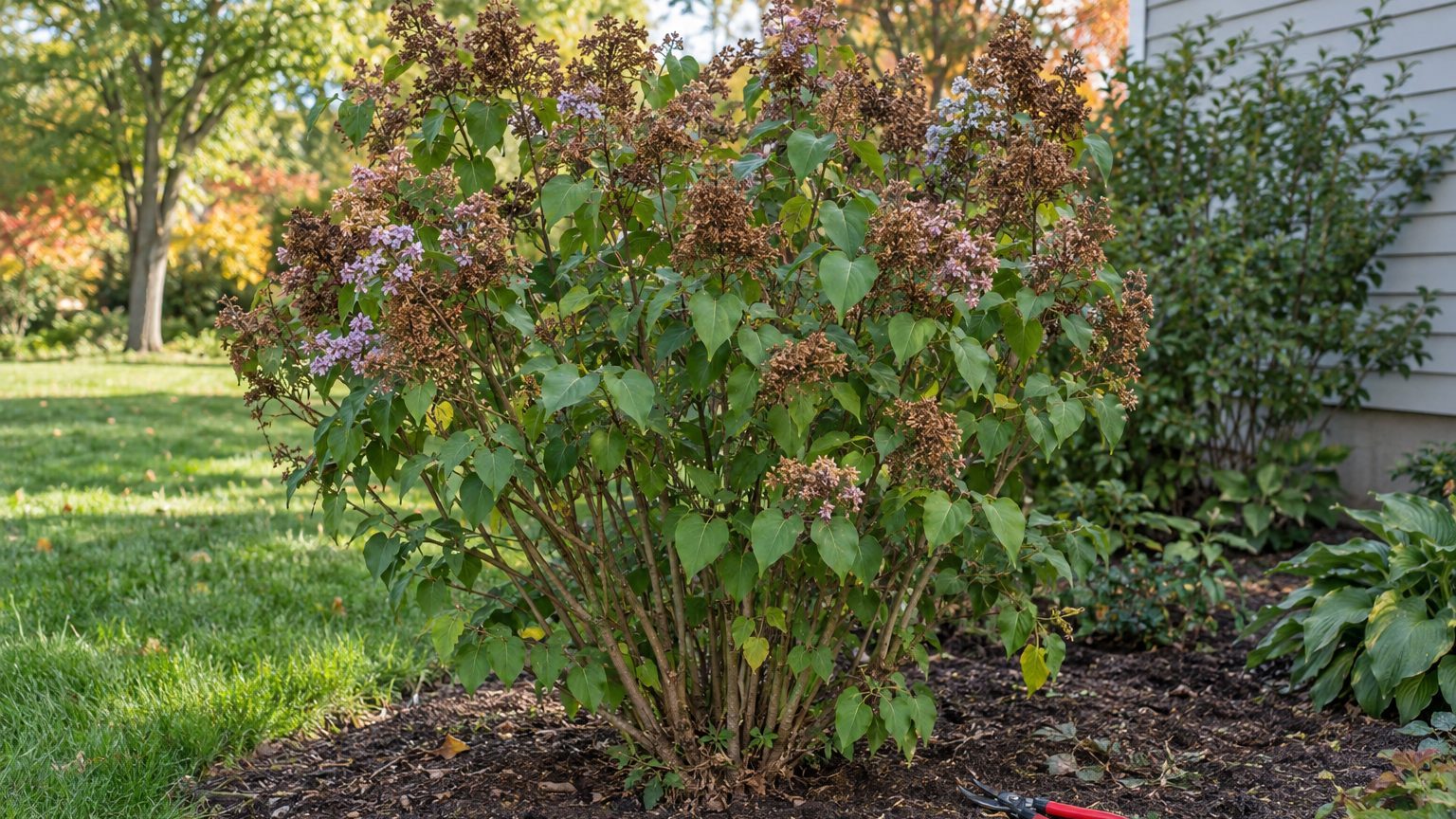
A lilac that has just dropped its last brown flower heads is ready for the pruning shears. In California the timing follows the bloom rather than a date on the calendar, because the shrub sets next year’s buds soon after it flowers. Climate matters here too, since a lilac asks for more winter cold than much of the state gives.
When to Prune Lilacs in California

Prune right after the last flowers fade. How soon that happens depends on your local spring, and in much of California it differs a lot from one valley or coastal town to the next. The bloom is your signal.
Lilacs flower on last year’s wood and form the following spring’s buds in summer. Any cut made after that point takes flowers with it.
| Type of pruning | When in California | Why |
|---|---|---|
| Maintenance pruning: spent flower heads, crossing or weak stems, light shaping | Right after the flowers fade | Next spring’s buds have not formed yet, so nothing is lost |
| Any cut made later in the year | Late summer, fall or winter: avoid | The buds are already set, and cutting removes the next spring’s flowers |
Thinning an old, crowded lilac follows the same rule, so make those cuts straight after bloom as well. A shrub that gets its heavy cuts at any other time will flower less the following spring. Lilacs also need a cold winter rest to mature their buds, which is why they do best in cold-winter climates and may flower poorly in the milder parts of California.
California — the year and the numbers
- State
- California
- USDA zones
- 5a-11a
- Frost
- none in an average year
- Annual rain
- 12 in
- Lawn zone
- warm-season
- Source
- NOAA NCEI 1991-2020 Climate Normals · Los Angeles
How to Tell When Your Lilacs Are Ready to Prune
Your shrub gives better timing than any calendar, and the signs are easy to read from the sidewalk.
- The flower clusters turn from fresh color to dull brown, which means the show is over and pruning can start.
- Most of the florets on a panicle have dropped or shriveled, so you can cut the whole spent cluster without losing anything still opening.
- Small seed capsules begin to form where the flowers were, and removing them sends the plant’s energy into new growth instead of seed.
- New leafy shoots start pushing out below the old flower heads, which shows the shrub is already building next year’s wood and buds.
- A lilac that bloomed sparsely or not at all still follows this rhythm, so prune after the last flowers you do see rather than waiting for a bigger display.
Once the shoots have grown and the leaves have filled in, the window for easy pruning is closing, so work soon after the bloom ends.
Should You Prune Lilacs in Fall or Winter in California?
No. Cutting in fall or winter removes the flower buds that formed after last spring’s bloom, and the shrub then has little to show you. A tidy-looking lilac in winter can mean a bare one the following spring.
Gardeners are often tempted to do a reshaping cut in late winter, when other shrubs are being trimmed and the lilac stands bare. The same rule applies. A cut made then takes off buds, so expect fewer flowers that spring even though the shrub will recover and grow.
Otherwise, wait for the next bloom to finish and cut then.
How Lilac Pruning Time Shifts Across California
California spans USDA hardiness zones 5a to 11a, so the same shrub lives in very different conditions. The sign stays the same, but the places where lilacs do well, and where they struggle, change a good deal.
- Sierra Nevada and the high country: Winters here freeze and give lilacs the cold rest they want. The bloom comes later where winter lingers, and pruning follows it.
- Central Valley: Freezes happen here, so lilacs get some winter rest, though hot summers can stress them. Prune once the flowers fade, and ask your county extension office how to protect the shrub through the summer heat while following local water rules.
- Northern California: Freezes occur in an average year, which suits lilacs better than the coast to the south. Treat the bloom as your guide and prune soon after it ends.
- Southern California and the coast: These areas are frost-free, so lilacs get little winter chill and may flower poorly. Some varieties will bloom with only little chilling, and the Descanso hybrids, developed in Southern California, include white Angel White, blue Blue Boy and pink California Rose.
Wherever you garden, a lilac still sets its buds soon after flowering, so the post-bloom window holds across the state.
Where to Get Lilac Advice in California
Local conditions in California vary enough that a nearby expert is worth a visit.
- The statewide pages of University of California Agriculture and Natural Resources cover lilac care and which varieties handle low winter chill, so read them before you buy.
- Your county extension office and its Master Gardener volunteers can tell you which lilacs flower in your neighborhood, so call or visit before you shop.
Common Questions
Which Lilacs Grow in Southern California?
Varieties that bloom with little winter chill are the ones to look for. The Descanso hybrids were developed in Southern California, and Angel White, Blue Boy and California Rose are among them. Even these like some cold, so choose a spot with good light and do not expect the heavy bloom of a cold-winter garden.
Why Does a Lilac in California Grow Leaves but Few Flowers?
Look at your winter first. A mild, frost-free climate gives buds too little chill to mature, and a lilac in that setting may flower poorly no matter how well you tend it. Then look at when the shrub was last cut, because pruning after summer removes the buds that were meant to open.
Can You Grow Lilacs in the Central Valley?
Yes, since the valley freezes in winter and the shrub gets some rest. Hot, dry summers are the challenge, so ask your county extension office how to protect the shrub while following local water rules.