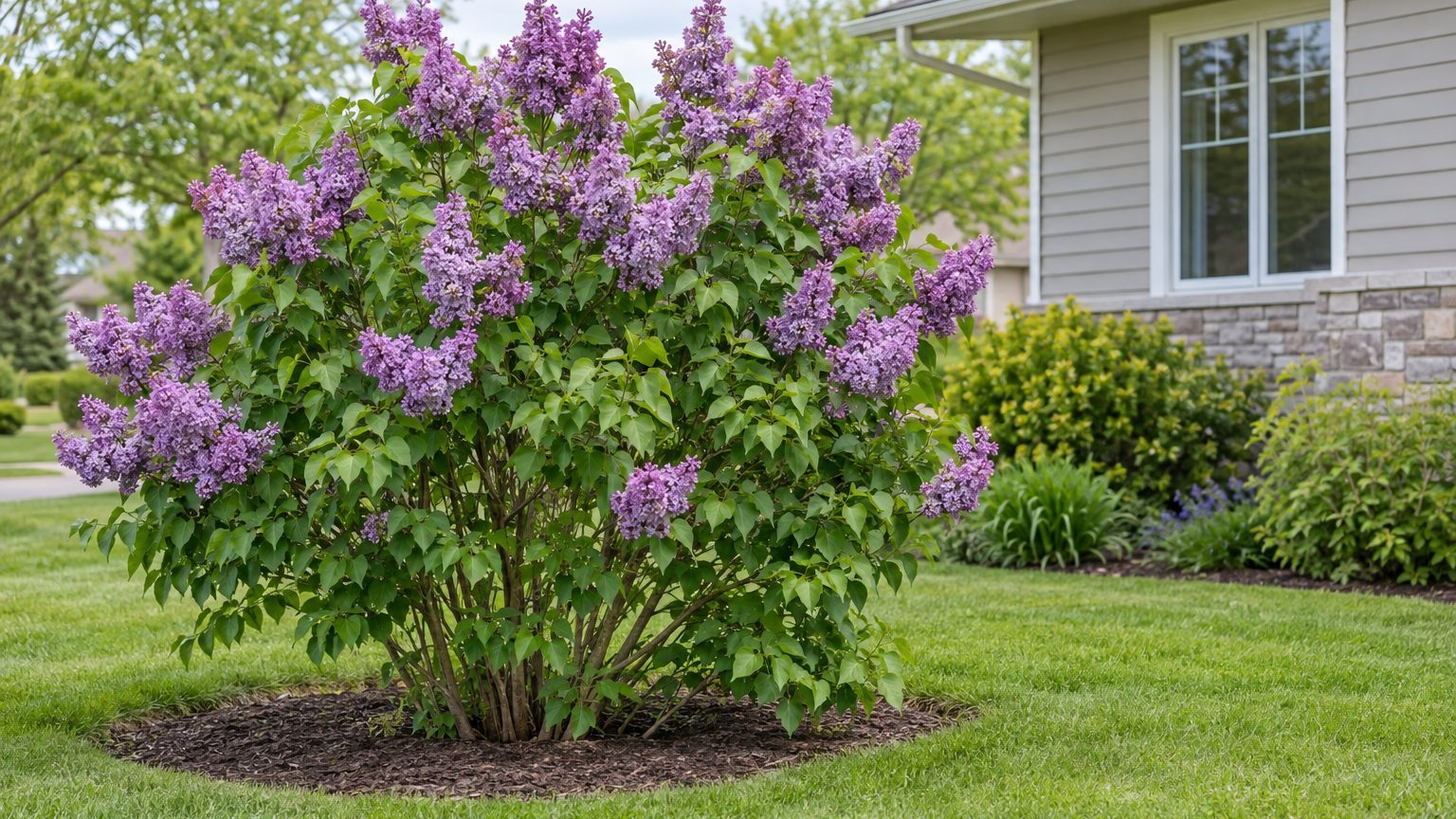
Lilac buds swell on bare stems in spring, and by the time the soil has warmed the first clusters are opening in yards across Saskatchewan. Lilac season here runs through May and into June, and the pruning, the bud-setting that follows and the winter rest all hang on those flowers.
When Do Lilacs Bloom in Saskatchewan?

Lilacs in Saskatchewan bloom in May and carry on into June, with the common lilac opening first and the late and tree lilacs closing the season.
- In May, the common lilac opens its first clusters, once the garden has turned green and the worst of the cold has passed.
- Through June, the late lilacs and the Japanese tree lilac take over, and the tree lilac’s flowers bring the season to a close.
- In June, right after the flowers fade, the shrub is ready for pruning, because it starts forming next year’s flower buds soon after it blooms.
- Through the rest of summer, those buds develop on the new growth, so any cutting at that stage removes next spring’s flowers.
- From fall through winter, the lilac rests with its buds already set, and the shrub asks for very little beyond being left alone.
Frost frames the season. Around Saskatoon, the last spring frost falls on average May 18 and later in about half of years, so treat it as the middle of a window. The first fall frost arrives on average September 18, another midpoint rather than a safe date. Saskatoon sits in Canadian hardiness zone 3a, a system that does not convert to USDA zones.
Saskatchewan — the year and the numbers
- State
- Saskatchewan
- Hardiness zones
- 3a
- Last spring frost
- May 18
- First fall frost
- September 18
- Annual rain
- 14 in
- Lawn zone
- cool-season
- Source
- Environment and Climate Change Canada — Canadian Climate Normals 1981-2010, station SASKATOON SRC · Saskatoon
Which Lilacs Grow Best in Saskatchewan?
Lilacs suit Saskatchewan well. They are built for cold-winter climates, and the winters here give the buds the rest they need. What they ask for in return is a sunny site with good air circulation.
Most of the choice comes down to timing: which kind opens when, and how exposed its flowers are to a late frost.
| Lilac type | How it does in Saskatchewan | Why |
|---|---|---|
| Common lilac | Reliable, opens first in May | Adapted to cold climates, thrives in sun with good air movement |
| Late lilacs | Good, bloom in June | They open after the common lilac and stretch the season |
| Japanese tree lilac | Good, flowers in June | Its June blooms bring the lilac season to a close |
| Hyacinthiflora hybrids | Very hardy, but a frost risk | They bloom earlier than the French hybrids they resemble, so a May frost can catch the buds |
The hyacinthiflora hybrids are worth planting only where late spring frosts are less frequent. In a frost-prone yard, the common lilac and the June bloomers are the safer picks.
When to Plant, Prune and Feed Lilacs in Saskatchewan
Pruning depends closely on timing, because the cut decides whether next spring’s flowers survive. For planting and feeding, follow local advice and the conditions in your yard.
A lilac blooms on last year’s wood and sets its next flower buds in summer, soon after it flowers. So pruning belongs right after the flowers fade, and cuts in late summer, fall or winter take off the following spring’s flowers.
| Task | Best timing in Saskatchewan | Why then |
|---|---|---|
| Routine pruning | June, right after the flowers fade | The new buds have not formed yet, so the cuts cost no flowers |
| Pruning while dormant | March or April | Easy to see the branch structure, but it costs that spring’s flowers |
| Hard renovation of an overgrown lilac | March or April | The shrub is dormant and regrows from the base, though flowers return only after a few years |
Planting is simpler. Choose a sunny spot where air moves through, and set the shrub in once the soil can be worked in spring. A lilac that settles into the right place needs little feeding to flower well.
How Lilac Bloom Time Changes Across Saskatchewan
Saskatchewan’s climate varies, and bloom shifts with the ground and the latitude.
- Saskatoon and the central prairie: bloom follows the pattern above, with the common lilac in May and the late kinds in June.
- Regina and the southern prairie: spring usually arrives a little sooner in the south, so flowers open earlier than farther north.
- Prince Albert and the northern edge of the farmland: the season starts later, and the late kinds may open well into June.
- Cypress Hills: higher ground stays cooler, so lilacs there bloom later than on the plains below.
The dates follow the nearest comparable climate. Confirm local timing with a local garden centre, a garden society or the provincial gardening groups.
Where to Get Lilac Advice in Saskatchewan
Saskatchewan has no local extension page on lilac timing, so advice comes from provincial resources and people who garden nearby. For a sick shrub or a lilac that will not flower, start with these.
- The Government of Saskatchewan agriculture pages point you to provincial staff and resources for plant and soil questions.
- A local garden society or master gardener group knows which lilacs have done well in your town and can say what is blooming now.
- A garden centre can look at a branch or a photo, so bring a cutting when the leaves are fully out and any problem shows.
Common Questions
Can a Spring Frost Ruin Lilac Flowers?
It can. Around Saskatoon, a hard frost after the buds have opened can brown the flowers, and the common lilac opens in May, close to the average last frost date. The flowers may be lost even when the shrub survives to bloom again the next year.
Why Is a Lilac Leafy but Not Blooming?
Look for shade and for recent cutting. A lilac in a spot with little sun, or one that was pruned hard in late winter or cut back in late summer or fall, will often grow green and flower sparsely. More sun or recovery after a hard cut can improve flowering.
Do Lilacs Need a Cold Winter to Bloom?
They do. Lilacs need a cold winter rest to mature their flower buds, which is why they do best in cold-winter climates and struggle where summers are hot and humid. Saskatchewan’s winters suit them well.