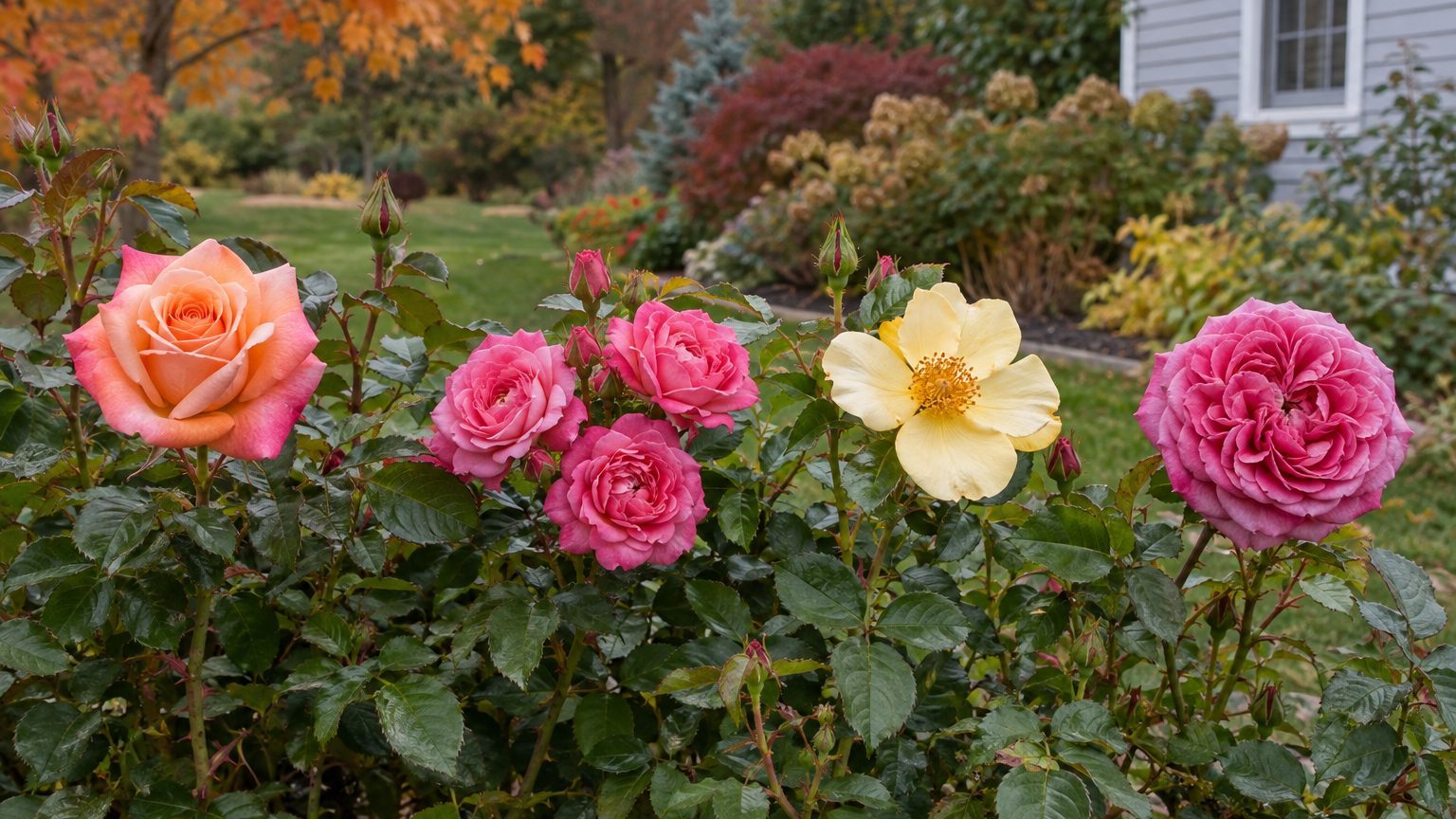
A rose that blooms through an Oklahoma summer and wakes up after a hard winter usually shares a few traits. It is hardy, it shrugs off leaf disease, and it asks for little fuss. Polyanthas, disease-resistant floribundas, Double Knock Out and Earth-Kind selections fit that description. Hybrid teas can grow here too, but they ask more of you.
Best Roses to Grow in Oklahoma

Hardy, low-care roses do best, because winters run across USDA hardiness zones 6a to 8a, summers bring heat and drought, and humid weather invites leaf disease. Roses that are only semi-hardy may need winter protection, so toughness comes before color when you shop.
Polyanthas
Polyanthas are hardy and well adapted to Oklahoma conditions. That makes them a dependable choice for a bed that gets little attention.
Earth-Kind Roses
The Earth-Kind name is awarded only to roses that showed superior pest tolerance and outstanding landscape performance in research and field trials. Once established, these cultivars also handle heat and drought well.
They are not fussy about ground either, doing well from acid sands to highly alkaline clays. Look for the Earth-Kind name when you shop.
Double Knock Out
Double Knock Out is a shrub rose known for its robust nature. It carries cherry-red double flowers with a sweet, fruity fragrance and keeps blooming through the growing season, which suits a front-yard bed you want colorful without constant work.
Europeana Floribunda
Europeana is a dark red floribunda that appears in Oklahoma disease guidance for roses. That guidance calls resistant cultivars the most effective disease control measure, and choosing one at the nursery is easier than treating leaves all summer.
Hybrid Teas
Hybrid teas need more care than the hardy kinds. If you want one, plant it bare-root in February or March while it is dormant, and ask about hardiness first, since semi-hardy roses may need winter protection.
Oklahoma — the year and the numbers
- State
- Oklahoma
- USDA zones
- 6a-8a
- Last spring frost
- March 28 to April 10
- First fall frost
- October 29 to November 8
- Annual rain
- 36 in
- Lawn zone
- transition-season
- Source
- NOAA NCEI U.S. Climate Normals 1991-2020, 32F freeze probabilities · Oklahoma City
How to Choose a Rose for an Oklahoma Garden
Start with the problem your yard actually has. A bed that gets cold wind needs different roses than a sunny slope that bakes in July.
Whatever you pick, check the tag for hardiness and disease resistance before color or fragrance.
| Your situation | What suits it in Oklahoma | Why |
|---|---|---|
| Cold winters | Polyanthas and other hardy types | They are hardy, while semi-hardy roses may need winter protection |
| Humid summer with leaf disease | Europeana floribunda and Earth-Kind selections | Resistant cultivars are the most effective disease control |
| Heat and drought | Earth-Kind roses | Once established, they tolerate heat and drought well |
| Little time to spend | Polyanthas, Double Knock Out | Hardy types need less care than hybrid teas |
Around Oklahoma City the last spring frost falls between March 28 and April 10. Suburban and rural gardens usually see it later, so check your own county before setting out roses that are not fully hardy.
Which Roses Suit Different Parts of Oklahoma
Oklahoma runs from the high, cold Panhandle to the warm country along the Red River, and the right rose shifts with it.
- Panhandle: winters are colder here, so lean on hardy types like polyanthas and give any semi-hardy rose winter protection.
- Southern Oklahoma along the Red River: winters are milder, so cold matters less and heat and drought tolerance matters more, which favors Earth-Kind selections.
Your own county’s weather decides the details, so match the rose to the coldest and driest stretch your yard sees.
Rose Buying Mistakes to Avoid in Oklahoma
Buying a Rose Too Tender for Winter
Semi-hardy roses may require winter protection, and a bed that gets none can lose canes. Choose a hardy type such as a polyantha, or plan to protect the plant before the cold arrives.
Choosing a Disease-Prone Variety
A variety that struggles with leaf disease turns a humid summer into a long fight. Use of resistant cultivars is the most effective disease control measure in Oklahoma, so pick Europeana or an Earth-Kind rose at the start.
Pruning Roses at the Wrong Time
Repeat-blooming roses such as hybrid teas, floribundas and modern shrub roses are pruned in March, and most Oklahoma roses should not be cut before March 15. April works as a fallback.
Once-blooming roses, including old garden roses, ramblers and many climbers, flower on last year’s wood. Prune them right after they bloom, never in early spring, or you cut off the year’s flowers.
Where to Get Rose Advice in Oklahoma
Local help is easy to reach, and it knows your soil and your county’s weather. Oklahoma State University Extension publishes rose guidance written for the state, and your county office can answer questions about your own yard.
- The extension website has fact sheets on rose varieties and disease, worth reading before you order plants.
- Your county office can tell you how your area differs from the state’s general advice, so call before planting season.
Common Questions
Can You Plant a Potted Rose Later than Bare-Root?
Yes. Bare-root and dormant roses are best planted in February and March, and potted roses can go in later. That makes a container rose the easier choice if spring slips away.
When Should You Feed Roses in Oklahoma?
Feed around April 1, or up to four to six weeks after spring planting, with a complete fertilizer or a special rose fertilizer. Feeding can continue from April through August, and it can stretch into September, every four to six weeks during the growing season.
How Many Roses Carry the Earth-Kind Label?
No Oklahoma-specific count is available here, but the Earth-Kind label is reserved for select rose cultivars. Many of them have successive blooms over multiple seasons, so they suit a yard where you want color to last.