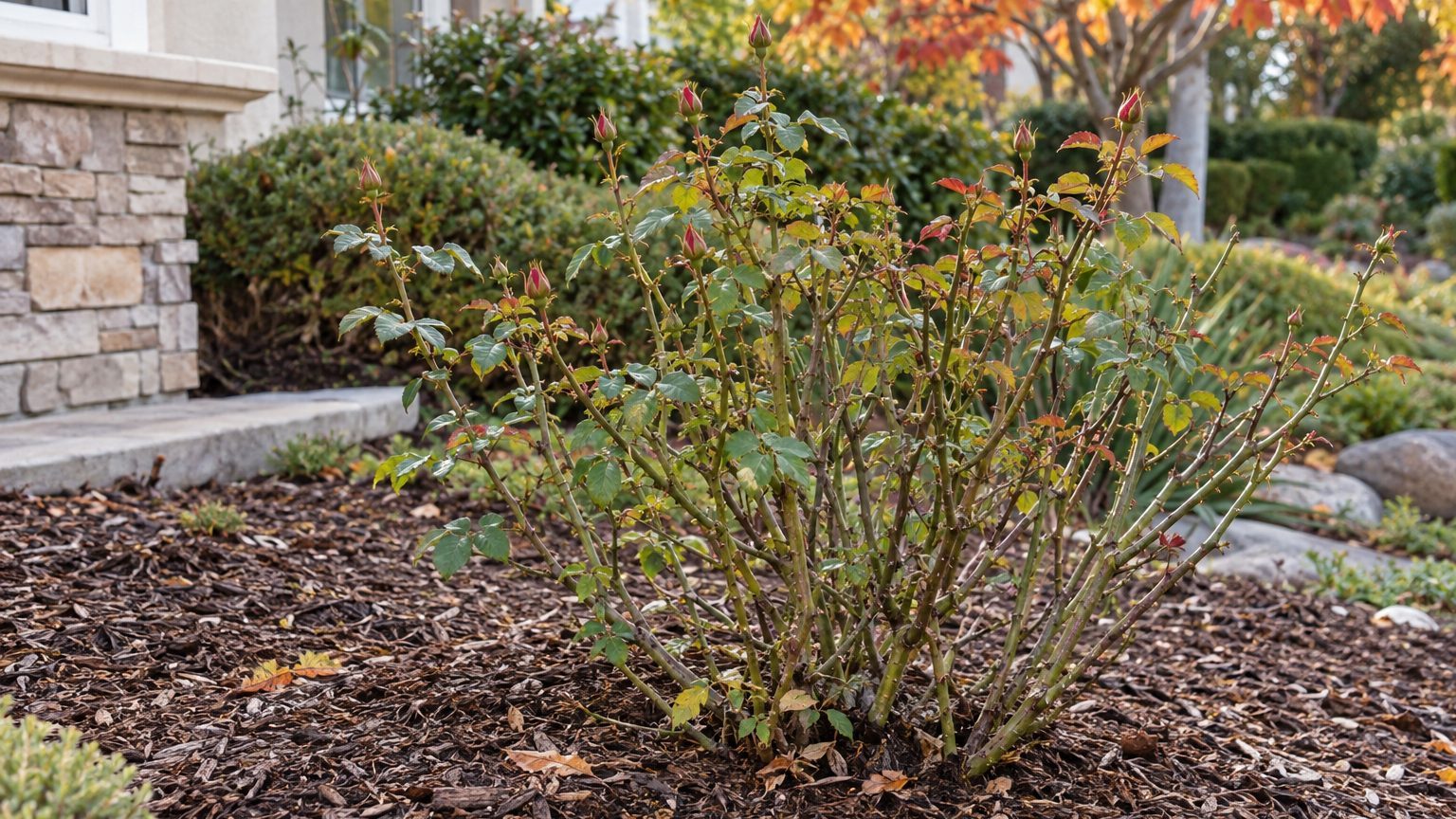
When the winter rains soften the garden and the first buds on your roses start to redden, the pruning shears come out. In California, that happens in winter, well before the spring flush.
When to Prune Roses in California

Prune repeat-blooming roses in January and February. March and December also work, as long as the buds have not yet swollen. Gardens where late spring frosts are common can wait a little longer.
Once-blooming roses follow a different rule. They flower on last year’s wood, so a winter cut removes the coming bloom.
| Rose type | When to prune in California | Why |
|---|---|---|
| Hybrid teas | January and February, or March and December | They bloom on new growth, so a winter cut before the buds swell sets up the flush |
| Floribundas | January and February, or March and December | New canes carry the clusters of flowers, and pruning ahead of growth keeps the shape tidy |
| Modern shrub roses | January and February, or March and December | They repeat bloom on new wood, so they follow the same winter window |
| Old garden roses and once-blooming climbers | Right after the spring bloom, never in early spring | They flower once a year on last year’s wood, and an early cut removes the flowers |
Repeat-blooming climbers follow a different pattern. They are generally pruned in the same winter window as other repeat bloomers, while ramblers and climbers that bloom once a year wait until their flowers fade. If you are unsure which kind you have, watch it through spring. A rose that blooms once and stops is a once-bloomer, and next year it gets pruned right after the flowers drop.
California — the year and the numbers
- State
- California
- USDA zones
- 5a-11a
- Frost
- none in an average year
- Annual rain
- 12 in
- Lawn zone
- warm-season
- Source
- NOAA NCEI 1991-2020 Climate Normals · Los Angeles
How to Tell When Your Roses Are Ready to Prune
The calendar gives the window, but the plant tells you when inside it, and a quick look at the canes settles the question.
- Buds that are still tight and dormant mean you are in good time, because pruning should be finished before the buds swell.
- Red, swelling buds along the canes mean the window is closing, so prune soon and keep the cuts light.
- Leaves that have mostly dropped or turned tired and spotted tell you the rose has slowed down and can take the shears.
- A cold snap in a frosty garden is a reason to hold off, since late spring frosts can nip new shoots that start growing after an early cut.
- Fresh green growth already pushing from the base means pruning has slipped late, so remove only dead or crossing wood.
In mild coastal gardens, an average year brings no hard freeze, so swelling buds are the main signal, not the weather.
Should You Prune Roses in Fall or Winter in California?
Winter is the season for the real pruning. Fall is for light work only, such as shortening very long stems that would whip in the wind and loosen the roots. Leave the hard cuts alone until the rose is ready to restart.
A severe cut in autumn pushes tender new growth just as the garden heads into its cool season. That growth is easily damaged where frost reaches, and it takes energy the plant would rather bank for spring. Wait for January and February, then shape the bush properly.
Fall does have its own job in the rose garden, which is feeding. Nitrogen goes on in September and October, and again in March and April. In California, the suggested rate is 1 pound of nitrogen per 1,000 square feet, scaled down for a smaller bed.
How Rose Pruning Dates Shift Across California
California is large enough that winter means different things in different gardens, so the window stretches or tightens with the local climate.
- Coastal and Southern California: no freeze occurs in an average year, so roses are pruned in the winter window without any frost worry. Heat, drought and water restrictions matter more here than cold.
- Central Valley: winter freezes do happen, so lean toward the later part of the window and watch for cold snaps after you cut.
- Northern California: frosts reach some gardens into spring, which is when delaying the pruning makes sense.
- Sierra foothills and mountains: freezes are a regular part of winter, so wait until the hardest cold has passed and the buds are about to wake.
Los Angeles is frost-free, but it does not speak for the whole state, so judge your own garden by its winters. The USDA hardiness zones across California run from 5a to 11a, which shows how different the yards are.
Where to Get Rose Advice in California
Local conditions vary enough that a nearby expert is worth a call. University of California Agriculture and Natural Resources runs the state’s extension network, and your county office can speak to your own microclimate.
- The extension site carries rose guides on pruning, feeding and common problems, and it is a good first stop in late fall before the pruning window opens.
- Your county office can answer questions about your area’s frost risk and which varieties suit it, so call before you buy bare-root roses in February or March.
Common Questions
When Should You Plant Bare-Root Roses in California?
February and March suit bare-root roses best. They can also go in from April through August, and container roses can be planted through the summer.
Which Roses Are Easiest to Grow in California Gardens?
In California, floribundas and polyanthas are more suitable for landscape use than hybrid teas and grandifloras, thanks to their profuse bloom and disease resistance. Landscape shrub roses are also among the more resistant to powdery mildew.
Are Rose Diseases a Problem in California?
Diseases are less common in California’s dry interior valleys than in areas with more humid climates. Even so, varieties differ greatly in how well they resist powdery mildew, so choose resistant types.