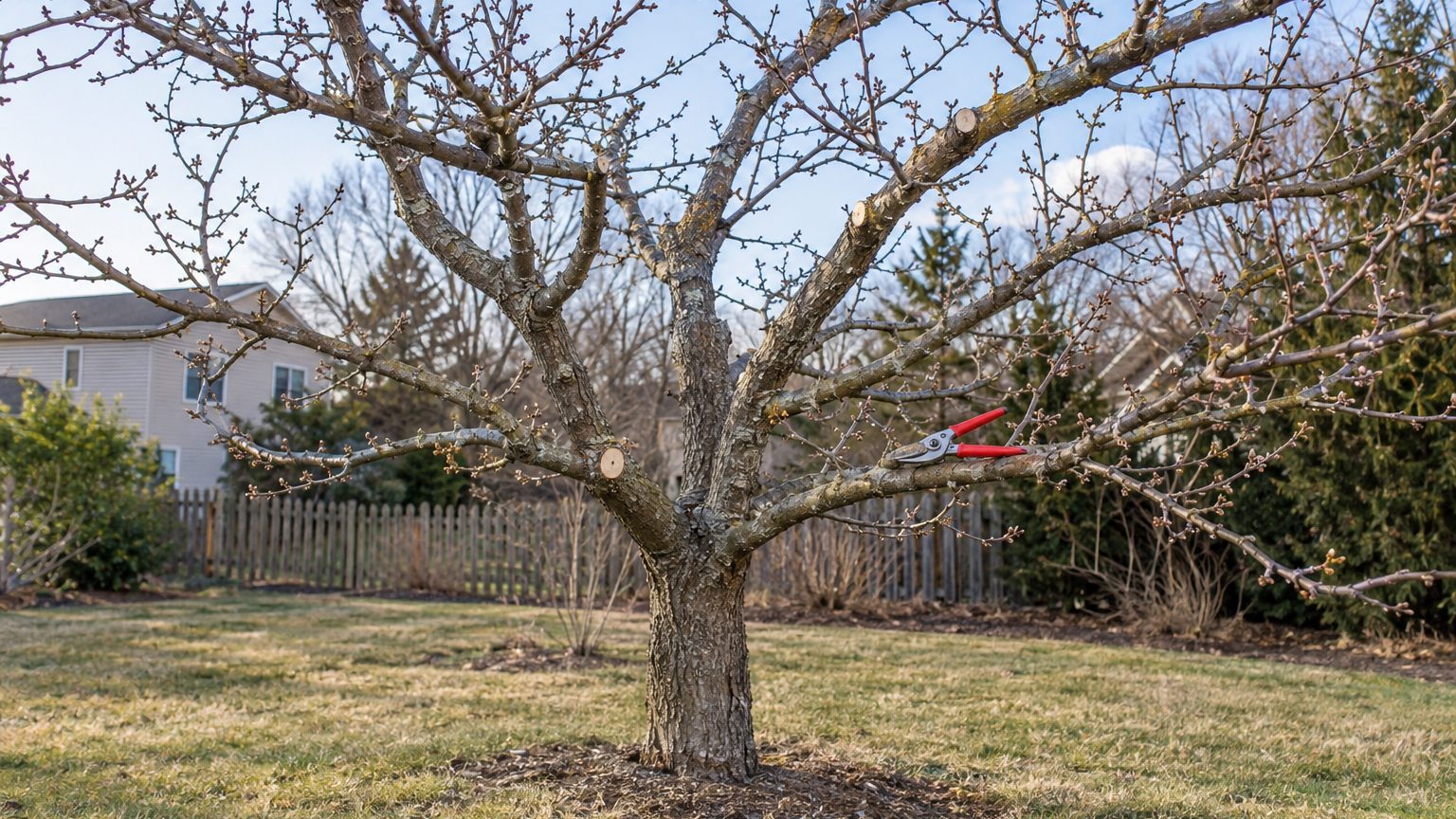
Bare apple and pear branches against a gray late-winter sky mean the pruning saw can come out. In Maine, fruit trees are pruned while they sleep, once the worst of winter has passed and before the buds begin to open.
When to Prune Fruit Trees in Maine

Prune fruit trees in Maine in late winter into early spring, with March and April the months to aim for. Pruning then costs the tree the least in winter hardiness, because the deepest cold is behind it and the wounds start to close as growth resumes.
| Fruit tree | When to prune in Maine | Why |
|---|---|---|
| Apples and pears | March to April, while dormant | Pruned first, with the tree still asleep and the buds closed |
| Peaches and nectarines | April, closest to bloom | Flower buds are easily hurt by cold, so these wait longest |
| Cherries and plums | March to April, before the buds swell | Cuts made at rest heal as the tree wakes up |
| Young trees | March to April, in the dormant season | Shaping cuts are made before spring growth starts |
Summer pruning in late July or August is possible, but severe cuts then weaken the tree. Most of the work belongs in winter or spring. Fall and early winter are avoided, since new growth triggered by a cut may not harden before the cold arrives.
Maine — the year and the numbers
- State
- Maine
- USDA zones
- 3b-6a
- Last spring frost
- April 22 to May 1
- First fall frost
- October 9 to October 21
- Annual rain
- 48 in
- Lawn zone
- cool-season
- Source
- NOAA NCEI 1991-2020 Climate Normals, 32F freeze probabilities · Portland
How to Tell Your Fruit Trees Are Ready to Prune
The tree gives better signals than a calendar page, and the weather in your own yard decides which of them show up first.
- The tree has dropped every leaf, which means it is dormant and the structure of the branches is easy to read.
- The hardest stretch of winter has passed, so cuts will not leave the tree exposed to a deep freeze.
- The buds are still tight and closed, which tells you pruning can go ahead without wasting stored energy.
- Finish apples and pears while the trees are still dormant, before the buds swell, and leave only the peaches.
- Snow has melted from the ground around the trunk, so you can stand and work safely without damaging shallow roots.
Once the buds open and leaves emerge, dormant pruning is over for the year.
When to Prune Peach and Apple Trees in Maine
Apples go first. They are pruned in the heart of the dormant season, in March and into April, while the buds are still shut. They tolerate the cut well, and an early start leaves the rest of spring for the trees that need to wait.
Peaches go last, as close to bloom as you dare. Their flower buds are easily hurt by cold, and a cut made early can leave a tree with fewer blooms after a hard snap. Waiting lets you see which buds came through the winter and prune with that in mind.
Summer pruning in late July or August can tidy a tree, such as thinning a crowded apple, but keep it light. Heavy cuts in summer weaken the tree, and the major structural work still belongs to the dormant months.
Where to Get Fruit Tree Advice in Maine
Maine winters vary a lot from the coast to the northern interior, so local advice helps you judge timing in your own yard.
- University of Maine Cooperative Extension publishes fruit tree guides and pruning pages that are worth reading before the saw comes out in late winter.
- Your county extension office can answer questions about your site and your trees, so call before the buds start to swell.
Common Questions
Can You Prune Fruit Trees in Fall in Maine?
Fall pruning is avoided. A cut can push new growth that has no time to harden before cold weather, and the tree enters winter weaker for it.
Which Fruit Trees Need Extra Care in Maine Winters?
Apricots are generally hardy through winter but quickly become tender as temperatures rise in late winter. Spring Satin, a plum-apricot hybrid, does not tolerate the freeze-thaw cycles of late winter, so plant it where it is sheltered.
Can You Plant Fruit Trees in Fall in Maine?
Fall planting does not suit fruit trees here, because the winters are too cold for a newly planted tree. Plant in April or early May, as soon as the frost has left the ground. Bare-root trees go in while still dormant.