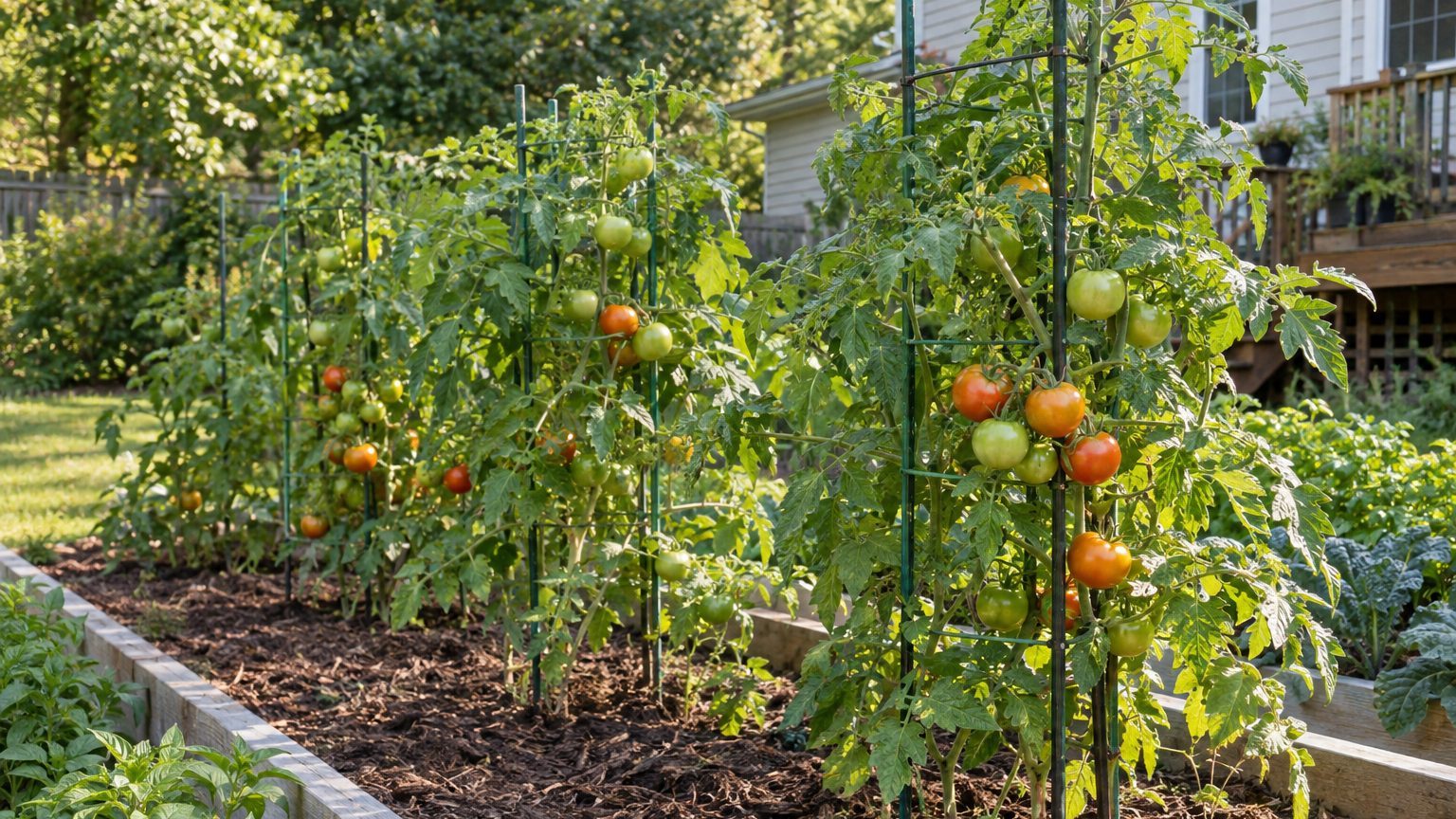
Tomato transplants in Georgia go into warm spring ground, and the same gardeners often return in midsummer to set out a second round for fall. The state stretches from mountain ridges to the coastal plain, so the right week depends on where your yard sits.
When Is the Best Time to Plant Tomatoes in Georgia?

Spring transplants go in from March to April, with May still workable inland, and a second planting for fall goes in during July.
- In March, the Coastal Plain can start setting out transplants from mid-month, as soon as the frost danger has passed and the soil has begun to warm.
- In April, gardens across most of the state are ready, and the plants get time to flower before summer heat arrives.
- In May, inland yards can still take transplants, though the plants have less time to set fruit before the heat.
- In July, set out seedlings started in June for a fall crop, and early August is the last chance for it.
- In late fall, frost ends the crop, so fruit is picked or ripened indoors before it arrives.
These windows exist because frost kills tomato plants outright and cold soil holds them back, while hot weather stops fruit from setting. In Atlanta, the last spring frost falls between March 11 and March 29, and the first fall frost arrives between November 13 and December 1. Georgia spans USDA hardiness zones 6a through 9b. North Georgia and the mountains freeze several weeks earlier in fall than Atlanta, and the coastal plain runs milder, so shift your timing a little toward your own corner of the state.
Georgia — the year and the numbers
- State
- Georgia
- USDA zones
- 6a-9b
- Last spring frost
- March 11 to March 29
- First fall frost
- November 13 to December 1
- Annual rain
- 50 in
- Lawn zone
- transition-season
- Source
- NOAA NCEI 1991-2020 Climate Normals, 32F freeze probabilities · Atlanta
When to Start Tomato Seeds for Georgia
Mid-February is the time to sow tomato seeds indoors in Georgia. That timing gives the seedlings six to eight weeks to grow sturdy before they go out in March or April.
Sowing much earlier produces tall, leggy plants that wait on the windowsill for warm weather. For the full seed-starting routine, see the page on when to start tomato seeds indoors in Georgia.
How to Plant Tomatoes in Georgia
Good planting is mostly patience and a few simple habits, done in this order.
- Before planting, harden the seedlings off outdoors for one to two weeks, so the leaves toughen to sun and wind instead of scorching.
- After the last frost, wait until the soil has warmed to about 60°F, because tomatoes sit and stall in cold ground even when the air feels mild.
- At planting time, set each transplant deeper than it grew in its pot, since the buried stem sends out extra roots and anchors the plant.
- Right away, push a stake or cage in beside the plant, while the roots are small enough that nothing gets damaged.
- After planting, water the transplant in well, so the soil settles around the roots and the plant recovers from the move.
- Once the soil is warm, spread mulch around the plants to hold moisture and keep soil from splashing onto the lower leaves.
Georgia summers are hot and humid, so plant early enough that the first flowers open before nights stay near 80°F. Large-fruited types keep flowering in that heat but stop setting fruit.
When to Seed, Plant and Harvest Tomatoes in Georgia
The year runs in three stretches: seeds in February, transplants in spring, and a second planting in summer for fall fruit.
Harvest has no fixed month. It follows the plants, and in fall it ends when frost threatens.
| Task | Best timing in Georgia | Why then |
|---|---|---|
| Sow seeds indoors | February, around mid-month | Seedlings reach planting size in six to eight weeks |
| Plant spring transplants | March to April, or into May inland | Frost is past, soil is warm, and fruit sets before peak heat |
| Plant for fall | July, or early August at the latest | Seedlings started in June reach the garden with time to ripen fruit |
| Harvest before frost | Once fruit colors, and before the first freeze | Frost kills the plants and damages fruit left on them |
Pick green fruit and bring it indoors when a freeze is forecast, since the fall crop has little margin once cold nights arrive.
Where to Get Tomato Advice in Georgia
University of Georgia Extension has local guidance for tomato growers across the state, and each county has an office staffed to answer garden questions.
- Visit University of Georgia Extension for planting guides and seasonal advice written for Georgia gardens.
- Contact your county extension office for a soil test, ideally before spring planting so you know what the bed needs.
- Take a leaf or stem sample to the same office when spots or wilting appear, so the disease can be identified before you treat anything.
Common Questions
Can You Plant Tomatoes in Georgia in July?
Yes. July is the time for a fall crop, using seedlings started in June. Fruit from these plants ripens in cooler weather and tends to be large and attractive.
What Kind of Tomato Handles Georgia Heat?
Look for descriptions that say heat-set, hot-set or heat-tolerant. Early varieties such as Early Girl, Celebrity and Super Sweet 100 ripen in 50 to 65 days from transplanting, which helps them finish before the worst of summer.
Why Do Tomato Plants Flower but Not Set Fruit?
Blossoms drop when nights stay warm, and the plant keeps growing without producing fruit. Check whether the plant is large-fruited and whether summer nights have turned hot. Both point to heat, and fruit usually returns when the weather cools.