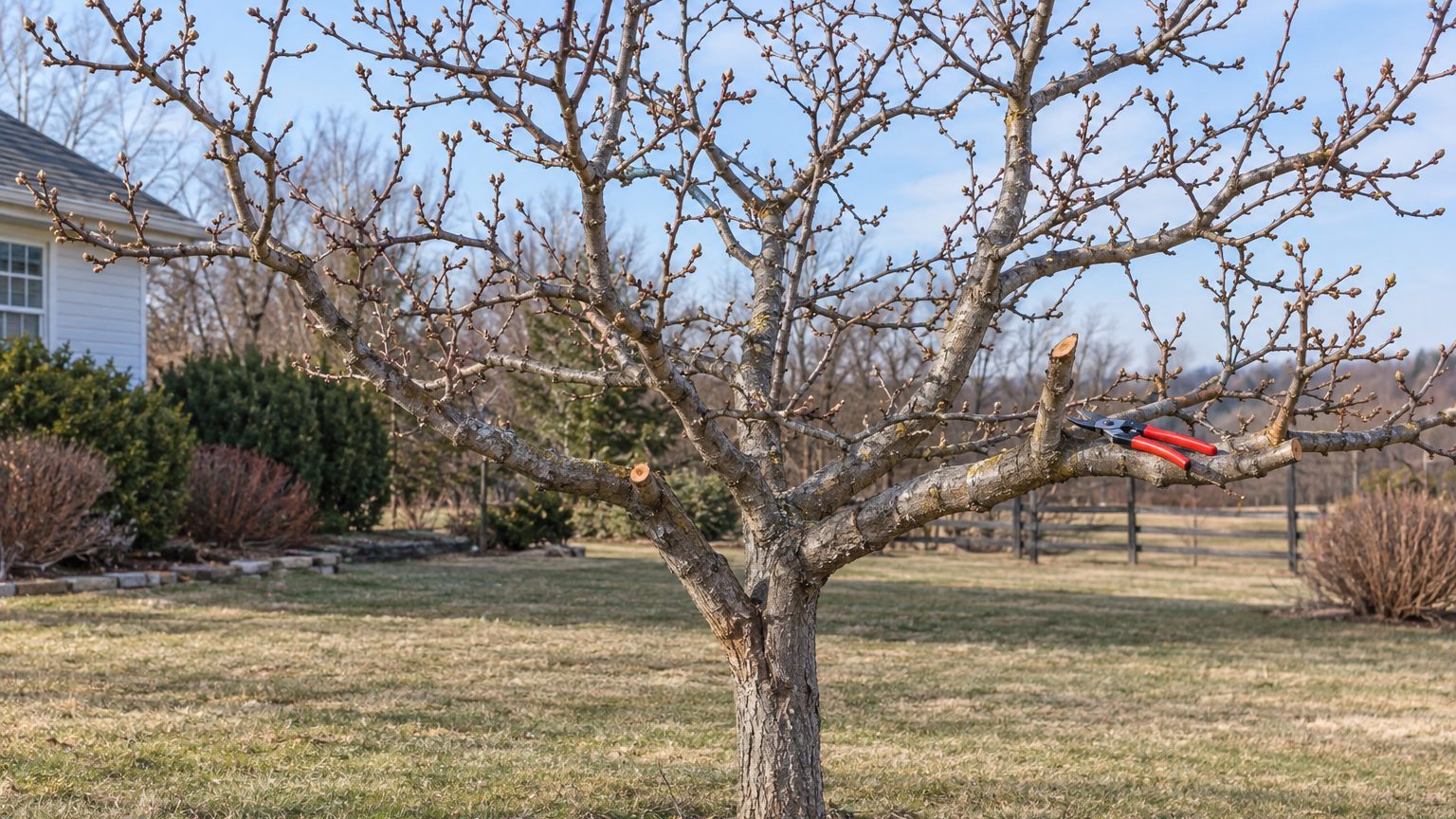
Bare branches against a gray late-winter sky are the signal Kentucky fruit growers wait for. Pruning apples, pears, peaches, cherries and plums belongs to the weeks when the trees are still asleep, just ahead of spring growth. Timing shifts a little from one fruit to the next, and it matters more than the cuts themselves.
When to Prune Fruit Trees in Kentucky

Prune fruit trees in Kentucky while they are dormant, in February and March, before the buds swell. It can also be done in April if winter ran long. Cutting in fall or early winter invites new growth that may not harden before the cold.
| Fruit tree | When to prune in Kentucky | Why |
|---|---|---|
| Apples and pears | February to March, with April as a fallback | Dormant wood heals cleanly, and these trees go first because their buds are less tender than a peach’s. |
| Peaches and nectarines | Later, from late March | Flower buds are easily hurt by cold, so peaches are pruned last, closest to bloom. |
| Cherries and plums | February to March, with April as a fallback | Dormant pruning just before growth begins keeps cuts from meeting hard cold. |
| Young trees | Not before February | Newly planted and nonbearing trees are more prone to winter injury from early cuts. |
Louisville, the reference city for Kentucky, has its last spring frost between March 24 and April 4. Rural yards nearby tend to warm up a bit sooner, so the pruning window there can close earlier. Kentucky also spans hardiness zones 6a to 7a, so a yard in the cooler parts of the state should lean toward the later end of the range.
Kentucky — the year and the numbers
- State
- Kentucky
- USDA zones
- 6a-7a
- Last spring frost
- March 24 to April 4
- First fall frost
- November 2 to November 12
- Annual rain
- 48 in
- Lawn zone
- transition-season
- Source
- NOAA NCEI 1991-2020 Climate Normals, 32F freeze probabilities · Louisville
How to Tell Your Fruit Trees Are Ready to Prune
The tree itself tells you more than a calendar square does, and a short walk around the yard is enough to read it.
- Bare branches with no leaves mean the tree is dormant, which is the condition fruit trees want when you cut.
- Tight, closed buds mean you still have time, so you can prune apples and pears without hurry.
- Buds that begin to swell tell you the dormant window is closing, so finish quickly and stop once green shows.
- Pink or white at the tips of peach buds means bloom is close, and peaches should be pruned just before that point so you can see which flower buds survived the cold.
A tree that has already leafed out is past the easy window, and the work is best left until the next dormant season.
When to Prune Peach and Apple Trees in Kentucky
Apples are pruned first, in the heart of the dormant season. Their wood handles late-winter cold well, so February and March work, with April as a fallback if the weather has kept you out of the orchard.
Peaches wait. Their flower buds are easily hurt by cold, so pruning begins from late March, close to bloom. Cutting earlier can expose the tree to winter injury, and waiting until you can check the buds lets you leave more wood where the buds came through alive.
Pruning peaches too late can reduce fruit size, so do not let the job drift far past bloom. Young apple and stone fruit trees should stay untouched until February, to limit the chance of winter injury.
Where to Get Fruit Tree Advice in Kentucky
Local help is easy to reach, and a quick call before the cutting season can settle questions about your own trees and your own site.
- University of Kentucky Extension offers guidance on fruit tree care, so check in during late winter before you pick up the pruning saw.
- Your county extension office can answer questions about local conditions and your particular trees, so call it when buds start to look uncertain.
Common Questions
Can You Prune Fruit Trees in Summer in Kentucky?
Dormant pruning is the main job for fruit trees. Heavy cuts in summer are not part of the usual routine, so keep the saw work for the resting season and ask your county extension office about any light summer touch-ups.
Should You Prune a Newly Planted Fruit Tree in Kentucky?
Wait until February at the earliest. Young, nonbearing trees are more likely to suffer winter injury if cut sooner, and planting in March or April gives them time to settle before you shape them.
Why Are Peaches Pruned Later than Apples?
Peach flower buds are easily hurt by cold. Pruning them last, close to bloom, lets you see which buds made it through the winter. Apples handle earlier cutting without that risk.