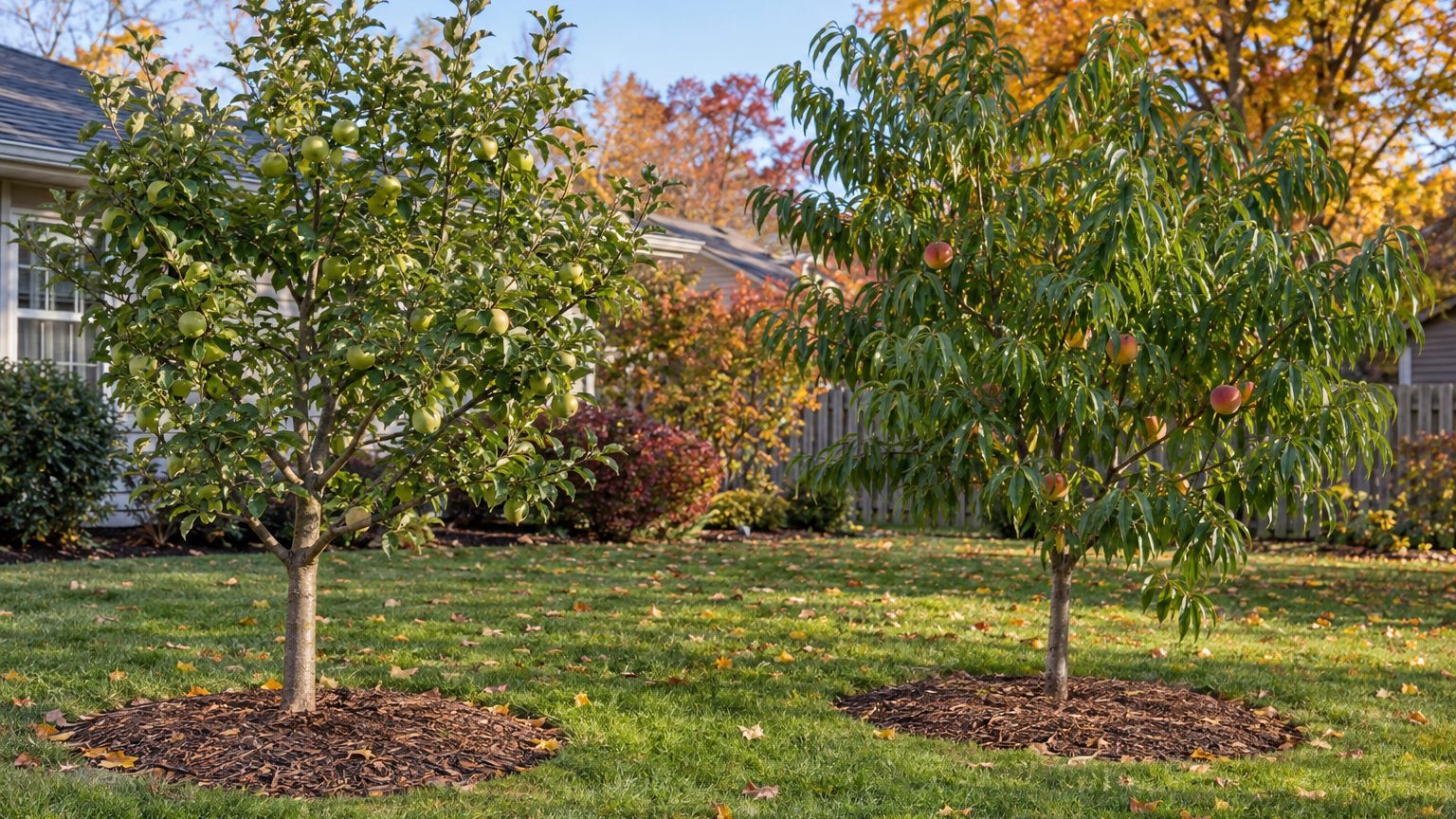
Pruning saws come out in late winter, while the apple and peach branches are still bare, and that is when Illinois fruit trees get their yearly reset. Apples, pears, peaches, cherries and plums are the trees most homeowners grow here, and pawpaw adds a native option. Where you live in the state decides which of them will last.
Best Fruit Trees to Grow in Illinois

Apples, peaches, cherries, pears and pawpaw all suit Illinois, with peaches needing the warmer half of the state. Hardiness zones run from 5a to 7b (USDA system), so a yard in the north faces much colder winters than one in the south. Check your own county before you choose.
Apple Trees
Apples handle Illinois winters well and are among the trees that need yearly pruning for good fruit. Prune them first among the fruit trees, in late February into March, while they are dormant.
Peach Trees
Peaches do well in central and southern Illinois. Most cultivars are not winter hardy, so they cannot survive the cold winters of northern Illinois. Pick bud-hardy cultivars and protect the bloom from late-spring frosts.
Cherry Trees
Cherries are pruned after the apples and pears, in mid-March before the buds begin to swell. Sour cherry is a tree fruit well adapted to this region, so it is a sensible choice if winters worry you.
Pear Trees
European and Asian pears both do well and, like apples, should be pruned every year for the best fruit. Prune them early, in late February and early March.
Pawpaw
Pawpaw is hardy from USDA zone 5A to zone 9, which covers every zone found in Illinois. It is a good pick for northern yards where peaches struggle.
Illinois — the year and the numbers
- State
- Illinois
- USDA zones
- 5a-7b
- Last spring frost
- April 11 to April 22
- First fall frost
- October 24 to November 3
- Annual rain
- 38 in
- Lawn zone
- cool-season
- Source
- NOAA NCEI 1991-2020 Climate Normals, 32F freeze probabilities · Chicago
How to Choose a Fruit Tree for Your Illinois Yard
Start with how cold your winters run, then think about how much care you can give. Fruit trees need pruning each year, so a tree you will not prune is a poor match for any yard.
Planting time is the same for most of them: March and April, while bare-root trees are still dormant.
| Your situation | What suits it in Illinois | Why |
|---|---|---|
| Very cold winters in northern Illinois | Apple, pear, sour cherry or pawpaw | Most peach cultivars are not winter hardy enough for the north |
| Central or southern Illinois | Peach, along with apple and pear | Peaches tend to do well in these parts of the state |
| Late frosts that catch the bloom | Bud-hardy peach cultivars | Hardy buds and a sheltered bloom give the best chance of fruit |
| Zone 5a yard that wants something different | Pawpaw | Hardy from zone 5A to zone 9 |
Sour cherry is a fruit for a yard that gets little attention. Whatever you pick, plan the pruning for February and March and keep peaches for last, closest to bloom.
Fruit Tree Buying Mistakes to Avoid in Illinois
Buying a Peach for a Northern Yard
A peach that is not winter hardy will not survive northern Illinois winters, and you lose the tree and the years spent growing it. In the north, choose apple, pear, sour cherry or pawpaw instead. Farther south, pick bud-hardy peach cultivars.
Ignoring the Pruning Work
Apple, pear, peach and cherry trees all need pruning every year for good fruit, so buying one without planning for that leads to poor crops. Put late February into March on the calendar. Apples and pears go first, cherries in mid-March, peaches last. Avoid pruning in fall or early winter, since new growth may not harden before the cold.
Planting at the Wrong Time
Bare-root trees must go in while still dormant, before the buds open, so order them for March or April. Container trees can go in over a longer stretch if watered, but they settle best in the dormant season. Summer is hard on new roots because of heat and dry soil.
Where to Get Fruit Tree Advice in Illinois
University of Illinois Extension publishes fruit tree guidance written for the state’s growing conditions, and your county office can tell you what works locally.
- The extension website covers pruning and varieties, so read it in winter before ordering trees.
- Your county extension office can tell you which cultivars suit local winters, so call before March planting.
Common Questions
Can You Grow Peaches in Northern Illinois?
Peaches are a gamble there, since most cultivars cannot take the cold. Apples, pears and pawpaw are safer choices.
When Should You Plant Fruit Trees in Illinois?
March and April suit bare-root and container trees, planted while still dormant.
Should You Water a Tree Planted in Fall?
Yes. Keep watering until the ground freezes.