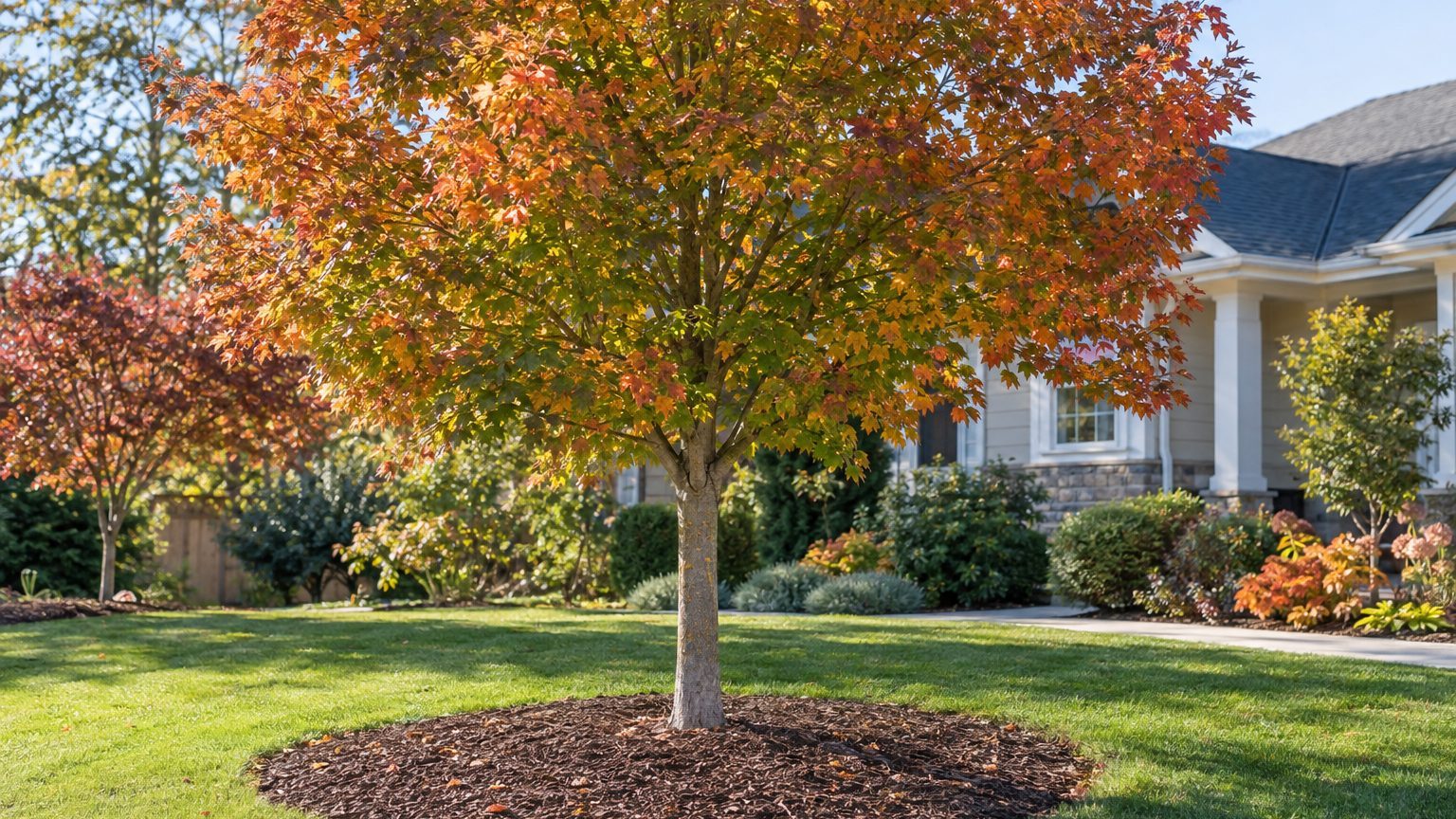
Fall gives young trees a gentle start in California, while winter suits bare-root fruit trees. Summer heat is what stresses new roots.
When Is the Best Time to Plant Trees in California?

For shade and ornamental trees, October and November are the months to aim for, with September and December as fallback months.
- In September, container trees can go in if the weather has eased, though the soil is still dry and needs regular watering.
- In October and November, planting gives roots time to settle before summer stress arrives, and this is the stretch to plan around.
- In December, a tree can still be planted while it is dormant, as long as the ground is workable.
- Container-grown trees can be planted most of the year if they are watered, but they settle best when planted in the dormant season.
- In summer, hold off. Heat and dry soil stress new roots more than at any other time of year.
Frost matters little along the coast and in Southern California, where a freeze does not occur in an average year and the limits are heat, drought and water restrictions. Northern California, the Central Valley and the Sierra do freeze, so local timing shifts there. The USDA hardiness zone system runs from 5a to 11a across the state, so check your own zone before choosing a tree.
California — the year and the numbers
- State
- California
- USDA zones
- 5a-11a
- Frost
- none in an average year
- Annual rain
- 12 in
- Lawn zone
- warm-season
- Source
- NOAA NCEI 1991-2020 Climate Normals · Los Angeles
When to Plant Fruit Trees in California
January is the target for fruit trees, with December, February and March as fallback months. Bare-root trees go in during winter dormancy, before the buds open, so the roots get established before leaves demand water.
At planting, bare-root trees are topped at 20-24 inches to encourage low branching.
| Kind of fruit tree | When to plant in California | Why then |
|---|---|---|
| Bare-root | January, or December to March | The tree is dormant and the buds have not opened |
| Container | January, or December to March, and most of the year with watering | It settles best in the dormant season |
Choose varieties by chill hours, and pick only those whose requirement matches or falls below what your area receives. Japanese plums need 500 to 900 chilling hours, while European plums need 700 to 1,000. Low-chill plum hybrids tolerate warmer conditions.
Best Trees to Plant in California
Native oaks and redbud suit the state’s dry summers. Fruit growers in Southern California have drought-tolerant options as well, and pears handle clay better than most fruit trees. Match any tree to your space, sun and zone.
| Tree | How it does in California | Why |
|---|---|---|
| Black oak | Grows slowly to 30-70 ft. and nearly as wide | Completely drought-tolerant |
| Coast live oak | Evergreen and common in Sonoma County | The most common native oak there |
| Western redbud | A large shrub or small, multi-trunked tree | Dramatic blooms that birds, butterflies, moths and bees visit |
| Fig | Grows well in full sun in Southern California, 10-30 feet tall | Drought-tolerant and spreads even wider |
Jujubes are more drought tolerant than most fruit trees, though they need some irrigation for abundant fruit. Pears tolerate clay or wet soils better than other fruit trees do, but avoid sandy, high clay or shallow soils.
When to Plant, Water and Prune Trees in California
Most tree work follows dormancy. Plant when the tree is resting, water new trees through their first dry season, and prune fruit trees before the buds swell.
| Task | Best timing in California | Why then |
|---|---|---|
| Plant shade and ornamental trees | October, November | Roots settle before summer stress |
| Plant fruit trees | January | Bare-root trees are dormant |
| Water a young tree | Regularly, especially through the first dry season | New roots dry out fast in summer heat |
| Prune a fruit tree | January, February | Dormant, before spring bud break |
Peaches are pruned last, closest to bloom, because their flower buds are easily hurt by cold, while apples go first. Apricot and cherry trees are not pruned in winter here. Most other fruit trees are pruned in the dormant season and again in summer. Avoid pruning in fall or early winter, since new growth may not harden before the cold. The page on when to prune fruit trees goes deeper.
Where to Get Tree Advice in California
University of California Cooperative Extension can answer questions about species, soil and local timing.
- The UC Agriculture and Natural Resources site offers planting guides and fruit tree advice, handy in fall before planting.
- Your county extension office can advise on which tree suits your site and can point you to soil testing before you plant.
- Local gardening volunteers can answer questions about trees suited to your area, and early fall is a good time to ask.
Common Questions
Can You Plant a Tree in Summer in California?
You can if the tree is container-grown and you water it, but it is the hardest season. Fall is gentler on new roots.
Should You Plant Bare-Root Trees After the Buds Open?
No. Plant them while dormant, before the buds open, so the roots can establish before the leaves need water.
Do You Need to Worry About Frost When Planting in California?
Along the coast and in Southern California, frost is not a concern. In Northern California, the Central Valley and the Sierra, freezes happen, so check local conditions and your hardiness zone.