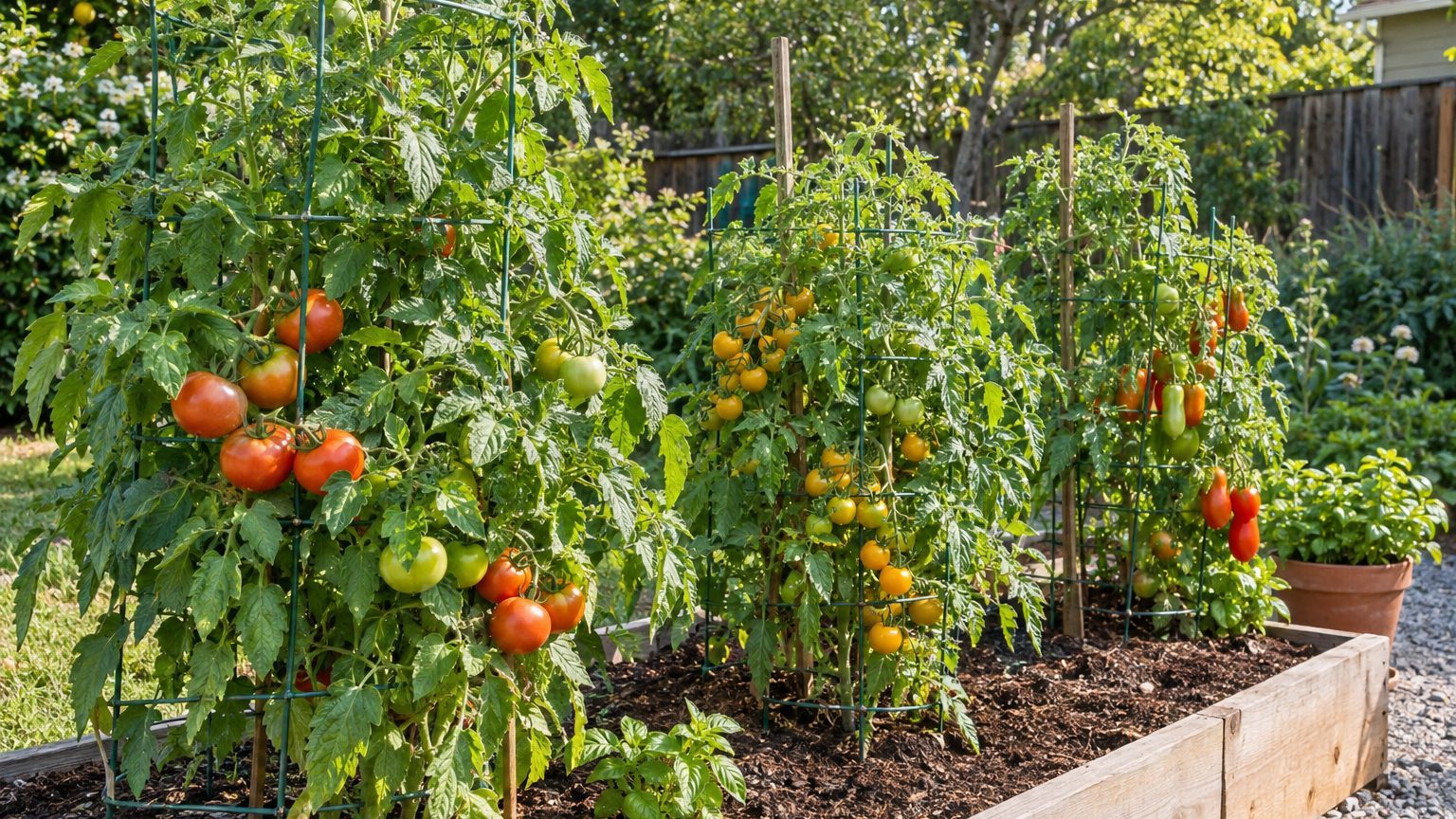
Tomato plants in a California yard usually go in as small transplants in spring and keep growing through the warm months. Coastal and southern gardens never see a freeze in an average year, so frost is not the worry there. The choice comes down to disease resistance, tolerance of drought and cool fog, and how well a variety copes with the conditions in your own yard.
Best Tomatoes to Grow in California

Disease resistance is the quality that matters most in California, and varieties bred for it do well from the foggy coast to the warmer inland valleys. Gardeners who have had disease trouble in past years should pick resistant varieties first. Northern California, the Central Valley and the Sierra do freeze, so those yards still wait for frost to pass, but coastal and southern yards face heat, drought and water limits instead.
Stupice

Stupice is a very cold-tolerant, early tomato with disease resistance. It sets clusters of 3-4 oz. fruits, which suits cool spots where bigger tomatoes sulk. Plant it where spring stays cool and you want ripe fruit early.
Big Beef

Big Beef is a highly disease-resistant hybrid that adapts to a variety of growing conditions. It produces bright-red fruits of 10-16 oz. even in cool, foggy West County. If you want slicers on the cool side of the state, this is a dependable pick.
Better Boy
Better Boy is highly adaptable and thrives in most climates, with very good disease resistance. That makes it a sensible choice when you are not sure how your yard behaves through the summer.
Lemon Boy Plus
Lemon Boy Plus F1 is a medium yellow tomato that area gardeners have called reliable year after year. It carries multiple disease resistances, including fusarium, verticillium and nematodes. Choose it for beds where soil problems have shown up before.
Dry-Farmed Tomatoes
One variety is prized for dry-farming because of its extreme tolerance to drought and blossom end rot. It also resists Fusarium Wilt races 1 and 2 and Verticillium Wilt. Where water restrictions limit irrigation, that tolerance is worth looking for on the plant tag.
California — the year and the numbers
- State
- California
- USDA zones
- 5a-11a
- Frost
- none in an average year
- Annual rain
- 12 in
- Lawn zone
- warm-season
- Source
- NOAA NCEI 1991-2020 Climate Normals · Los Angeles
How to Choose Tomatoes for Your California Garden
Start with what your yard throws at a tomato. Cool nights, fog, a hard freeze or a dry summer each favor a different plant, and a tag that lists disease resistance covers the most ground.
Timing is simple once you pick a plant. Start seeds in pots indoors anywhere from February to April, and the seedlings will soon be ready to move outdoors. Transplants go outside in April to May, and it can also be done in June.
| Your situation | What suits it in California | Why |
|---|---|---|
| Cold winter or cool spring | Stupice | Very cold-tolerant and early, with 3-4 oz. fruits in clusters |
| Cool, foggy coast | Big Beef | Sets 10-16 oz. fruits even in cool, foggy West County |
| Dry summer with water limits | Dry-farmed type | Extreme tolerance to drought and blossom end rot |
| Past disease problems | Lemon Boy Plus F1 | Resists fusarium, verticillium and nematodes |
| Unsure of your conditions | Better Boy | Thrives in most climates with very good disease resistance |
Whatever you choose, seedlings need hardening off for one to two weeks before they go into the ground in late April to early May. Wait until all danger of frost has passed and the soil has warmed to about 60°F.
Tomato Buying Mistakes to Avoid in California
Skipping Disease Resistance
A plant with no resistance can lose a season to the same disease that struck before. If trouble has shown up in your beds, pick varieties bred for resistance. Lemon Boy Plus and Big Beef are two that carry it.
Buying Too Early
Plants bought in a warm spell can be hurt if frost is still possible in the Central Valley, the Sierra or northern areas. Hold them until the danger has passed, in April to May, and harden them off first for one to two weeks.
Ignoring Your Local Conditions
A variety suited to one part of the state can disappoint in another. Cool, foggy yards do well with Stupice or Big Beef, while a dry-farmed type fits places with limited water. Read the tag for resistance and match it to your yard before you buy.
Where to Get Tomato Advice in California
University of California Agriculture and Natural Resources runs the state’s extension network, and its master gardeners work county by county. Local volunteers know which varieties handle your fog, heat or valley soil.
- County master gardener programs publish tomato grow sheets and variety guidance, useful before you shop in spring.
- Plant sales run by local master gardeners offer varieties chosen for your area, so check the dates before April.
Common Questions
Can You Grow Tomatoes in California All Year?
Coastal and southern California has no freeze in an average year, so frost does not set the schedule there. Northern California, the Central Valley and the Sierra do freeze, and tomatoes there wait for spring.
When Should You Start Tomato Seeds Indoors in California?
Anywhere from February to April works, and the seedlings will be ready to go outside soon after. Starting them about six to eight weeks before planting out gives them time to grow sturdy.
What If Tomatoes Struggle with Disease in Your Garden?
Choose varieties bred for disease resistance. Lemon Boy Plus resists fusarium, verticillium and nematodes, and Big Beef is highly disease-resistant too.